Roche
Roche obesity drug produces 15.5% weight loss in mid-stage trial
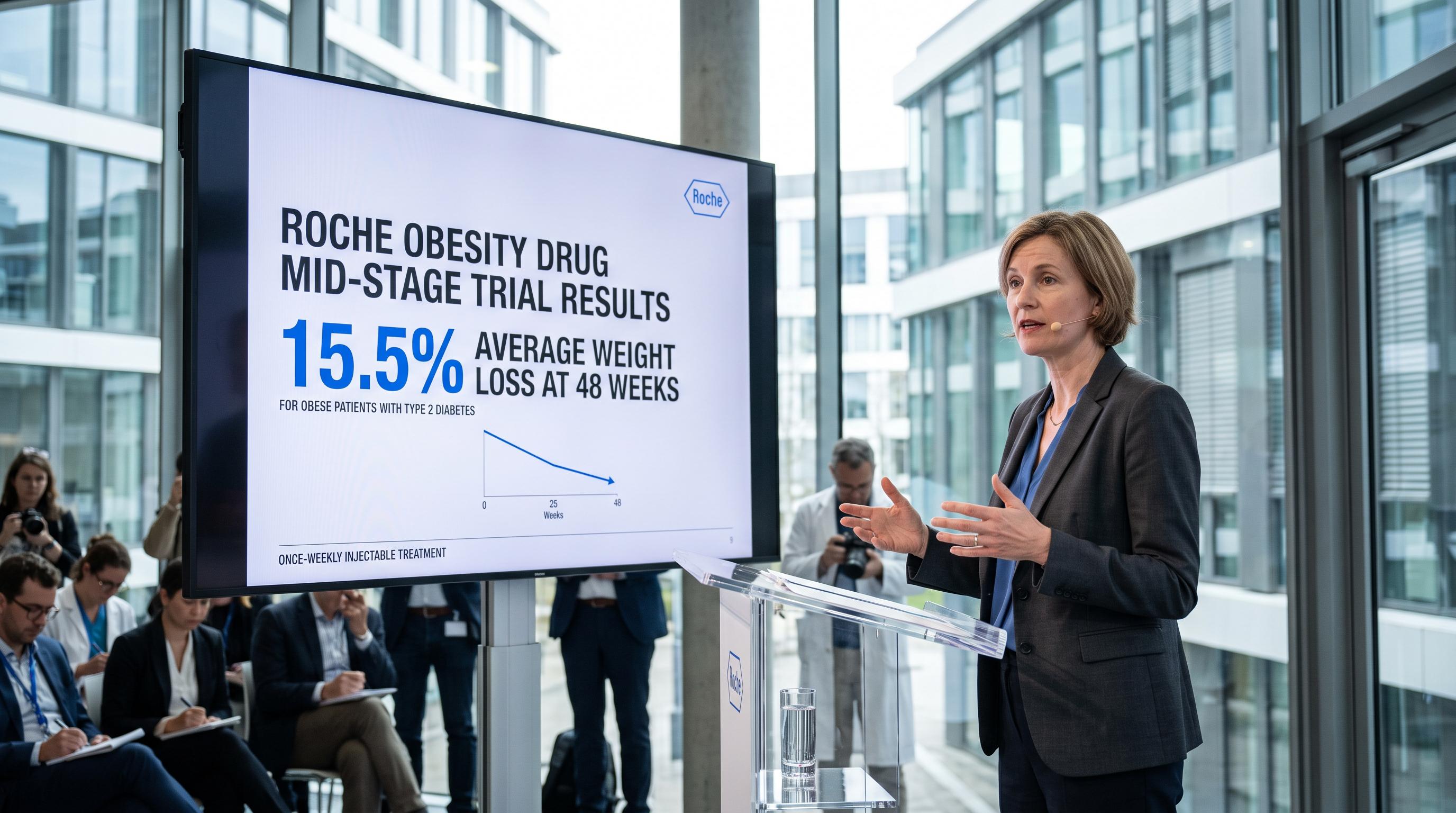
Roche says its experimental once-weekly obesity treatment reduced body weight by an average 15.5% after 48 weeks in overweight or obese people with type 2 diabetes. Analysts called the mid-stage results competitive but stressed that larger Phase 3 trials are still needed.
Roche puts weight loss rivals on notice
Roche’s experimental obesity treatment delivered 15.5% average weight loss in 48 weeks, putting the Basel-based pharmaceutical group closer to the front line of the global weight loss drug race. Enicepatide, administered once a week, produced the result in overweight or obese people with type 2 diabetes who received the highest 24 milligram dose in a mid-stage clinical trial.
The same group recorded a 2.65% reduction in HbA1c, the blood sugar measure used to assess diabetes control. Roche said about 62% of participants reached the normal glycemic range during the study. The company also reported that no weight loss plateau had emerged by the 48 week mark.
The findings arrive as Eli Lilly and Novo Nordisk dominate a fast-growing market that analysts estimate could eventually be worth up to $150 billion worldwide. Roche shares slipped 0.19% in Zurich after the results, a modest market response that reflects both the promise of the data and the remaining clinical risks.
The results come from a Phase 2 study, however. Analysts said Roche must provide detailed placebo-adjusted figures and reproduce the benefit in larger Phase 3 trials before investors can judge how strongly enicepatide can compete with established medicines.
The trial links weight loss to diabetes control
The 24 milligram dose combined substantial weight loss with sharper blood sugar control. Roche said patients in that group lost an average of 15.5% of their body weight after 48 weeks and reduced HbA1c by 2.65%. Researchers also observed no plateau in weight reduction during the study period, a detail that may shape the design of the company's next trials.
Enicepatide works by activating two hormones involved in metabolism, GLP-1 and GIP. That mechanism resembles Eli Lilly’s Zepbound, giving Roche a familiar biological route into a market already shaped by weekly injectable treatments. The medicine was previously known as CT-388 and originated at Carmot Therapeutics, which Roche bought for $3.1 billion in 2023.
Manu Chakravarthy, Roche’s senior vice president for cardiovascular, renal and metabolism product development, highlighted the treatment’s effect on both conditions. “You’re losing weight, you have no hypoglycemia, and you’re dropping your sugar in a very, very healthy range,” he said.
The diabetes results matter commercially as well as medically. Roche is developing enicepatide for people with obesity alone, as well as patients facing diabetes and other serious conditions. That broader strategy could expand the medicine’s potential market if later trials confirm the current findings.
Roche’s safety signal faces a tougher test
Only 2% of participants stopped treatment because of side effects after 48 weeks, according to Roche. That figure gives enicepatide an important point of comparison with competing medicines, although the trials were not identical and the results cannot be treated as a direct head to head test.
In an earlier, shorter mid-stage trial of Eli Lilly’s Mounjaro in people with diabetes, discontinuation rates ranged from 5% to 24.5%, Bloomberg reported. Roche’s figure therefore looks encouraging, but analysts have urged caution until the company publishes the full safety and placebo-adjusted data.
Goldman Sachs analysts James Quigley and his colleagues described the results as “competitive” with rival drugs tested in Phase 3. They also stressed that the evidence remains incomplete. Larger studies will need to establish how consistently enicepatide works across different patient groups, how long the weight loss lasts, and how side effects affect adherence over time.
Those details will matter to doctors in Switzerland and elsewhere. Patients with obesity and type 2 diabetes often need treatment that can control blood sugar without causing hypoglycemia, while also remaining tolerable over months or years. Roche’s early safety signal strengthens its case, but it does not remove the need for a broader evidence base.
Roche moves enicepatide into late-stage development
Roche already has two late-stage obesity trials under way, moving enicepatide from promising Phase 2 data toward the regulatory evidence needed for approval. The company plans to expand testing in early 2027 to include diabetes and cardiovascular outcomes, according to the report.
Roche is also evaluating higher doses and combinations with other weight loss medicines. Teresa Graham, the company’s pharmaceuticals chief, said in July that Roche wanted to develop enicepatide both as a standalone treatment and in combinations for patients needing “greater weight loss and/or better glycemic control.”
The strategy reflects the range of patients Roche hopes to reach. Chakravarthy said the company is studying use in people who are overweight or obese without other conditions, as well as those with cardiovascular disease, heart failure and type 1 diabetes. Each group brings different medical risks and will require specific evidence.
Analyst forecasts show the commercial stakes. Vontobel’s Stefan Schneider expects a launch as early as 2028 and peak sales of CHF 2.5 billion, or roughly $3.05 billion. Bloomberg Intelligence analysts have projected peak sales of $4 billion and possible approval by 2030. Those estimates depend on successful Phase 3 trials, regulatory review and Roche’s ability to secure a place in a crowded treatment market.
Switzerland watches the next trial closely
The next decisive evidence will come from larger trials, not the headline percentage alone. Roche must now show that enicepatide’s 15.5% average weight loss holds across a broader population and remains clinically meaningful over longer periods. Regulators will also examine cardiovascular outcomes, safety, dosing and the treatment’s performance alongside other medicines.
For Switzerland, the programme keeps one of the country’s largest pharmaceutical companies focused on a rapidly expanding field. Roche is seeking to challenge Novo Nordisk and Eli Lilly while using its existing expertise in metabolic disease development. A successful product could add a major new growth driver, although the company faces intense competition on efficacy, tolerability, supply and price.
Patients and Swiss health insurers will ultimately judge the medicine through access and value. A treatment that improves both obesity and diabetes may offer advantages for people managing several conditions, but its cost and reimbursement status will influence how widely doctors can prescribe it.
Roche’s timeline points to several years of testing before a potential approval. The company expects to broaden clinical development in 2027, while analysts see a possible launch from 2028 and approval estimates extending to 2030. Until those milestones arrive, enicepatide remains a strong Phase 2 candidate with a demanding clinical programme ahead.