Nestle
Nestlé doubles planned investment in Mexico to $2 billion
Nestle plans to double its investment in Mexico to $2 billion, including a distribution centre and support for coffee growers. The story should examine the strategic importance of Mexico to the Swiss food group, the promised agricultural benefits and the company’s expanding international footprint.
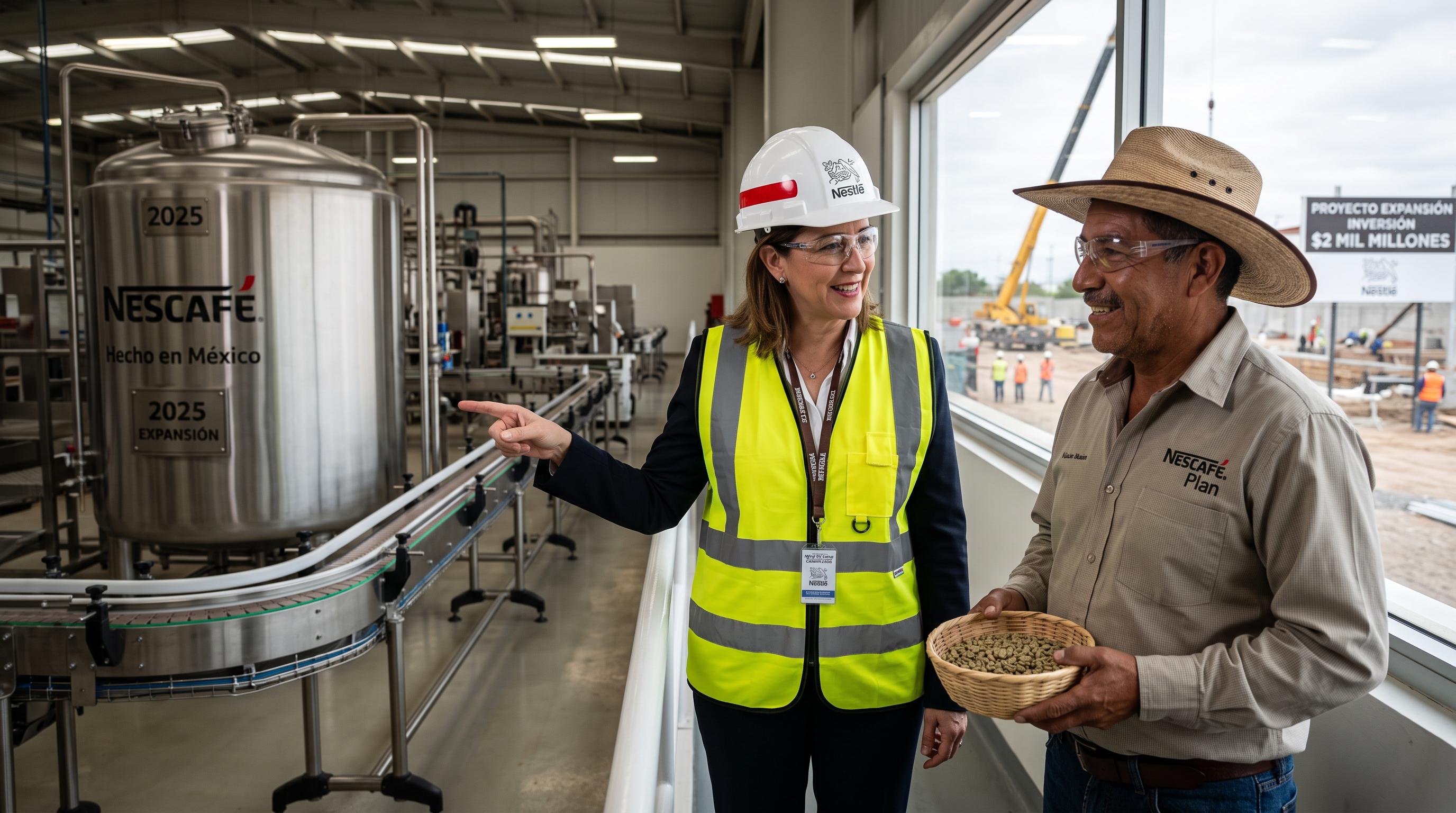
Nestlé Doubles Down on Mexico
Nestlé will commit $2 billion to Mexico during the current government’s six-year term, doubling the Swiss food group’s earlier investment plan and putting Mexico firmly at the centre of its expansion strategy. Mexican President Claudia Sheinbaum announced the increase on October 9, 2026, after meeting Nestlé CEO Philipp Navratil.
The revised figure builds on the $1 billion commitment Nestlé announced at the start of 2025. The company has not provided a detailed breakdown of the full programme in the information released by the Mexican government, but the plan includes new distribution infrastructure and agricultural support.
For Nestlé, Mexico offers a large production and consumer base, while also linking the group to important agricultural supply chains. The announcement gives the Swiss company a substantial, multi-year platform in a market where logistics and sourcing capacity will shape its next phase of growth.
The timing also gives the investment a direct political profile. Sheinbaum’s administration is presenting the commitment as part of its economic programme, while Nestlé is expanding its physical presence through a distribution centre in Zumpango and deepening its relationship with coffee producers in Veracruz. The pledge therefore combines industrial investment with a rural development component.
Build the Zumpango Supply Hub
The planned Zumpango distribution centre will place logistics at the heart of Nestlé’s Mexican expansion. The site is planned for the area north of Mexico City, one of the country’s most important commercial and transport zones.
A distribution centre can improve how products move from factories and suppliers to retailers, although Nestlé and the Mexican government have not disclosed the project’s cost, capacity, construction timetable or expected employment. Those details will determine the facility’s practical effect on regional trade and local communities.
Zumpango’s location gives the project a clear connection to the capital’s vast consumer market. It also places new infrastructure within the wider logistics network serving central Mexico. For a food group that sells products across multiple categories, the ability to coordinate storage and delivery is a central part of maintaining supply.
The facility also represents a long-term commitment to Mexico rather than a single agricultural programme. The government’s announcement links it to the broader $2 billion investment package, which will unfold during the current administration’s term. Until Nestlé publishes further specifications, the centre’s main confirmed significance is strategic: it will strengthen the company’s distribution capacity in one of its key international markets.
Back Veracruz Coffee Growers
Nestlé plans to distribute 70,000 coffee plants and support 2,000 farmers in Veracruz between 2028 and 2030. The agricultural programme is the clearest quantified benefit included in the announcement and gives the investment a direct connection to producers.
Veracruz is one of Mexico’s coffee-growing states. Nestlé’s plan, as described by the Mexican government, will provide planting material and assistance to farmers over a three-year period. The announcement does not specify the coffee varieties, the form of technical support, the financing arrangements or how the company will measure results.
The numbers indicate the scale of the proposed intervention: an average of 35 coffee plants per farmer if the plants are distributed evenly among the 2,000 participants. That figure is a simple comparison, not a stated allocation by Nestlé, and the final programme could vary by farm and region.
For growers, the value of the initiative will depend on implementation, plant survival, farm productivity and the terms of any future purchasing relationship. For Nestlé, strengthening local production can help secure agricultural supply while tying its investment more closely to Mexico’s rural economy. The programme is scheduled for 2028 to 2030, placing delivery and follow-up beyond the initial announcement.
Turn a Corporate Pledge Into Projects
President Claudia Sheinbaum announced the higher figure after meeting Nestlé CEO Philipp Navratil, giving the investment a prominent place in Mexico’s economic messaging. The announcement came through Sheinbaum’s account on X on Friday, October 9, 2026.
The meeting connects Mexico’s industrial policy with the decisions of one of Switzerland’s largest food companies. Nestlé’s plan covers the full six-year term of the current Mexican government, creating a timetable that extends beyond a single construction project or annual corporate budget.
The government’s announcement highlights two visible parts of the commitment: the Zumpango distribution centre and support for coffee agriculture in Veracruz. It does not provide a complete project list or explain how the additional $1 billion will be allocated across manufacturing, logistics, sourcing and other activities.
That gap matters for assessing the investment. The headline figure establishes the scale, while future disclosures will need to clarify spending schedules, job creation, local procurement and the role of Mexican suppliers. The company’s expansion will be judged through those measurable outcomes as projects move from announcement to execution.
For Nestlé’s leadership, the agreement reinforces Mexico’s importance within its international network. For Sheinbaum’s administration, it offers a high-profile Swiss corporate commitment with both urban infrastructure and agricultural elements.
Measure the Investment’s Reach
Mexico now accounts for a $2 billion Nestlé commitment during one government term, a figure that matters in Switzerland because it shows how the Vevey-based group is allocating capital beyond its home market. The announcement also illustrates the breadth of Nestlé’s international footprint, from distribution infrastructure in a major metropolitan region to agricultural support in a coffee-producing state.
The Swiss perspective is visible in the company’s role as an investor, while the immediate economic effects will be felt in Mexico. Zumpango is set to receive a new logistics facility. Veracruz farmers are slated to receive 70,000 coffee plants, with 2,000 growers included in the planned support programme from 2028 to 2030.
The next milestones will be practical. Nestlé will need to clarify the wider investment breakdown, provide details on the distribution centre and set out how it will deliver and evaluate the coffee initiative. Mexican authorities and local communities will have a role in tracking those commitments.
The announcement gives both sides a clear framework: Mexico receives a major planned investment from a Swiss multinational, and Nestlé gains additional capacity in a strategically important market. The final record will depend on construction, planting and farmer support that can be measured over time.