Law
ECHR Faults Switzerland for Denying Father's Visiting Rights to Jailed Pregnant Partner
The European Court of Human Rights has ruled against Switzerland for violating the right to family life. The court found that authorities in Vaud unjustly denied a man the right to visit his pregnant partner while she was in pre-trial detention.
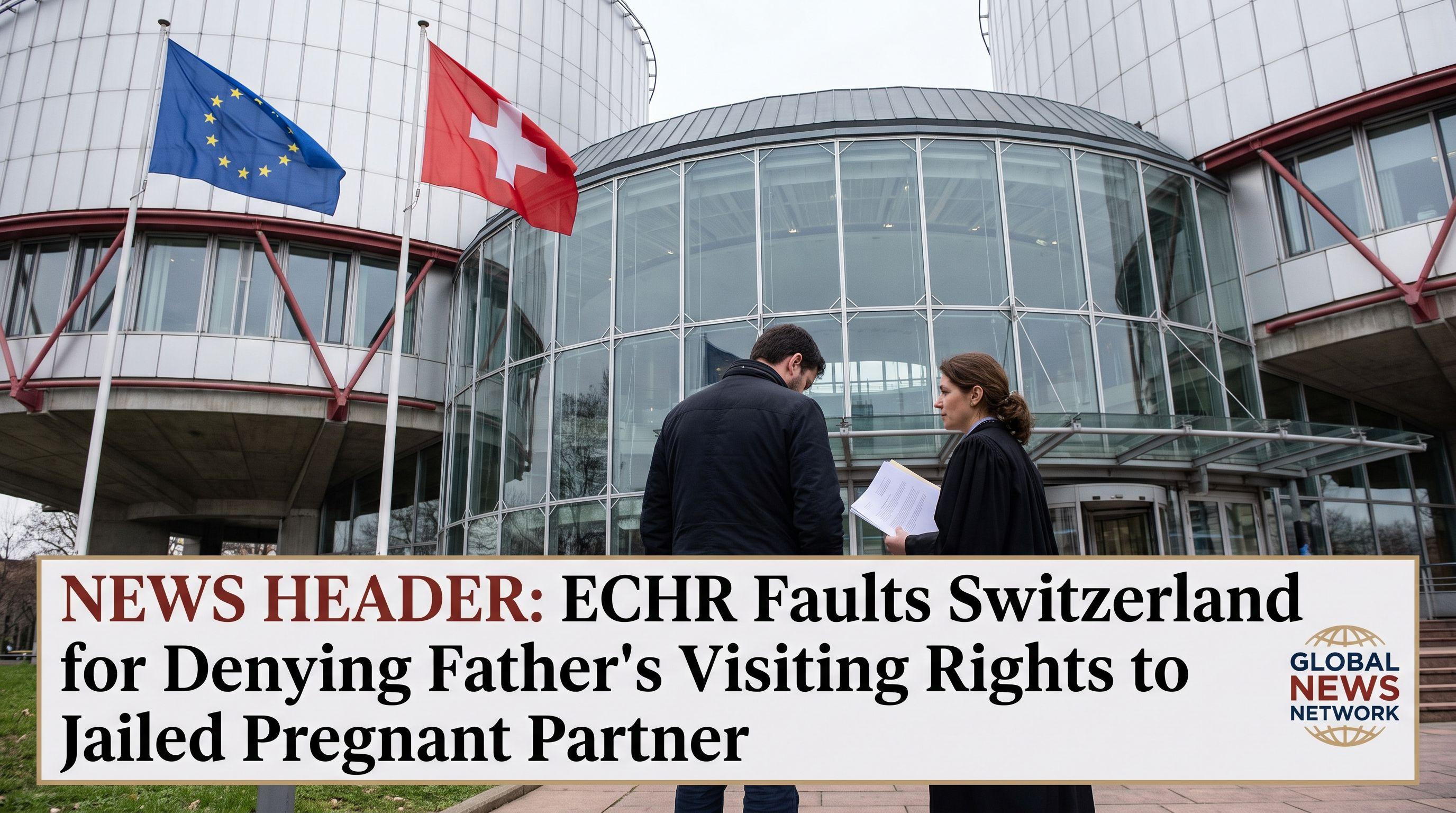
Strasbourg Slaps Switzerland with Human Rights Violation
Switzerland stands rebuked on the international stage as the European Court of Human Rights (ECHR) delivers a stinging indictment of the nation’s judicial conduct. In a definitive ruling released Thursday, the Strasbourg-based court declared that Swiss authorities flagrantly violated Article 8 of the European Convention on Human Rights. This is not a mere procedural hiccup; it is a fundamental breach of the right to respect for private and family life. The case centers on a Spanish national, born in 1994, who was held in pre-trial detention in the canton of Vaud back in 2019. While she sat behind bars on suspicion of drug offenses, she was also carrying a child—a fact that Swiss officials seemingly treated as secondary to the rigid mechanics of the state. The ECHR’s decision sends a clear message: even within the walls of a prison, the sanctity of the family unit is not a privilege to be granted, but a right to be protected. This ruling marks a critical moment for Swiss jurisprudence, forcing a confrontation between national security protocols and basic human dignity.
Vaud’s Iron Fist Crushes Family Rights
Authorities in Vaud wielded the law like a blunt instrument, denying a father-to-be the right to see his pregnant partner or even witness the birth of his child. The justification? A trifecta of standard legal shields: the risk of absconding, the danger of collusion, and the threat of reoffending. However, the ECHR found these arguments insufficient to justify the total severance of family ties. While the woman was remanded in custody, the state effectively erased the father from the narrative of his child's entry into the world. This aggressive stance by the Vaudois courts highlights a chilling disconnect between administrative caution and human reality. By prioritizing the theoretical risk of 'collusion' over the tangible necessity of a father’s presence, the Swiss legal system failed to balance its investigative needs with its humanitarian obligations. The court’s ruling exposes a systemic tendency to over-rely on detention restrictions, often at the expense of the very values Switzerland claims to champion on the global stage.
The Price of Injustice: Compensation and Collusion
The cost of this judicial failure is now tallied in both currency and reputation. Switzerland is ordered to pay exactly €1,730—roughly CHF 1,606—in compensation for the pain and suffering inflicted upon the complainant. While the figure may seem modest to a wealthy state, the symbolic weight is staggering. This payment serves as a formal admission of a state-sponsored grievance. The ECHR’s intervention underscores a growing intolerance for the 'collusion' excuse when used to justify extreme isolation. In this instance, the state’s fear that a father might help a mother flee or tamper with evidence was deemed an overreach that lacked proportionality. This ruling forces a recalculation of how Swiss prosecutors manage high-stakes cases. No longer can the 'risk of flight' be used as a blanket justification to strip away the rights of the unborn and their parents. The financial penalty is a minor sting, but the legal precedent is a seismic shift that will reverberate through the halls of Swiss justice for years to come.
A Pattern of Judicial Overreach
This is not an isolated incident, but rather the 140th time since 1974 that the ECHR has rapped Switzerland’s knuckles. From surname regulations to asbestos claims, the Swiss state has a documented history of friction with European human rights standards. This latest ruling regarding prison visiting rights adds a new, urgent chapter to that history. It challenges the Swiss perception of their own legal exceptionalism. As the country grapples with this verdict, the implications for future pre-trial detentions are massive. Prosecutors must now provide more than just boilerplate warnings of 'collusion' to deny family access; they must prove that such restrictions are absolutely necessary and proportional. This decision is a victory for the European Convention, but a wake-up call for Bern and Lausanne. As Switzerland moves forward, the pressure to align its cantonal practices with international human rights law has never been more intense. The eyes of Strasbourg are watching, and the standard for 'family life' has just been raised significantly.