UBS
UBS Fined $145 Million by US Regulators for Anti-Money Laundering Failures
Swiss banking giant UBS has been hit with a $145 million fine in the United States for repeated failures in its anti-money laundering controls between 2019 and 2023. US authorities described the bank as a 'repeat offender,' with FinCEN imposing its largest-ever penalty on a broker-dealer.
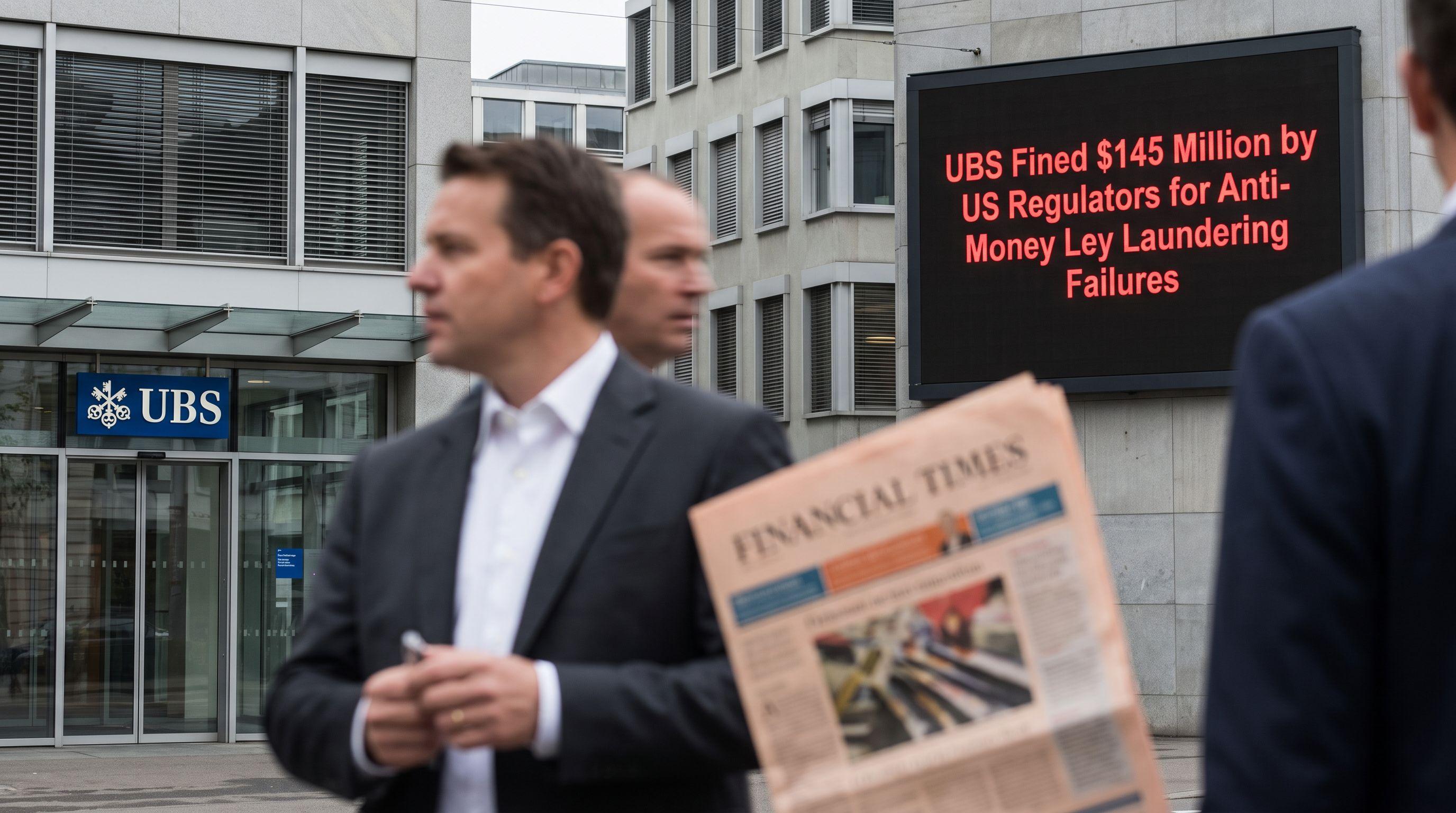
UBS Reeling Under Record-Breaking US Penalties
A staggering $145 million fine now hangs over UBS as US regulators deliver a crushing blow to the Swiss banking giant. This isn't just a slap on the wrist; it is a definitive statement of zero tolerance. On Monday, the US money laundering regulator FinCEN and the Securities and Exchange Commission (SEC) coordinated a dual-pronged assault on the bank’s American subsidiary, UBS Financial Services Inc. The $125 million portion of the fine represents the highest penalty ever imposed on a broker-dealer for breaches of the Bank Secrecy Act, signaling a dramatic escalation in regulatory enforcement. While the bank grapples with the fallout, the sheer scale of the $145 million (CHF 117 million) total penalty highlights a systemic inability to police its own corridors. The failures, spanning from 2019 to 2023, suggest that the world's largest wealth manager has been operating with a blind spot that US authorities are no longer willing to ignore. This development sends shockwaves through the Zurich Paradeplatz, forcing a reckoning for a bank that is supposed to be the gold standard of global finance.
FinCEN Cracks Down on Systemic Compliance Failures
More than four years of negligence have finally caught up with UBS. Between 2019 and 2023, the bank repeatedly failed to report suspicious transactions within the legally mandated timeframes, creating a vacuum where illicit finance could potentially thrive. FinCEN’s $125 million civil fine exposes a culture of compliance lethargy that has persisted despite previous warnings. In contrast to smaller, one-off errors, these were described as persistent and systemic failures. The SEC added its own $20 million weight to the penalty, focusing on the bank's inability to maintain the rigorous standards required of a top-tier broker-dealer. This double-tap from US authorities underscores a critical vulnerability: even the most sophisticated financial institutions can fall victim to their own bureaucracy. The bank’s internal controls did not just fail; they crumbled under the weight of modern regulatory expectations. As the SEC and FinCEN peel back the layers of these reporting lapses, the industry is left wondering how many other 'suspicious' movements went unnoticed while the bank’s systems remained dormant.
Repeat Offender Status Rattles Investor Confidence
UBS has been explicitly branded a 'repeat offender' by US authorities, a label that carries devastating weight in the halls of international finance. This isn't the bank's first rodeo with American regulators, but the 'repeat offender' designation suggests a worrying pattern of behavior rather than isolated incidents. When a financial institution of this magnitude is labeled as such, it triggers a crisis of confidence that extends far beyond the immediate $145 million cost. Investors now confront the reality that UBS’s risk management framework may be fundamentally flawed. While the bank may attempt to frame this as a legacy issue, the timeline—extending into 2023—proves that these problems are contemporary and urgent. The market reacts poorly to uncertainty, and the 'repeat offender' tag ensures that every UBS transaction will now be viewed through a lens of heightened suspicion. This reputational damage could prove far more expensive than the fine itself, as the bank struggles to prove it can be trusted to police the billions of dollars flowing through its accounts daily.
Swiss Banking Sovereignty Faces Global Scrutiny
Switzerland’s financial reputation is once again on the line as its flagship bank falters on the global stage. This massive US fine serves as a stark reminder that Swiss banks no longer operate in a vacuum; they are subject to the iron fist of international regulators who demand absolute transparency. The $145 million penalty is a loud wake-up call for the Swiss Financial Market Supervisory Authority (FINMA) and other domestic bodies to tighten their own grip. As UBS absorbs this blow, the broader implications for the Swiss banking sector are clear: adapt or face obsolescence. The era of 'business as usual' is dead. Moving forward, UBS must demonstrate an unprecedented commitment to reform if it hopes to shed its 'repeat offender' status. This case will likely serve as a catalyst for even stricter oversight within Switzerland, as the nation moves to protect its status as a premier financial hub. The world is watching, and the cost of failure has never been higher. UBS must now navigate a treacherous path toward redemption, where every transaction is a test of its integrity.