Weather
Switzerland on Course for Record-Breaking Hot Summer
The summer of 2026 is shaping up to be at least as hot as the record-breaking summer of 2003, according to MeteoSwiss. The Federal Office of Meteorology and Climatology stated that the current conditions should be classified as exceptional, with some weather stations already exceeding 2003's number of hot days.
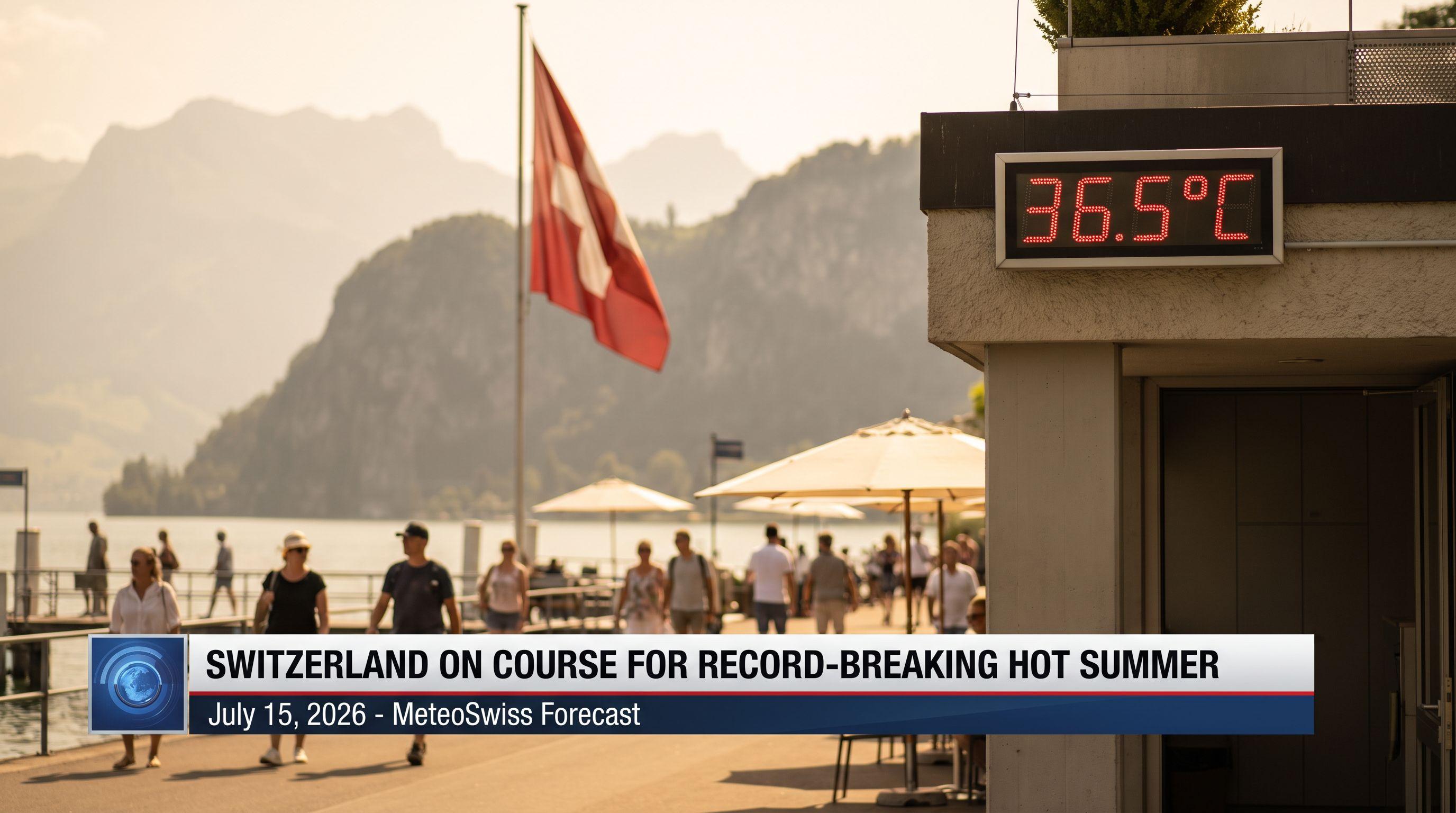
Shattering the 2003 Benchmark
Switzerland is currently rewriting its climate history as the summer of 2026 surges past the catastrophic benchmarks set in 2003. July 2026 now stands as the hottest month ever recorded in Swiss history, a staggering achievement that has left meteorologists at MeteoSwiss stunned. While 2003 was once considered a once-in-a-century outlier, the current data suggests that extreme heat is no longer the exception—it is becoming the rule. In a dramatic shift from previous patterns, record-breaking daily maximums were already being smashed as early as June. Several measuring stations across the plateau and alpine valleys report that the number of 'hot days' has already surpassed the totals seen during the entire legendary heatwave of two decades ago. This is not just a warm spell; it is a fundamental shift in the Swiss climate profile. As the mercury consistently hovers around the 30°C threshold, the nation confronts a reality where the cool alpine refuge of the past is rapidly evaporating. The sheer velocity of this warming trend indicates that 2026 will likely be crowned the warmest year since records began in 1864.
A Nation Under Fire
The Swiss landscape is currently a tinderbox, with 'Very High' wildfire alerts gripping five major cantons including Zurich and Geneva. The risk of forest fires has reached a critical tipping point, forcing authorities to implement stringent restrictions on outdoor activities. While Switzerland has historically prided itself on its lush, green vistas, the 2026 heatwave has turned the Jura and Valais regions into high-risk zones. The Federal Office of Meteorology and Climatology warns that the interconnectedness of the heat and the prolonged lack of moisture has created a perfect storm for environmental disaster. Even as the country assists its European neighbors in battling blazes, the domestic threat looms larger than ever. The situation is so severe that official cooperation mechanisms are being tested to their limits. Firefighters remain on high alert, grappling with a landscape that has been baked dry by months of unrelenting sun. This is no longer just a matter of discomfort; it is a direct threat to the Swiss ecosystem and the safety of its residents. The iconic Swiss forests, essential for avalanche protection and biodiversity, now face their most significant challenge in modern history.
The Drought Paradox
Do not be fooled by the occasional August thunderstorm; Switzerland’s drought is far from over. Experts warn that the current weather pattern presents a dangerous paradox: while rainfall is expected to increase slightly, it will likely do more harm than good. For the parched Swiss soil to truly recover, it requires several consecutive days of light, steady rain. Instead, the forecast predicts short, intense bursts of precipitation. When water hits soil this hard and dry, it cannot be absorbed; instead, it creates significant surface runoff, leading to localized flooding without alleviating the underlying water deficit. This 'flash drought' scenario means that even as citizens see rain, the groundwater levels and agricultural sectors continue to suffer. The soil has become so hydrophobic from the heat that it effectively rejects the very lifeblood it needs. MeteoSwiss remains pessimistic about a quick resolution to the water crisis. Farmers across the Mittelland are watching their crops wither, while the Rhine's water levels continue to plummet, threatening the vital shipping arteries that the Swiss economy relies upon. The transition from heatwave to 'normal' conditions will be a slow, agonizing crawl rather than an abrupt relief.
Adapting to the New Normal
As Switzerland moves into the latter half of August, the immediate intensity of the heatwave may subside, but the long-term implications are permanent. Temperatures are expected to moderate slightly, finally dipping below the 30°C mark after weeks of punishing heat. However, MeteoSwiss is clear: we will remain well above seasonal norms. This summer has proven that the 'exceptional' events of the past are the standard of the future. The Swiss Confederation must now confront a reality where its glaciers are retreating at double-speed and its urban centers must be redesigned for heat resilience. From the streets of Zurich to the peaks of Graubünden, the infrastructure of the country is being tested by a climate it was never built to withstand. The 2026 record-breaker serves as a final wake-up call for policy makers and citizens alike. While the heat may gradually fade this month, the urgency of climate adaptation has never been more pressing. Switzerland is no longer just observing climate change from its peaks; it is living it in every valley and city square. The question is no longer when the heat will end, but how we will survive the next one.