Technology
Switzerland's Growing Role as an AI Hub Faces Neutrality Questions
As tech giants like Google and Anthropic expand their artificial intelligence research in Switzerland, the country is solidifying its position as a global AI talent hub, while also navigating concerns that its military neutrality could impact access to international defence markets.
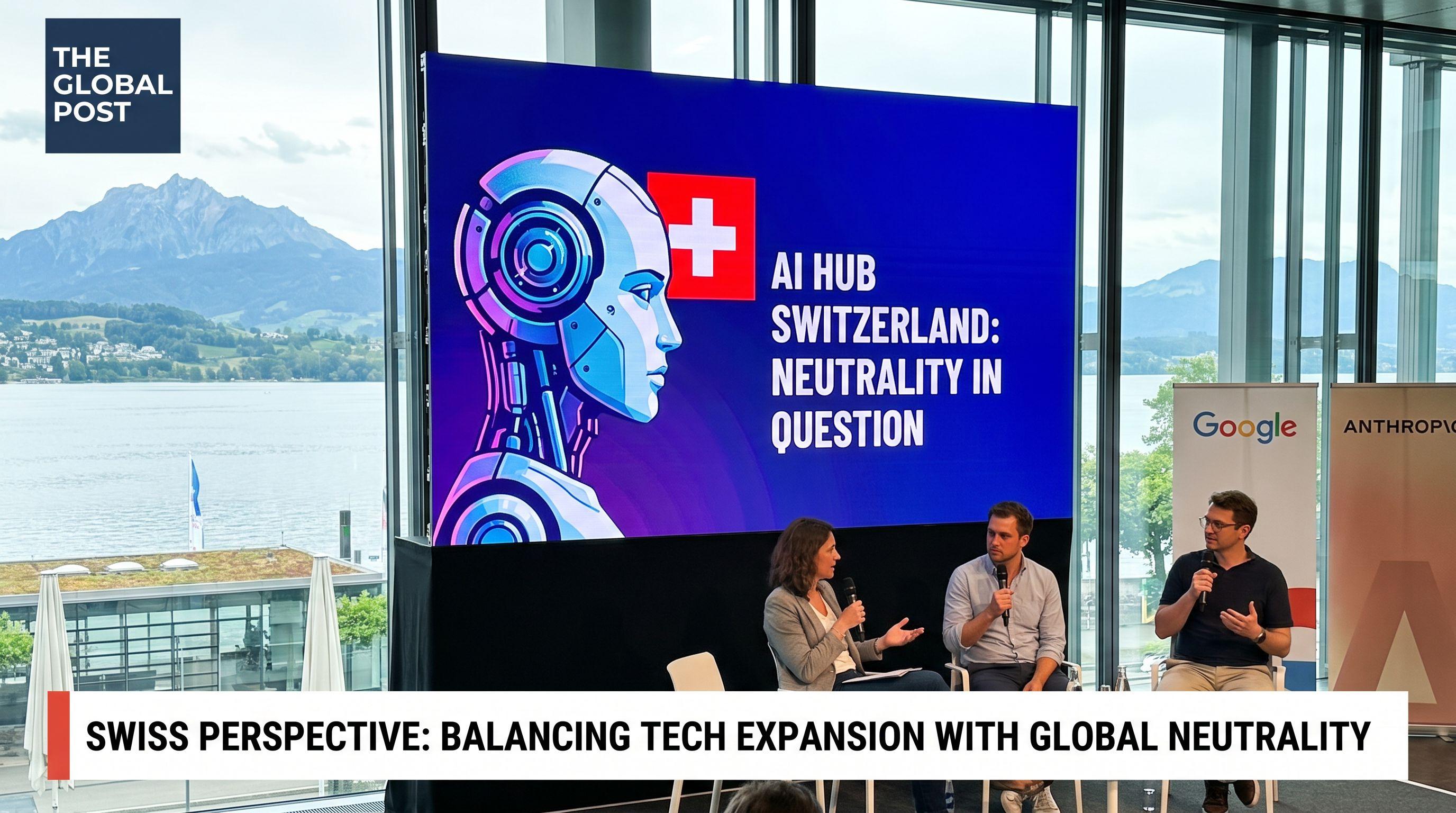
Switzerland Claims the Global AI Throne
Switzerland is no longer just the world's bank; it is officially the world's AI brain. A staggering 110 AI researchers and inventors now exist for every 100,000 Swiss inhabitants, a figure that crushes the competition and cements the Alpine nation as the densest concentration of machine learning talent on the planet. While the United States and China engage in a loud, fractious arms race, Switzerland has quietly recruited a talent pool that is, relative to its population, twice as large as that of the US or the UK. This isn't a gradual shift; it is a seismic takeover. In less than 24 months, industry titans like OpenAI, Anthropic, and Jeff Bezos’s Prometheus venture have aggressively expanded their footprints here. The message is clear: if you want to build the future of intelligence, you do it on Swiss soil. This influx of high-capital research entities is transforming the national economy into a high-octane engine of innovation that shows no signs of slowing down.
The Neutrality Magnet: A Strategic Safe Haven
Neutrality is Switzerland’s ultimate competitive advantage in an increasingly polarized world. As the US-China rivalry threatens to tear the global tech supply chain apart, Switzerland’s non-partisan stance offers a unique 'Switzerland of Data' sanctuary. Alexandre Meldem of the Deep Tech Nation Switzerland Foundation asserts that this political neutrality is far more than a diplomatic relic—it is a strategic asset for frontier technology firms. By remaining outside the direct fray of superpower conflicts, Swiss-based labs can collaborate across borders that are increasingly closed to others. This 'safe haven' status has turned the country into a magnet for investment, as corporations seek a stable environment free from the volatile swings of international sanctions and trade wars. In 2025 alone, the opening of the European Space Deep-Tech Innovation Centre (ESDI) proved that even major international agencies view Switzerland as the most reliable ground for long-term deep-tech development.
The Double-Edged Sword of Military Impartiality
However, this same neutrality now confronts a brutal reality: the line between civilian and military AI has vanished. The 'double-edged sword' of Swiss policy means that while neutrality attracts talent, it simultaneously threatens to lock Swiss firms out of the lucrative global defense market. As consumer drones are weaponized in Ukraine and Iran, the Swiss government grapples with how to regulate 'dual-use' technologies without stifling innovation. Strict export controls on anything that could be used in armed conflict raise a critical question: Can a Swiss AI company ever become a global defense powerhouse? The risk of being sidelined from international security contracts is real and growing. Industry insiders worry that if Swiss-made algorithms are deemed 'too neutral' to be exported for defense, the country might hit a glass ceiling in its technological expansion. The very policy that built the hub could eventually limit its reach.
Zurich's Silicon Valley Ascent
Zurich has emerged as the undisputed epicenter of this technological revolution. The city is a powerhouse of intellectual capital, anchored by ETH Zurich—one of the world's premier science and technology institutes. This cluster of academic excellence and corporate muscle has created a self-sustaining ecosystem that rivals Silicon Valley in quality, if not yet in sheer scale. The density of large tech corporations in Zurich is now arguably higher than anywhere else in the world. This isn't just about big names; it's about the 'cluster effect' where startups, venture capitalists, and researchers feed off each other’s proximity. The 2026 Stanford AI Index Report highlights this unprecedented concentration, showing that Switzerland is punching far above its weight class. For the Swiss people, this means a surge in high-paying jobs and a fundamental shift in the nation's identity from a financial hub to a digital superpower.
Navigating the New Geopolitical Frontier
The future of Switzerland depends on its ability to navigate a world where technology is the new currency of power. As the country solidifies its role as a global AI hub, it must decide whether to double down on its tradition of openness or succumb to the pressures of isolationism. The stakes could not be higher. If Switzerland successfully balances its neutrality with the demands of the international defense and security markets, it will remain the world's most influential tech laboratory. If it fails, it risks becoming a high-tech island, rich in talent but disconnected from the global security architecture. The coming years will determine if the Swiss model can survive the 'AI arms race' intact. One thing is certain: the world is watching Switzerland, not for its watches or its chocolate, but for the algorithms that will define the next century of human progress.