Economy
Swiss Tourism Sector Faces Headwinds as Hotel Stays Decline for Fourth Consecutive Month
The Swiss hotel industry has reported a fourth straight month of declining overnight stays, primarily driven by a significant drop in visitors from Asia. This article explores the economic impact on the tourism sector and analyzes the trends behind the fall in foreign guests.
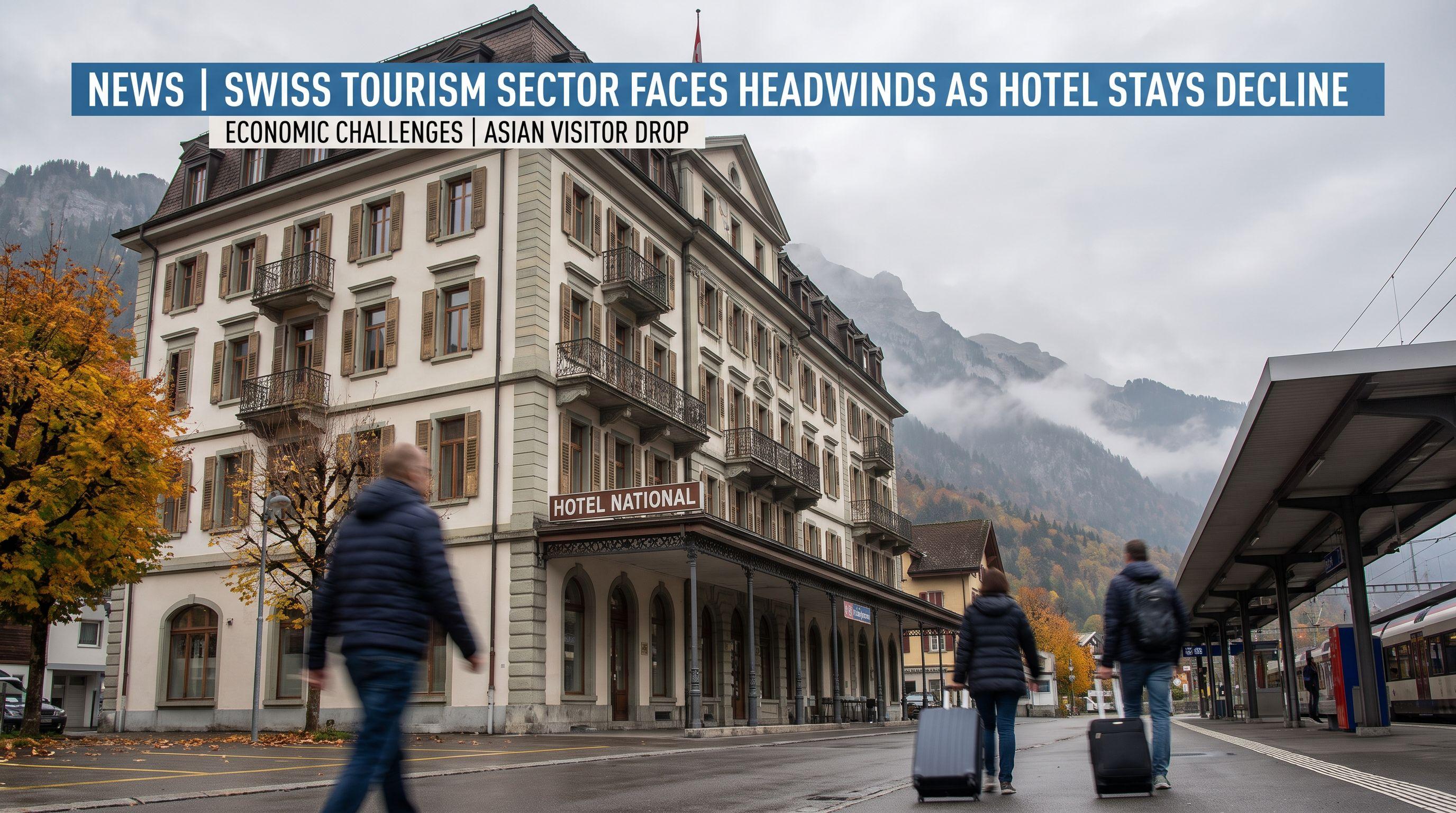
Swiss Hospitality Grapples with Four-Month Slump
The Swiss hotel industry is confronting a sobering reality as overnight stays plummeted by 2.2% in June 2026, marking the fourth consecutive month of contraction. This downward spiral shatters the momentum of what began as a promising year, signaling a critical cooling period for one of the nation's most vital economic engines. While the Federal Statistical Office (FSO) had anticipated this dip in initial estimates, the confirmation of a sustained four-month decline sends a clear message: the post-pandemic travel boom is facing a significant correction. The industry, which seamlessly transitioned from a record-breaking 2025 into a strong start in early 2026, now finds itself navigating choppy waters. This isn't just a statistical blip; it is a trend that demands immediate attention from stakeholders across the Confederation. The luxury and mid-tier sectors alike are feeling the pinch as the 'no-show' phenomenon becomes a recurring monthly headline.
Asian Markets Plummet as Indian and Gulf Travelers Retreat
A staggering 19% collapse in visitors from Asia has sent shockwaves through the tourism sector, exposing a growing vulnerability in Switzerland's international appeal. The data is nothing short of alarming: overnight stays from Indian tourists have cratered by 34%, while visitors from the high-spending Gulf states have retreated by 30%. Even the traditionally robust Chinese market saw a 7.4% decline. These regions represent the lifeblood of Switzerland's luxury retail and hospitality ecosystem. When these guests disappear, they take with them significant purchasing power that domestic travelers simply cannot replace. In contrast, the European and American markets remained relatively stable, showing only marginal decreases of 0.3% and 0.1% respectively. The disparity is jarring. Switzerland is currently losing its grip on the Eastern traveler, a demographic that has historically viewed the Swiss Alps as the ultimate status destination. This regional exodus suggests that global economic shifts or changing travel preferences are redirecting Asian capital elsewhere.
Domestic Resilience Fails to Offset Foreign Exodus
Foreign guest stays have fallen by a critical 4.6%, a gap that local Swiss travelers are unable to bridge despite a modest 0.7% uptick in domestic stays. While the Swiss are increasingly choosing to vacation within their own borders, their increased presence is a mere drop in the bucket compared to the massive loss of international volume. This creates a stark tension within the industry: hotels must now decide whether to pivot their marketing toward the 'staycation' crowd or double down on reclaiming their lost international prestige. The domestic market's resilience is a silver lining, but it lacks the scale to sustain the infrastructure built for a global audience. The statistics highlight a fundamental shift—while the Swiss still love their mountains, the world's most affluent travelers are looking elsewhere. This imbalance threatens the profitability of mountain resorts and urban luxury hubs that rely on the high-volume, high-spend foreign visitor to maintain their margins.
Economic Crossroads: From Record Highs to Uncertain Horizons
Switzerland now stands at a pivotal economic crossroads after the record-breaking performances of 2025 were abruptly halted in March 2026. The industry is no longer riding the wave of the previous year's success; it is now in a defensive crouch. With the FSO set to release final absolute figures on August 4, hoteliers and economists are bracing for a reality check that could redefine the strategy for the upcoming winter season. The implications are profound: if the decline continues into the third quarter, it could trigger a reassessment of Swiss tourism's pricing power and its competitive position in a global market. The 'Swiss Brand' remains prestigious, but prestige alone is no longer filling rooms. The sector must now confront whether this is a temporary cooling or a structural shift in how the world consumes Swiss luxury. One thing is certain—the era of effortless growth has ended, and the battle for every overnight stay has begun in earnest.