industry
Swiss Steel announces more German job cuts amid industry crisis
Swiss Steel plans further restructuring and job cuts at its German sites after already halving its workforce. The article will look at the company’s dependence on the German automotive sector and the wider pressure on European steelmaking.
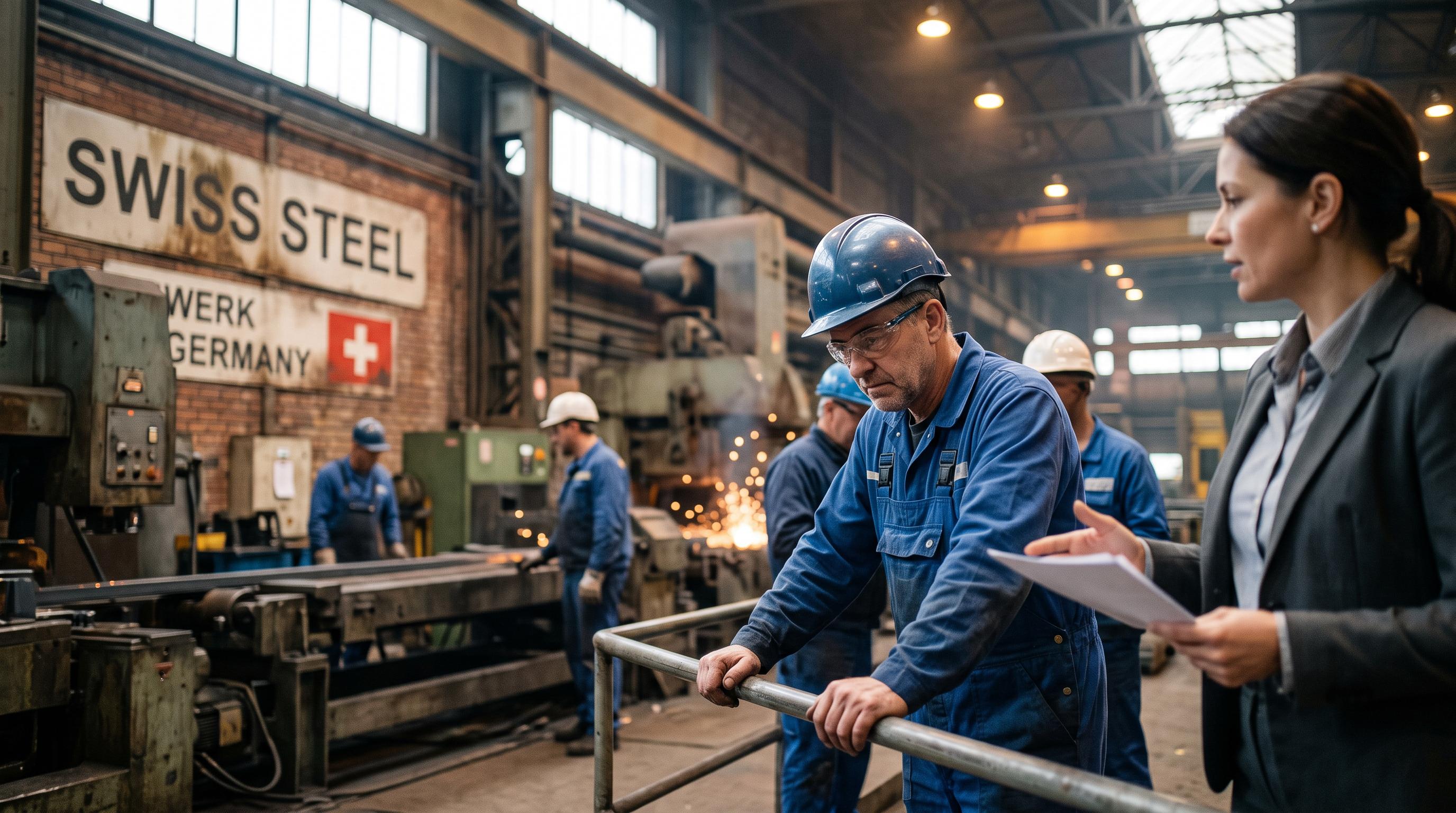
Swiss Steel Targets German Sites Again
Swiss Steel will cut more jobs at its German sites, adding a new round of restructuring to a workforce reduction that has already removed half of the company’s employees. CEO Frank Koch announced the plans in an interview with the SonntagsZeitung, but gave no figure for the number of positions affected.
The announcement places Germany at the centre of Swiss Steel’s effort to adjust to a sharply contracted market. The company supplies steel to industrial customers and remains heavily exposed to the German automotive sector. Koch said the restructuring would make that dependence “significantly lower once again”.
Swiss Steel has reduced its workforce from 13,000 employees to 6,500. The further changes will focus on production sites in Germany and are intended to help them return to operating profit. The company also plans to examine its balance sheet, although it has not released details about that process.
Koch said Swiss Steel aims to return to operating profitability from 2028. By then, he expects the group to be smaller and more focused. The immediate impact on German workers remains unclear because management has not published a timetable, site-by-site breakdown or consultation details.
German Car Demand Shapes the Cutbacks
Swiss Steel’s workforce has fallen by 6,500 employees, according to Koch, who described the reduction as part of a broad effort to resize the group. The company now plans further changes at its German operations, where its exposure to the automotive industry has become a strategic vulnerability.
German carmakers are an important customer base for the European steel industry. When vehicle production slows or manufacturers reduce orders, steel suppliers feel the impact through lower volumes and pressure on prices. Swiss Steel has not published a breakdown showing how much revenue comes from automotive customers, so the precise financial effect of that dependence cannot be measured from the company’s latest announcement.
Koch said the production sites must be reorganised to make operating profits in a smaller market. That points to a restructuring focused on capacity, product mix and the alignment of plants with available demand. The company has not said which facilities will be affected or whether the planned cuts will involve closures, transfers or changes in working hours.
For employees and local communities, the lack of figures leaves the scale of the next phase uncertain. Swiss Steel’s statement confirms the direction of travel, while the operational details are still to come.
Europe’s Steel Market Tightens
European steelmakers are operating in a market Swiss Steel describes as sharply contracted. Its German restructuring comes as the company faces the wider pressures affecting steel production across Europe, including weaker industrial demand and tougher conditions for cross-border trade.
Swissinfo.ch has separately reported that stricter European Union rules on steel imports are affecting Switzerland. Those measures matter to Swiss producers because Switzerland is closely integrated with European supply chains, even though it is outside the EU. Changes to tariffs, import safeguards and market access can influence the cost and availability of steel for manufacturers on both sides of the border.
The source material does not attribute Swiss Steel’s job cuts to one specific EU measure. Koch’s comments instead link the company’s response to the contracted market and its dependence on German automotive customers. The group is seeking a production structure that can earn an operating profit at lower volumes.
That adjustment carries consequences beyond company accounting. Steel plants support skilled industrial employment and regional supplier networks. Yet Swiss Steel has not disclosed the locations, jobs or investment plans involved in the next phase. Until it does, the effect on individual German regions and Swiss-linked operations cannot be assessed precisely.
Koch Sets a 2028 Profitability Target
Swiss Steel has set 2028 as its target for a return to operating profitability. Koch said the company would be “significantly smaller and more focused” by that point, signalling that management sees a permanent change in the group’s scale rather than a short-term adjustment.
The next step includes further restructuring at German production sites and a balance sheet restructuring. Swiss Steel has not disclosed the financial measures under consideration, the amount of any liabilities involved or whether new capital will be required. It has also not provided a schedule for the German job cuts.
Those unanswered points will shape the consequences for workers, suppliers and customers. A plant reorganisation can involve changes to product lines, shifts, staffing levels and investment priorities. Without site-level information, it is not possible to determine whether the planned measures will concentrate production, remove capacity or reposition the business toward less automotive-dependent customers.
For Switzerland, the announcement is another sign of the pressure facing an industrial sector tied to European demand. Swiss Steel’s stated objective is clear: restore operating profit in a smaller group. The path to 2028 will depend on the execution of the German restructuring, the strength of industrial orders and the company’s ability to diversify its customer base.