National Security
Swiss Security 'Worsening' Says Intelligence Chief, as Nation Seeks New Air Defence System
The Swiss Federal Intelligence Service has reported a deteriorating security situation, highlighting threats from espionage and global instability. Amid these concerns, Switzerland is actively negotiating with France, Israel, and South Korea to acquire a new long-range air defence system.
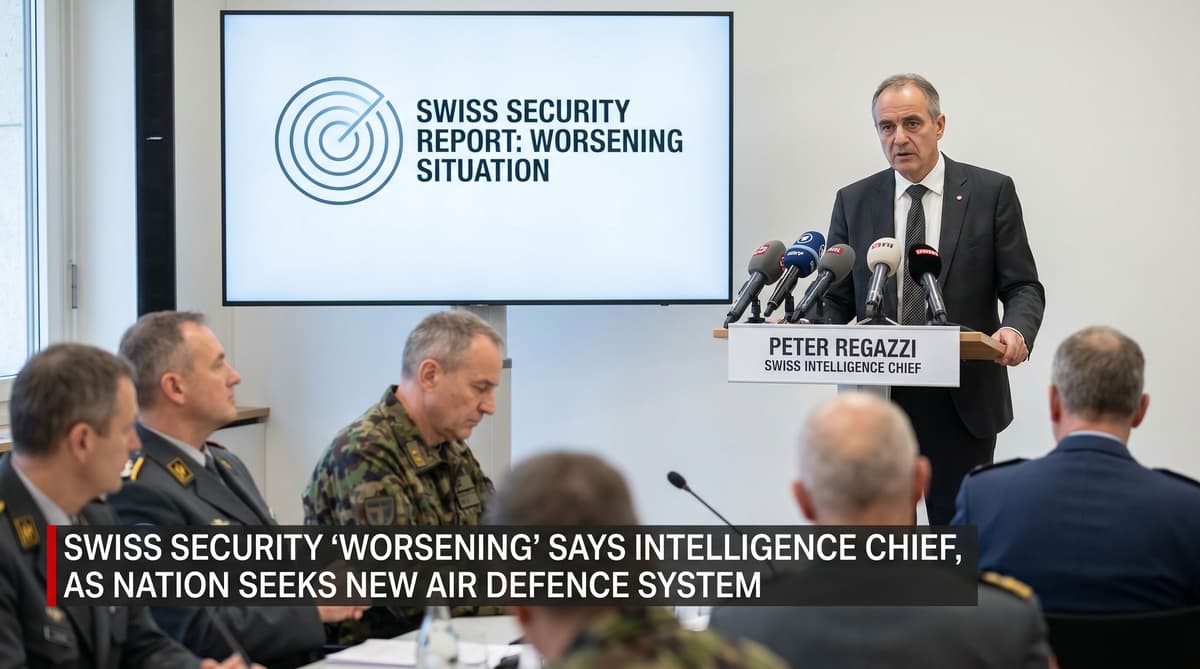
Switzerland’s protective environment is eroding from every direction. This stark warning from Federal Intelligence Service (SRC) Director Serge Bavaud signals a historic shift in the nation's security posture. The international order is undergoing a profound upheaval, leaving the Alpine stronghold vulnerable to global instability. For centuries, Switzerland relied on its neutral status as a geographic and political fortress, but that shield is thinning. Today, the SRC reports that threats are multiplying from the east, west, and south, forcing Bern to confront a reality where traditional neutrality no longer guarantees safety. The security situation has not just shifted; it has deteriorated further, reaching a critical tipping point that demands immediate and decisive action from the federal government.
The Patriot Trap: Navigating a Five-Year Defense Void
A staggering four to five-year delay in the delivery of US-made Patriot missile systems has left a gaping hole in the Swiss sky. While Bern ordered five systems in 2022 to secure its airspace, the timeline has shattered, with completion now pushed as far as 2028 or beyond. This logistical nightmare forced the Swiss government into a high-stakes game of financial chicken; payments were suspended last year in protest, only to be resumed now out of sheer necessity. Switzerland cannot afford to halt the acquisition without a replacement, yet the costs of waiting are soaring. In a controversial move, Washington even circumvented the Swiss payment freeze by diverting funds originally intended for F-35A fighter jets. This friction highlights the danger of over-reliance on a single superpower for national survival.
Espionage and Hybrid War: The Russian Shadow Over Bern
Dozens of suspected Russian intelligence officers are currently operating on Swiss soil, many hiding behind the veil of diplomatic cover. Moscow is actively waging a hybrid war, seeking to destabilize Western democracies through cyberattacks and sophisticated espionage. The SRC identifies Russia as the most immediate and potent threat to the Swiss Confederation. This is not a distant conflict; it is happening within the borders of Geneva and Bern. Beyond state actors, the specter of terrorism remains alarmingly high, fueled by online radicalization. The war in Iran has further spiked the likelihood of violence against Jewish or American targets within Switzerland. The nation is no longer a bystander to global conflict but a primary stage for shadow warfare.
Diversifying the Arsenal: The Race for New Alliances
Switzerland is now aggressively courting France, Israel, and South Korea to secure a secondary long-range air defence system. This pivot is a strategic masterstroke intended to break the 'single supplier' dependency that has left the nation's air defense in limbo. By initiating contract negotiations with these three powers, the Swiss Defense Ministry is signaling a move toward a more diversified and resilient military architecture. The goal is clear: rapid strengthening of defenses against long-range attacks. Meanwhile, the fleet of F-35A jets has been slashed from 36 to 30 as costs soar due to inflation and raw material prices. Switzerland is learning a hard lesson in the modern age—security requires not just money, but a complex web of global partnerships. The race to close the window of vulnerability is on, and the stakes for the Swiss people have never been higher.