Aargau
Fatal Swiss rave shooting reopens debate over event security
A fatal shooting at a rave in Aarau has prompted renewed debate over how much security event organisers and police can realistically provide.
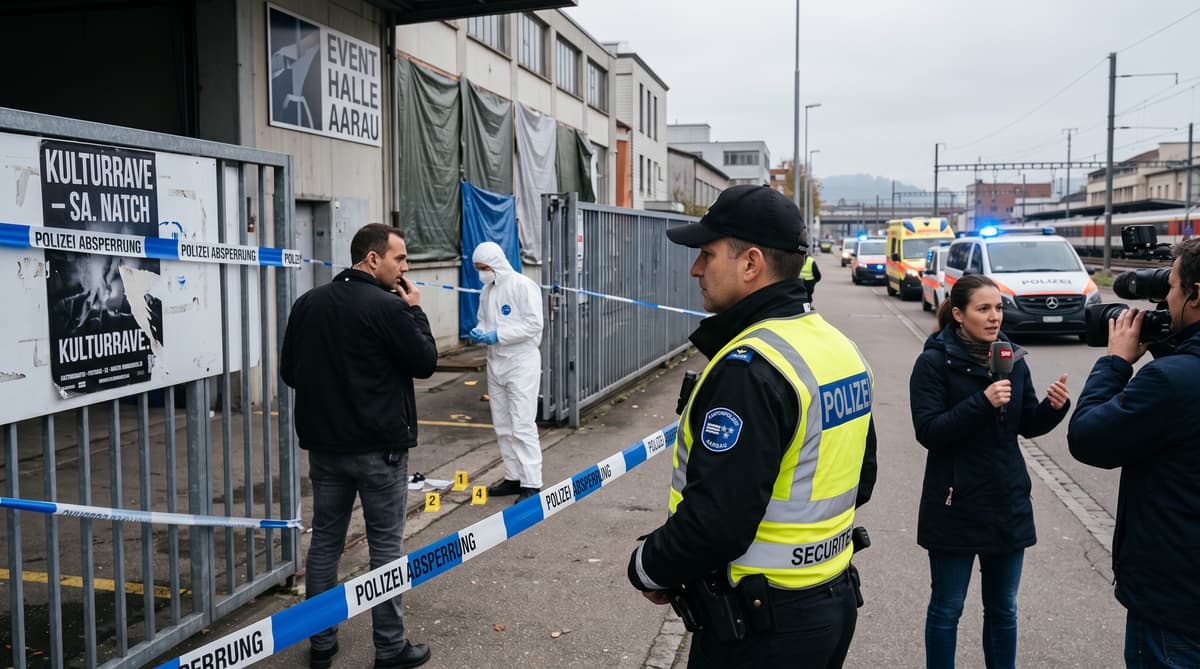
One woman is dead, five people are wounded and a 43-year-old Swiss man has been arrested. Those facts have shifted the Aarau rave shooting from a night of panic into a national debate over the limits of event security.
Shots rang out before 3:00 am on 30 August at the annual Aarauer Rave, held at the Aarau racetrack. About 3,500 people were attending the techno event, which ran from Saturday afternoon into Sunday morning. Partygoers fled the site, while many sheltered in a nearby gymnasium as police secured the area.
Aargau cantonal police said a 22-year-old woman died at the scene. Four men and one woman, aged between 24 and 27, were taken to hospital with injuries ranging from minor to serious. Police later arrested a 43-year-old Swiss man in connection with the shooting. An arrest does not establish guilt, and the investigation remains with the authorities.
The incident has pressed a difficult issue into public view: how organisers can protect thousands of people from a firearm attack, and where their responsibility ends.
Victims and community count the cost
The dead woman was identified by Italian officials as Maria Spinelli, a 22-year-old Italian national. Italy's foreign ministry said embassy officials had gone to the scene near Zurich to follow the investigation closely. Swiss Foreign Minister Ignazio Cassis called Italian Foreign Minister Antonio Tajani to offer his condolences.
Swiss police said all six victims were residents of Switzerland. Italy's foreign ministry added that two other Italian nationals were lightly injured. The details underline the cross-border character of large Swiss events, where residents and visitors from neighbouring countries gather in the same crowds.
The five wounded victims included four men and one woman, all aged between 24 and 27, according to Aargau police. Some suffered serious injuries. Medical teams and rescue workers responded as the site was sealed off and officers collected evidence and interviewed witnesses.
The human cost has also reached the music community. Swiss DJ Tekibo, who performed at the event, said he was physically unharmed but had lost a friend. His statement described raves as spaces intended for freedom and safety, a sentiment now shared by attendees, performers and organisers confronting the aftermath.
Organiser draws the security line
Olivier Grein says private security cannot provide the same protection as a major police operation. The head of Urban Agency Events, the rave organiser, told the Neue Zürcher Zeitung that an armed attack on a large crowd could only be prevented with a massive police presence.
Grein defended the decision not to use armed security personnel. He said organisers are responsible for security within the event area, while police are responsible for the surrounding public space. That division is familiar across Switzerland, where festivals, football tournaments and concerts rely on private stewards for access control, crowd management and first aid coordination, while cantonal and municipal police handle public order and criminal threats.
The distinction becomes harder to manage when an attack can affect both the venue and its perimeter. Police said shots were fired at the rave and from beside a trailer park, according to the initial reporting. The site included a large crowd, temporary infrastructure and roads leading away from the racetrack.
Grein said politicians now face pressure to review how authorities and organisers prepare for major public events, including questions around information sharing and privacy.