Archaeology
Roman Wall Linked to Emperor Tiberius Unearthed in Aargau
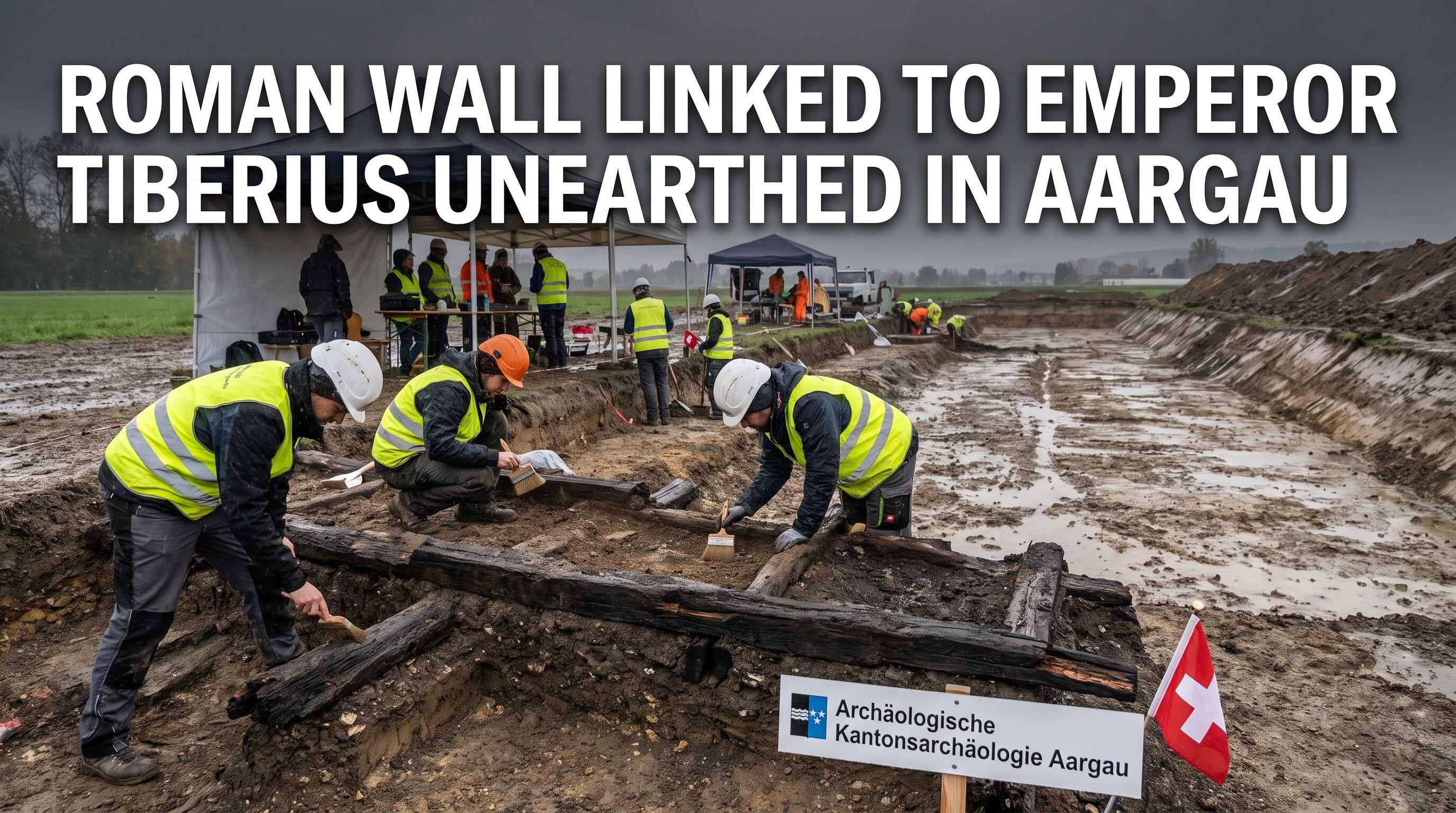
Archaeologists in Windisch, canton Aargau, have made a landmark discovery: a timber-and-earth wall from the first Roman military camp in Vindonissa, dating back to the reign of Emperor Tiberius. The find provides unprecedented insight into the early Roman presence in the region.
Aargau Unearths Imperial Secrets
History is surging back to life in Windisch as archaeologists confirm the discovery of a timber-and-earth wall linked directly to the reign of Emperor Tiberius. This isn't just a pile of dirt; it is the definitive footprint of the first Roman military camp at Vindonissa. Dating between 14 and 37 AD, this find shatters previous assumptions about the timeline of Roman expansion into the Swiss plateau. For 11 grueling months, a team of 20 specialists meticulously peeled back layers of soil on Zürcherstrasse, racing against modern development to document a site that has remained hidden for nearly two millennia. The discovery provides an unprecedented look at the Roman Empire's early strategic grip on the region, proving that Switzerland was a critical frontier long before the stone fortresses of the later legions were even a blueprint. This excavation, funded by a targeted special grant, represents a massive leap in our understanding of the Alpine transition from tribal territories to an imperial province.
Mapping the Tiberian Frontier
A staggering 70-metre gap separates this newly discovered timber wall from the later, more famous stone perimeter of Vindonissa. This distance is vital; it redraws the map of the early military occupation. The wall doesn't just sit there—it moves, turning north-west and revealing the precise geometry of the Tiberian-era moat for the first time in history. While later Roman architecture is often characterized by stone and mortar, this timber-and-earth construction speaks to the raw, pioneering urgency of the early Empire. The Aargau Cantonal Archaeology Department emphasizes that while the exact year remains elusive, the link to Tiberius is undeniable. This wall served as the primary shield for Roman interests in the north, a physical barrier between the disciplined legions and the untamed territories beyond. The sheer scale of the moat and wall system highlights the immense logistical effort the Romans poured into securing this specific Swiss corridor.
Daily Life in the Legionary Barracks
A massive barracks building, measuring 9 metres wide and stretching at least 30 metres long, offers a visceral look into the lives of the men who held the line for Rome. This was no temporary shelter; the structure featured regularly arranged rooms and anterooms, designed for efficiency and discipline. In the rubble layers surrounding the site, a wealth of coins spanning centuries was recovered, alongside evidence of a field smithy and a baking oven. Perhaps most sensational is the earlier discovery of a charred Roman loaf of bread—the first of its kind ever found in Switzerland. These artifacts transform Vindonissa from a cold military outpost into a living, breathing community. The presence of a smithy hearth inside an even older building suggests a 'pioneering period' where Roman engineers were working frantically to establish a foothold. From the smell of the forge to the taste of the flatbread, the excavation brings the sensory reality of the 1st century into the 21st.
From Ancient Hearth to Modern Heritage
The excavations are now complete, but the scientific impact is only beginning to be felt across Switzerland. As a new building prepares to rise on Zürcherstrasse, the data harvested from this site ensures that the Roman legacy is preserved in the digital and academic record. Switzerland continues to prove itself as an archaeological gold mine, aided by high-resolution radar scans and a national commitment to heritage. The wealth of finds, ranging from the 1st to the 4th century AD, demonstrates that Vindonissa was not a static fort but a dynamic hub of activity for over 300 years. This discovery cements Aargau's status as a central pillar of European Roman history. For the Swiss people, it is a reminder that beneath the bustling streets of modern towns like Windisch lies a complex, imperial past that helped shape the very foundations of the continent. The focus now shifts from the trenches to the laboratory, where the full story of Tiberius’s Swiss frontier will be written.