Partners Group
Partners Group exits Taiwanese bubble tea investment
Partners Group is exiting its private-credit investment in Taiwanese bubble tea chain Gong cha after Bain Capital acquired the company. The Swiss firm will be fully repaid on financing and its minority equity stake, although the investment returns were not disclosed.
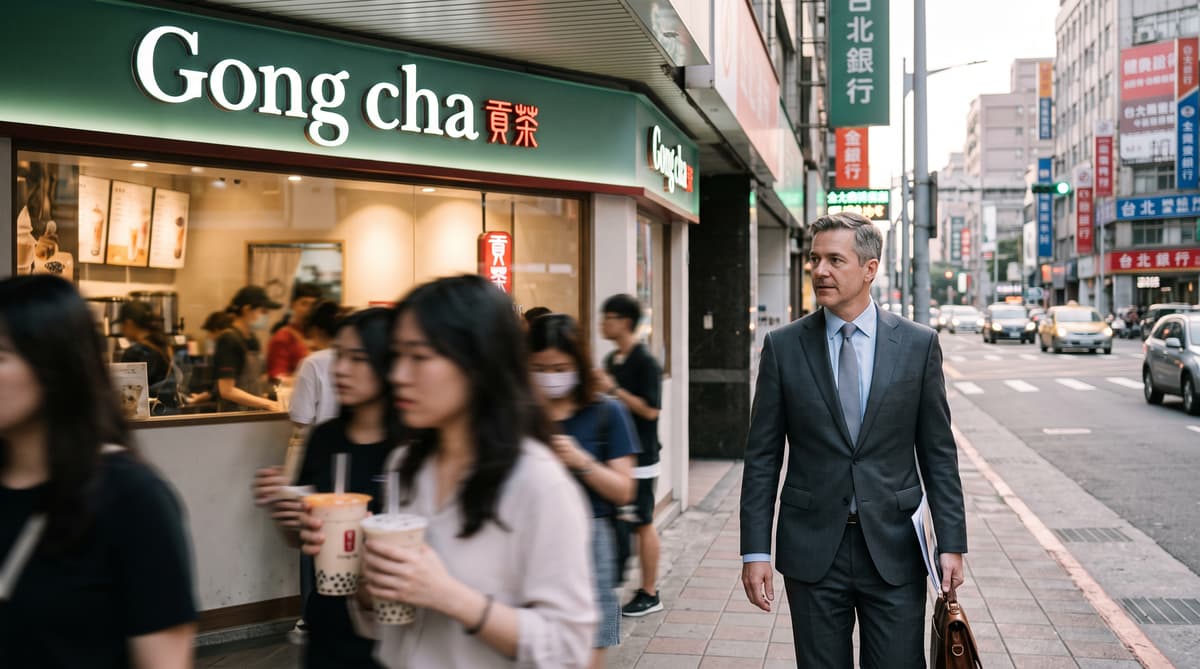
Partners Group is pulling the plug on its Gong cha investment just as Bain Capital takes control of the Taiwanese bubble tea chain. The Swiss asset manager has entered an agreement to be fully repaid on the financing it provided to Gong cha and on its minority equity stake, according to a document seen by Bloomberg. The transaction closes a seven-year chapter that began when Partners Group backed TA Associates’ acquisition of the fast-growing brand in 2019.
The deal mattered because it combined two very different forces: Switzerland’s expanding private-credit industry and Asia’s consumer-driven growth story. Partners Group supplied a financing package worth more than $200 million, while also taking an equity position in the company. Bain’s purchase from TA Associates now gives the Swiss firm a clean exit.
The crucial number remains under wraps. Partners Group has not disclosed its investment return, leaving investors without a public measure of how much value the Gong cha bet created. What is clear is that the exit arrives as Swiss capital hunts for opportunities beyond the United States—and as Asia’s private-credit market enters a more demanding phase.
A $200 Million Financing Bet, With the Returns Still Hidden
The original bet topped $200 million, but its payoff stays confidential. In 2019, Partners Group assembled a financing package of more than $200 million to support TA Associates’ purchase of Gong cha. The Swiss firm also secured a minority equity stake, giving it exposure not only to lending returns but also to the brand’s potential growth.
That structure reflects the hybrid tactics increasingly used by private-credit investors. Rather than relying solely on interest payments, lenders can pair financing with equity participation, creating an additional route to returns if a company expands or changes hands. In Gong cha’s case, Bain Capital’s acquisition provides the trigger for Partners Group’s repayment and departure.
However, the transaction offers no public verdict on performance. The returns have not been disclosed, and the available information does not identify the value assigned to either the financing or the equity stake at exit. For Swiss investors watching the sector, that opacity is a reminder of private markets’ central trade-off: access to negotiated opportunities, but far less day-to-day transparency than listed assets. The financial result may remain private even as the deal sends a public signal about Partners Group’s regional strategy.
Asia’s $1.8 Trillion Credit Arena Enters a Tougher Cycle
Asia-Pacific is still a small slice of a staggering $1.8 trillion global private-credit market. That imbalance explains both the opportunity and the pressure facing firms such as Partners Group. Private credit is expanding across the region, yet fundraising now confronts a harsher backdrop: economic uncertainty, geopolitical tensions and elevated interest rates are making investors more wary of locking money into illiquid assets.
Moody’s Ratings said those forces are set to slow the growth of private-credit fundraising in Asia-Pacific. The region’s challenge is not a lack of ambition; it is the difficulty of scaling a market while capital becomes more selective and borrowing costs remain high. A successful consumer brand can attract buyers, but the wider financing environment is becoming less forgiving.
For Partners Group, the Gong cha exit therefore cuts two ways. It crystallises a position in a sector with strong consumer visibility, while the firm continues to assess where Asian private credit can deliver defensive, risk-adjusted exposure. The Swiss manager is not abandoning the region. Instead, it is positioning the exit as part of a broader rotation toward businesses able to withstand a more volatile cycle.
The Gong cha Exit Clears the Way for a Bigger Asian Push
Partners Group has already deployed several billion dollars across more than 50 Asian private-credit investments. Most of that activity has taken place in the past five to seven years, demonstrating how rapidly the Swiss firm has expanded its regional footprint. It now oversees about $6 billion in Asian private-credit assets.
The momentum continues despite the Gong cha departure. Partners Group recently closed a $1 billion private-credit mandate with a major institutional investor in Asia. The mandate includes a discretionary tranche managed by Partners Group and additional co-investment capital, strengthening the firm’s position as institutions diversify their exposure.
Andrew Bellis, Partners Group’s global head of private debt, says clients are increasingly seeking dedicated allocations to Asian private credit. That demand reflects a wider strategic shift: investors want alternatives to concentrated US exposure, but they are demanding selectivity rather than simply chasing growth.
Partners Group is consequently favouring high-performing, defensive and less cyclical companies. It is targeting “real economy” businesses, including education and corporate services, while showing less appetite for the hottest financing themes. The Gong cha exit frees capital and attention for that next phase.
Beyond Bubble Tea, Partners Group Hunts for Resilient Asian Businesses
The next target is the real economy—not the loudest technology trade. Partners Group is steering away from some of Asia’s hottest financing areas, including data-centre and GPU financing, according to Bellis. Instead, it is concentrating on companies tied to everyday economic activity, such as education and corporate services, where cash flows may prove more resilient during market shocks.
That preference carries a distinctly defensive message for Swiss clients. The firm is responding to institutions that want geographic diversification without taking on every fashionable risk. The strategy also acknowledges the region’s immediate constraints: higher rates, geopolitical friction and uncertainty over the value of illiquid assets.
Partners Group currently makes these Asian investments through its global fund pool or specific mandates. It is still considering whether to launch an Asia-dedicated fund, but the decision remains open. The $1 billion mandate and the roughly $6 billion already under management give the firm scale; the Gong cha exit shows it is willing to recycle capital when ownership changes.
For Switzerland, the implications reach beyond one bubble tea brand. As domestic investors look abroad, Partners Group’s choices will help define whether Asian private credit becomes a durable allocation—or another cycle of enthusiasm followed by caution.