Lindt
Lindt chairman Tanner rules out resigning amid pricing criticism
Lindt & Sprüngli chairman Ernst Tanner says he has no intention of resigning, while acknowledging that the company underestimated customers’ reaction to steep price rises. He said the products had become too expensive for many consumers, particularly in Switzerland and Germany.
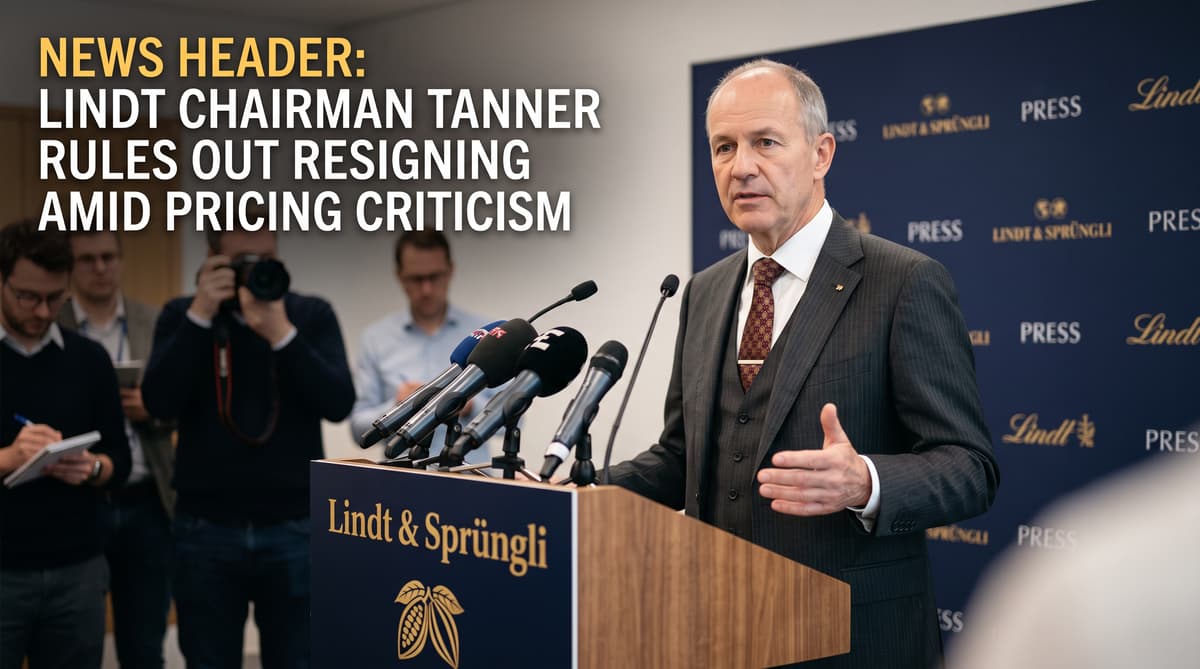
Ernst Tanner says he intends to stay at Lindt’s helm as the company tries to recover from a pricing miscalculation. The 80-year-old chairman told NZZ am Sonntag he believes he can help get the Swiss chocolate maker back on track. His remarks come as Lindt faces the consequences of price increases that proved too steep for many customers, particularly in Switzerland and Germany.
Tanner acknowledged that the company had misjudged how consumers would respond. Earlier market tests had suggested shoppers would accept significantly higher prices, but that assumption failed in some countries. The chairman said he would leave if the board concluded he no longer added value. He rejected age alone as a reason to step down, saying: “If the board of directors were to conclude that I no longer add value, I would leave immediately – but not simply because of my age.” Tanner said that once Lindt had regained its footing, he wanted to move on to the next stage of his life.
Reckon with the price backlash
Lindt’s pricing assumptions failed to match what shoppers would pay. Tanner said market tests had initially indicated customers were prepared to accept significantly higher prices. The company later found that this expectation was mistaken in some markets, with Switzerland and Germany especially affected. Tanner acknowledged that Lindt underestimated the reaction to its steep increases and said the products had become too expensive for many consumers.
The admission puts the company’s pricing challenge in plain terms: higher prices may support revenue per product, but they can also put purchases out of reach for customers. Tanner’s comments focus on the response in two important markets, including Lindt’s home country. He did not present the price increases as a successful strategy. The company now needs to rebuild sales volumes and gain market share, a goal he said Lindt is pursuing for next year. For Swiss consumers, the pricing shift is directly visible in the company’s reassessment of what customers are willing to pay.
Use discounts to win shoppers back
Discounts are now part of Lindt’s effort to bring customers back. Tanner said promotional campaigns are necessary to draw attention to price reductions, even though he dislikes seeing the company’s products on sale. “It pains me to see our products on sale,” he told NZZ am Sonntag.
He linked the prospect of permanent price cuts to cocoa costs, saying Lindt could lower prices permanently once cocoa stabilises at a normal level again. For now, the company is using discounts to make lower prices visible to shoppers. Tanner’s immediate priority is to lift sales volumes next year and win market share. That makes the promotional push more than a short-term display tactic: it is part of the company’s response to customers who have found its products too expensive. Tanner’s comments point to a possible longer-term price adjustment, but tie that possibility to a change in cocoa costs.
Protect jobs and reset leadership
Tanner ruled out group-wide job cuts and expects Lindt’s workforce to grow. The company currently employs around 15,000 people, and the chairman said it is likely to have more staff in one to two years. His workforce outlook accompanies a broader push to restore sales volumes and market share next year.
Lindt is also changing its leadership. Tanner said the early departure of Group CEO Adalbert Lechner was necessary to restore planning certainty quickly. Lechner would otherwise have retired in about a year. Former Group CEO Dieter Weisskopf is taking over on an interim basis while the company searches for a permanent successor. Lindt will consider external candidates as part of that process. Tanner’s comments bring the company’s operational and leadership plans together: no group-wide cuts, a possible increase in staff, and a CEO succession intended to give the business greater planning certainty as it seeks to regain customer demand.