Neutrality
How Swiss neutrality compares with policies elsewhere in Europe
With Swiss voters due to decide whether neutrality should be made more restrictive, a comparison with other European countries shows that neutrality takes different legal and political forms across the continent. The debate could shape Switzerland’s future foreign and security policy.
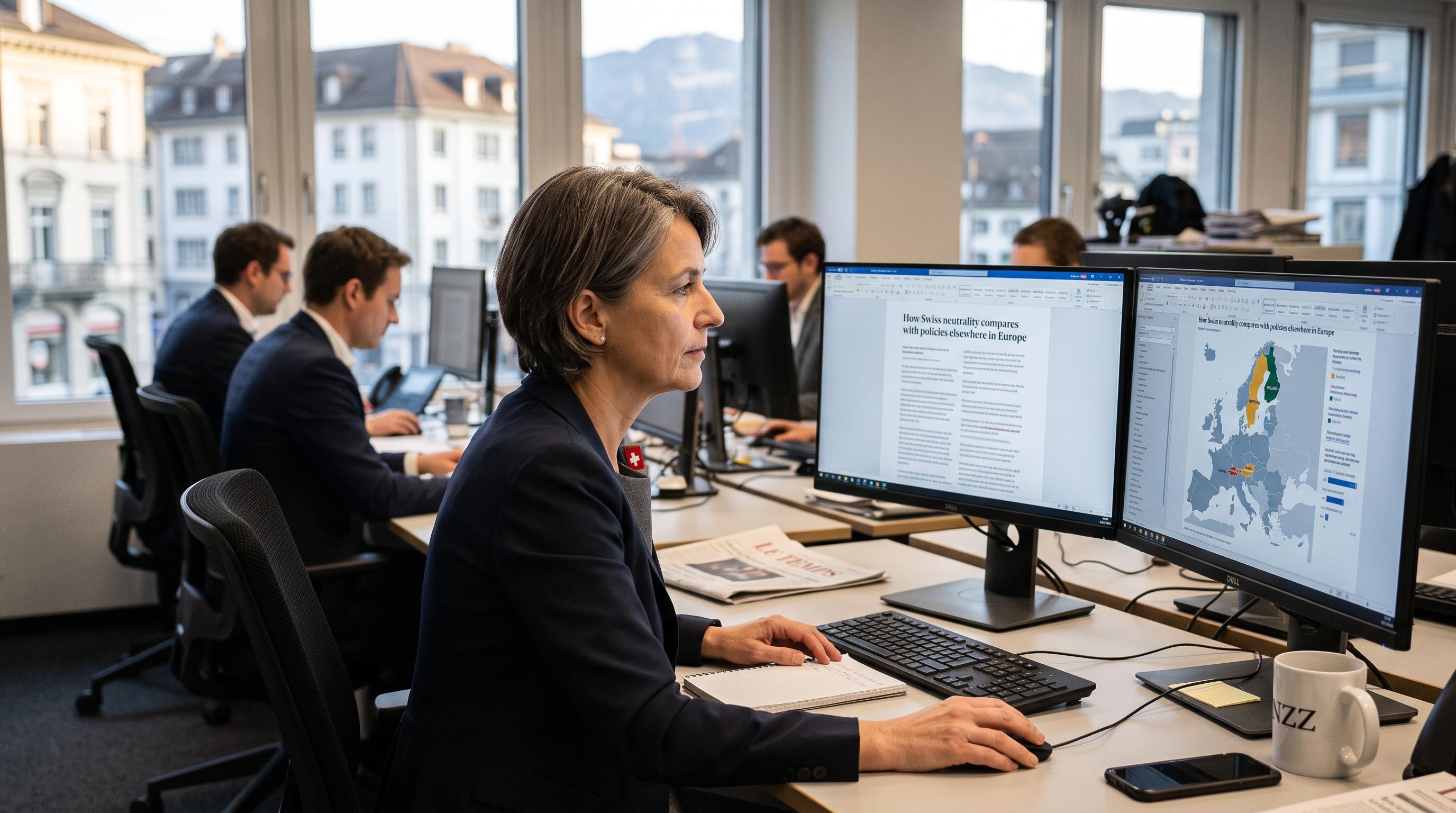
Swiss voters reopen the neutrality debate
Swiss voters face a decision on 27 September 2026 that could narrow the country’s room for manoeuvre abroad. The ballot asks whether Switzerland should retain its current neutrality or make the policy more restrictive, according to The Local. The same vote will also address the country’s food supply, giving the referendum a domestic issue alongside its foreign policy implications.
Switzerland’s position carries unusual historical weight. The country is widely described as having the oldest neutrality in the world, and neutrality has become part of its political identity as well as a tool of diplomacy. It shapes how Bern presents itself internationally, how political parties discuss sanctions and military cooperation, and how voters assess the risks of closer alignment with Europe’s security structures.
The comparison with other European states matters because “neutrality” does not describe one single legal model. Austria’s permanent neutrality rests on constitutional law. Ireland follows a long-standing policy of military neutrality. Malta’s constitution also refers to neutrality. Sweden and Finland, meanwhile, moved away from military non-alignment by joining NATO in 2024 and 2023 respectively. Switzerland’s vote therefore concerns a specific national settlement, not a common European standard.
Compare constitutional and political neutrality
European neutrality exists on a spectrum, from constitutional commitments to flexible political policies. Switzerland’s model is often discussed alongside Austria because both countries present permanent neutrality as a defining state principle. Austria adopted its constitutional neutrality framework in 1955, after the restoration of its sovereignty. Switzerland’s neutrality has deeper historical roots and is closely associated with its role as a diplomatic centre and host to international organisations in Geneva.
Ireland offers a different example. Its military neutrality is generally understood as a policy of non-alignment rather than a constitutional rule identical to Austria’s. Governments in Dublin have retained the policy while participating in international diplomacy, peacekeeping and European cooperation. Malta’s constitution provides another form of neutrality, shaped by the island’s history and Mediterranean security environment.
These distinctions affect how much room governments have to respond to a crisis. A constitutional rule can raise the political and legal threshold for change. A policy can be adjusted by a government or parliament, though major shifts still face public scrutiny. Switzerland’s referendum puts that question directly before voters, giving the country’s neutrality an unusually explicit democratic test.
Track the Nordic shift
Sweden and Finland show how quickly a European security policy can change when the strategic environment shifts. Finland joined NATO in 2023, followed by Sweden in 2024, ending decades of military non-alignment in both countries. Their decisions followed Russia’s full-scale invasion of Ukraine and a reassessment of national security across northern Europe.
Neither case maps neatly onto Switzerland. Finland and Sweden had developed non-alignment policies within different historical and regional settings. Their NATO decisions also involved applications, parliamentary processes and alliance commitments, while Switzerland is not being asked to join a military alliance in the referendum described by The Local. The comparison is useful because it demonstrates that neutrality and non-alignment are politically contingent, even when they have long shaped national identity.
The Nordic shift has changed the context in which Swiss neutrality is debated. Switzerland sits in the middle of an increasingly coordinated European security landscape while remaining outside the European Union and NATO. A more restrictive interpretation could limit future cooperation. A more flexible interpretation could preserve discretion for the government, while exposing it to criticism from voters who see neutrality as a firm rule.
Test the limits of neutrality
Switzerland’s neutrality has never meant isolation from international affairs. The country hosts diplomacy in Geneva, maintains extensive economic links with Europe and has used its neutral status to support dialogue. The precise boundaries of that role are now under renewed political scrutiny, especially as European governments coordinate more closely on security and foreign policy.
The comparison with Ireland, Austria and Malta highlights the practical questions behind the principle. Can a neutral state support sanctions while insisting it is not a party to a war? Can it cooperate with European defence initiatives without entering a military alliance? Can it preserve credibility as a mediator while taking clearer positions on aggression and international law? Different European countries have answered those questions in different ways, and their answers have changed over time.
The supplied sources do not state the detailed wording of the Swiss proposal or identify the campaign positions of individual parties. That makes the vote’s legal consequences impossible to quantify from the available information. What is clear is the direction of the debate: voters are being asked to decide whether neutrality should remain as it is or become more restrictive.
Watch the September ballot
The referendum will give Swiss citizens a direct say over a policy that has usually evolved through government decisions, diplomacy and convention. Its result will be watched beyond Switzerland because the country’s model remains distinct from the constitutional neutrality of Austria, the policy-based neutrality of Ireland and the alliance choices made by Sweden and Finland.
A vote for tighter neutrality could constrain how future governments interpret sanctions, military cooperation and foreign policy coordination. It could also reassure voters who regard neutrality as a permanent safeguard against entanglement in conflict. A vote against further restrictions would leave the existing framework in place, preserving greater discretion for the executive and parliament. The supplied articles do not provide polling figures, proposed legal language or forecasts of the result.
The immediate timetable is clear. Swiss citizens will vote on Sunday, 27 September 2026, on neutrality and food supply. The outcome will not settle Europe’s wider argument over non-alignment, but it will clarify how Switzerland wants to position itself within a continent where several countries have recently revised long-standing security policies.