Technology
Record-Breaking Year: Drones Save Over 7,500 Fawns from Mowers
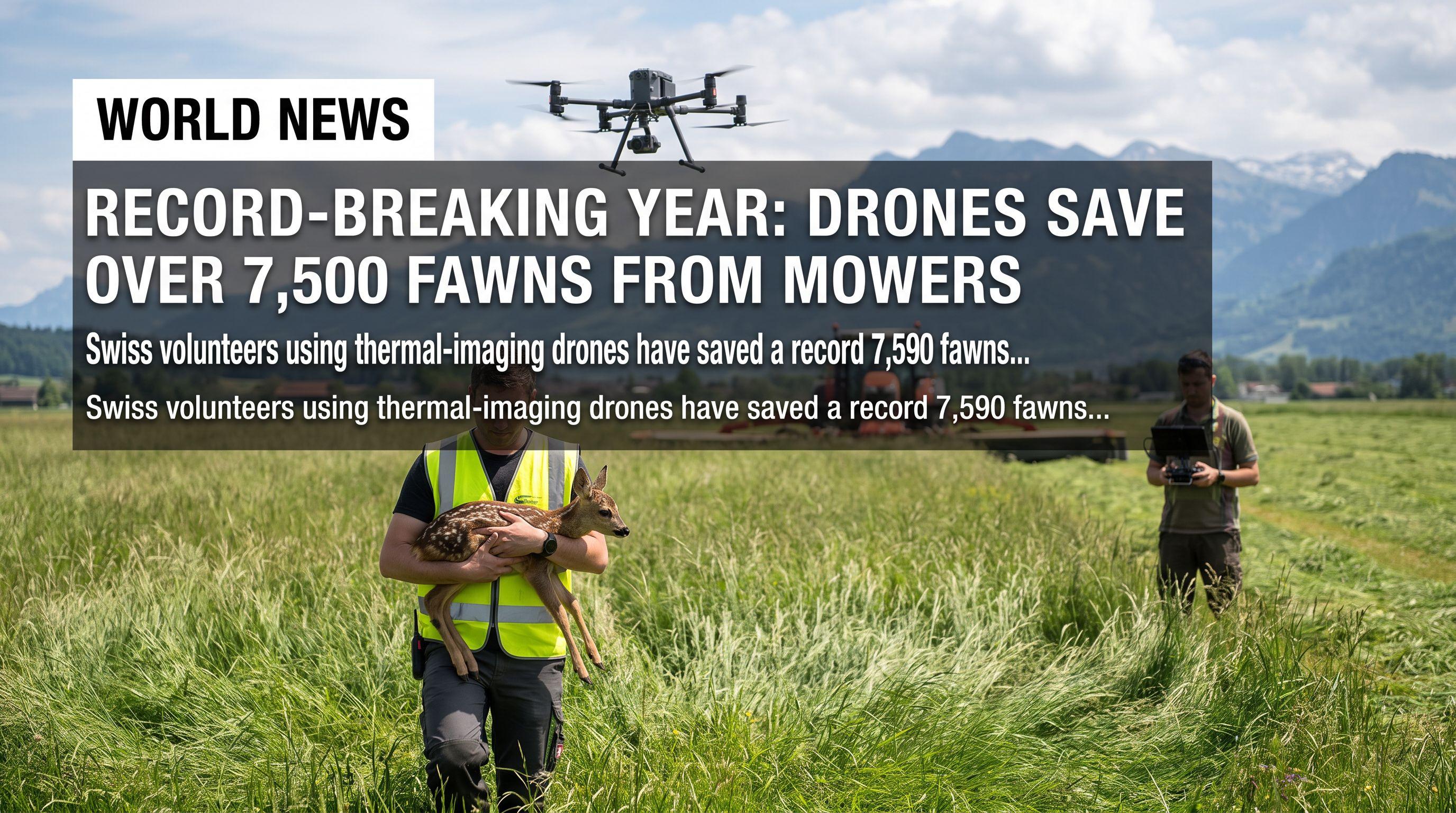
In a remarkable intersection of technology and conservation, Swiss volunteers using thermal-imaging drones have saved a record 7,590 fawns from being killed by agricultural mowers between April and July, surpassing last year's total by over a thousand.
A High-Tech Shield for Switzerland's Wildlife
A staggering 7,590 fawns are alive today thanks to a massive technological intervention that has redefined Swiss conservation. Between April and July 2026, an army of volunteers took to the skies, deploying thermal-imaging drones to scan meadows before the blades of agricultural mowers could strike. This figure represents an unprecedented surge in success, surpassing last year’s total by over a thousand rescues. While the roar of tractors usually signals a period of high mortality for young deer, this year the hum of drone rotors provided a life-saving counter-narrative. The operation, spearheaded by Rehkitzrettung Schweiz, proves that when cutting-edge technology meets grassroots volunteerism, the results are nothing short of miraculous. This isn't just a minor improvement; it is a total transformation of how we protect our natural heritage during the critical harvest season.
Scaling the Skies: 73,000 Hectares Under Watch
Nearly 730 square kilometers of grassland—an area larger than half of Canton Aargau—were meticulously searched by 800 volunteer drone teams this season. The scale of this mobilization is breathtaking, with volunteers clocking up a massive 7,700 days of service. This represents a significant jump of 1,400 days compared to the previous year. The logistics of such an operation are immense, requiring precise coordination between pilots, farmers, and wildlife experts. Despite a warm and dry April that allowed some farmers to mow early—before many fawns were even born—the teams remained vigilant, covering more ground than ever before. The Swiss Animal Protection Society played a critical role, providing a fleet of drones that allowed these teams to peer through dense vegetation that no human eye could penetrate. This is precision agriculture used for the ultimate humanitarian—and animalitarian—cause.
The Fatal Instinct: Why Technology is Mandatory
Official statistics reveal a grim reality: an average of 1,500 fawns are slaughtered by mowers annually, though experts warn the actual death toll is likely far higher. The tragedy stems from a biological irony—the fawn’s natural 'crouching reflex.' In the face of danger, these animals do not flee; they freeze. While this protects them from natural predators like foxes, it makes them sitting ducks for modern industrial mowers that move at high speeds. The fawns remain motionless in the tall grass, practically invisible until it is too late. However, the introduction of thermal imaging has turned the tide. By detecting the heat signatures of these hidden animals, drone pilots can pinpoint their location with surgical precision, allowing rescuers to safely move them before the mowers arrive. We are witnessing a confrontation between ancient instincts and modern machinery, where technology acts as the essential mediator.
Mobilizing the Nation: The Future of Conservation
Switzerland is setting a global gold standard for wildlife protection, but the mission is far from over. Rehkitzrettung Schweiz is already looking toward the future, launching a nationwide recruitment drive starting in August to train even more pilots for the 2027 season. The goal is clear: zero avoidable deaths. As climate patterns shift and mowing seasons become less predictable, the flexibility of drone teams becomes even more critical. This record-breaking year is not just a victory for the 7,590 fawns saved; it is a testament to the Swiss spirit of community service and innovation. The implications are profound—this model of drone-based conservation could easily be adapted for other species and other nations. As we move forward, the integration of AI-assisted detection and even larger volunteer networks promises to make the 'mower death' a relic of the past. The message to the world is loud and clear: technology, when guided by compassion, can heal the very environment it once threatened.