Swiss courts
Swiss court convicts Belarusian man over 1999 enforced disappearance
A cantonal court in St Gallen has sentenced a Belarusian man to a suspended 24-month prison term for his role in the enforced disappearance of three people in 1999. The court overturned an acquittal in one case but cleared him on two other counts.
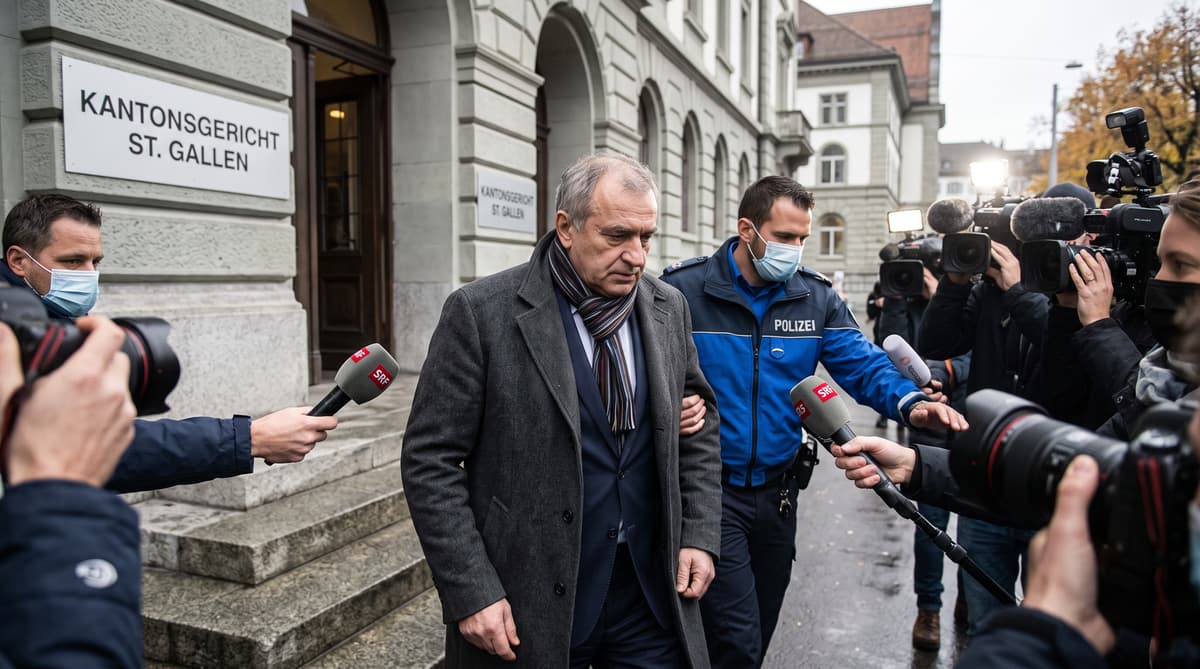
The St Gallen Cantonal Court has imposed a suspended 24-month sentence on a Belarusian man over an enforced disappearance tied to events in Belarus in 1999. The ruling overturns an acquittal in one case and leaves the defendant cleared on two other counts.
The case concerns the disappearance of three people, including politicians, while the man was serving in a special unit under President Alexander Lukashenko’s regime. The court found him guilty in one case, relying on statements he made during the preliminary investigation about his involvement.
The judgment marks a reversal of the Rorschach District Court’s September 2023 decision. That court had acquitted him, citing contradictory statements and a lack of evidence. The St Gallen Cantonal Court assessed his earlier account differently, finding it credible and detailed. The defendant can appeal the ruling.
Reassess the statements
The man’s preliminary-investigation statements became central to the conviction. The St Gallen Cantonal Court said he had described his involvement in the enforced disappearance of three people in a credible and detailed manner. Those statements formed the basis for overturning the lower court’s acquittal in one case.
The Rorschach District Court had reached a different assessment in September 2023. It acquitted the defendant, citing contradictory statements and insufficient evidence. The appeal court’s decision therefore turned on how it evaluated his earlier account, as described in the ruling.
The case involved allegations connected to the disappearance of politicians in 1999, when the defendant served in a special unit of the regime led by Alexander Lukashenko. The court’s conviction applies to one case. It did not find him guilty on all three counts, and it separately acquitted him in two other cases.
Separate the two acquittals
Two acquittals remain in place, each for a different reason. In one case, the court concluded that the accused was 20 years old at the time and did not know the abductee would later be killed. The court cleared him on that count.
In the other case, the court ruled that the relatives who had brought the matter as private prosecutors lacked standing. Relatives of the politicians who disappeared had appealed the first-instance decision in that capacity. The ruling on standing meant the court did not convict the defendant on that count.
Together, the decisions leave a mixed outcome: a conviction for one case and acquittals on two others. The court’s findings distinguish between the defendant’s account of his involvement, his knowledge in the case involving the abductee’s later killing, and the relatives’ right to pursue the remaining count as private prosecutors.
Apply the cross-border law
The prosecution relied on a legal offence that can reach acts committed abroad. The trial centred on an offence based on a United Nations convention, which allows prosecution of acts committed outside Switzerland. That legal basis placed events in Belarus before a court in St Gallen.
The allegations concern politicians who disappeared in 1999 and the defendant’s role while serving in a special unit of Lukashenko’s regime. The court sentenced him to a suspended 24-month prison term for the count on which it convicted him. It cleared him on the other two counts, one because of his lack of knowledge at the time and one because the private prosecutors lacked standing.
The defendant can appeal the decision. The judgment therefore establishes the outcome at the cantonal court stage, while leaving open the possibility of a further challenge.