Switzerland
Switzerland and Kuwait seek closer trade and investment ties
Switzerland and Kuwait marked 60 years of diplomatic relations with talks on expanding trade and a memorandum aimed at promoting investment in both countries, particularly in healthcare, fintech, sustainable agriculture and food security.
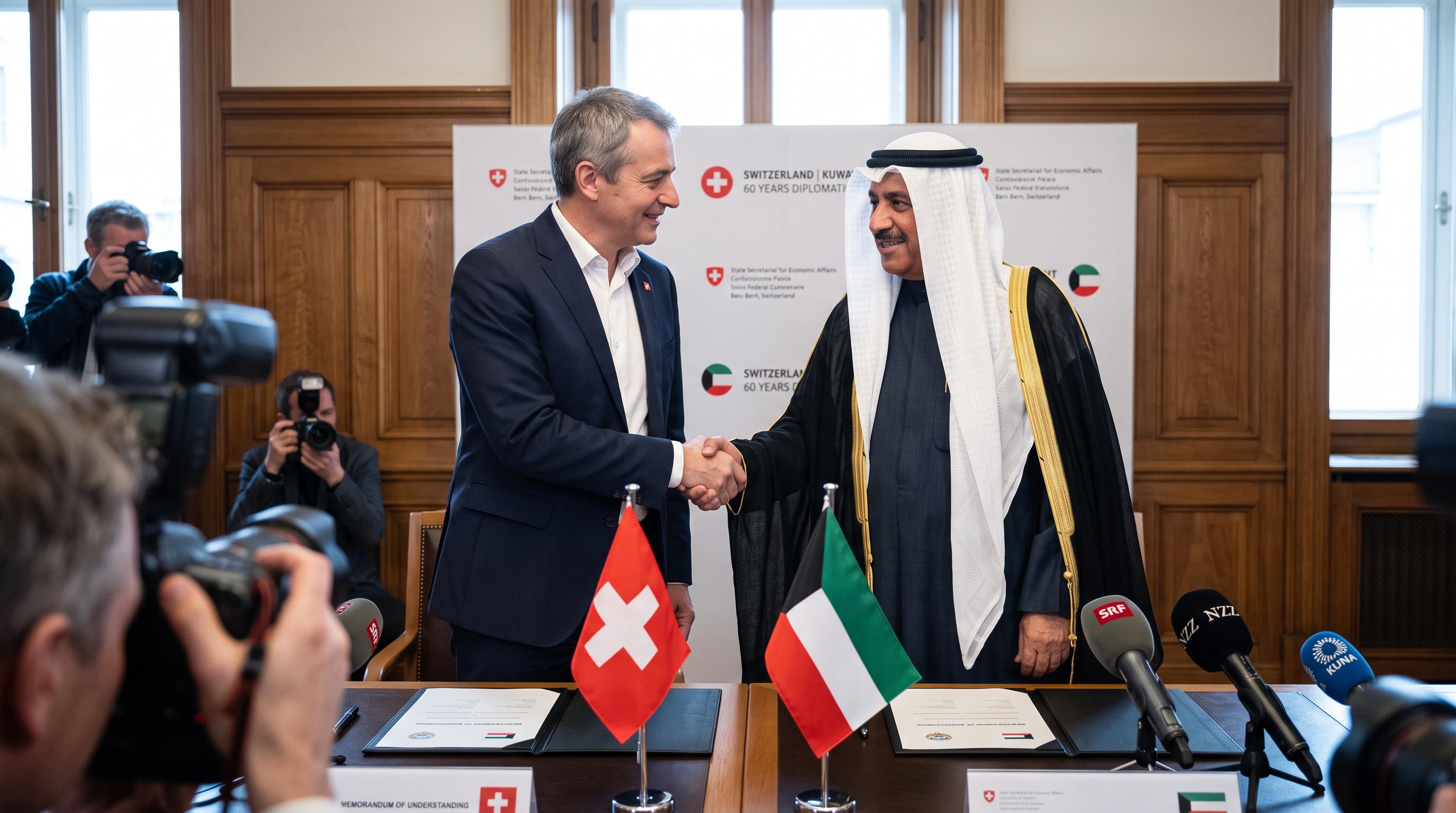
Bern turns a diplomatic anniversary into a trade push
Switzerland and Kuwait are using a 60 year diplomatic milestone to reset their economic relationship. Swiss President Guy Parmelin welcomed Kuwait’s Crown Prince, Sheikh Sabah Al Khaled Al Sabah, in Bern on Tuesday, September 29, as the two countries opened talks on deeper trade and investment cooperation.
The meeting placed commercial ties at the centre of the visit. Switzerland’s Federal Department of Economic Affairs identified healthcare, fintech, sustainable agriculture and food security as sectors with particular potential. These fields connect Swiss expertise in medical services, financial technology and specialised agriculture with Kuwait’s interest in diversification and investment.
The talks also produced a concrete institutional step. Switzerland Global Enterprise, the organisation that supports Swiss companies abroad, signed a memorandum of understanding with the Kuwait Direct Investment Promotion Authority. The agreement aims to promote investment in both directions, creating a framework for contacts between companies, investors and public agencies.
The visit carries diplomatic weight beyond the business agenda. It marks six decades of formal relations and follows Parmelin’s visit to Kuwait in February. For Bern, the sequence signals sustained attention to a Gulf partner with which Switzerland is seeking more regular commercial engagement.
A new investment channel targets four growth sectors
The memorandum gives the new economic agenda an operating channel. Switzerland Global Enterprise and the Kuwait Direct Investment Promotion Authority signed the document during the Bern meeting, with the stated goal of promoting investment in both countries.
The agreement does not announce a specific project, funding amount or list of participating companies. Its significance lies in the link it creates between two investment promotion bodies. Such a structure can help businesses identify counterparts, understand market conditions and navigate the public institutions that shape cross border investment.
For Swiss companies, the priority sectors named by the economics ministry offer several possible entry points. Healthcare includes medical technology and services. Fintech reflects Switzerland’s established financial centre and Kuwait’s interest in digital finance. Sustainable agriculture and food security address long term supply concerns in a region that relies heavily on food imports. The source does not specify which individual projects will follow or when they will begin.
The next stage will depend on implementation. Business missions, regulatory discussions and direct contacts between firms will determine whether the memorandum develops into measurable investment. For now, Bern and Kuwait City have established a formal platform and identified the sectors where they see room to expand.
Four sectors define the next phase of cooperation
Healthcare, fintech, agriculture and food security now anchor the economic conversation. The four sectors reflect areas where the two countries can bring different capabilities to the same partnerships, although officials have not released a project pipeline or trade figures.
Swiss healthcare companies operate in a country known for pharmaceuticals, medical technology and specialised services. Kuwait’s public institutions and private investors could provide opportunities for cooperation, subject to local rules and procurement processes. In fintech, Swiss financial expertise could meet demand for digital payments and financial services, while regulators would need to address market access and compliance.
Sustainable agriculture and food security carry a distinct regional relevance. Kuwait’s climate and limited arable land make reliable food supplies a strategic concern. Swiss companies and research institutions work in precision agriculture, food technology and resource efficient production, but the talks did not identify specific partnerships or investment commitments.
The sectors also fit the broader direction of Switzerland’s Gulf engagement. Foreign Minister Ignazio Cassis inaugurated a new Swiss embassy in Kuwait in October 2025, strengthening the diplomatic infrastructure available to businesses and officials. The embassy and the new memorandum give the relationship more channels for follow through.
Economic ties advance beside a wider regional agenda
Trade diplomacy unfolded alongside discussions on Iraq, Gaza and humanitarian cooperation. Parmelin and Sheikh Sabah also addressed the wider Middle East, including efforts to improve the humanitarian situation and support a two state solution.
That combination reflects the breadth of the Swiss and Kuwaiti relationship. Economic cooperation requires stable official channels, while regional crises shape the political environment in which companies, investors and institutions operate. The Bern talks kept both tracks in view without announcing new humanitarian programmes or a detailed joint initiative.
Switzerland has maintained a tradition of diplomatic engagement and humanitarian work in the region. Kuwait has also played a role in regional diplomacy and relief efforts. Their shared commitment to improving humanitarian conditions provides an additional area for dialogue, although the source gives no figures for funding, aid deliveries or joint operations.
The immediate commercial task is practical: turn the memorandum into contacts and projects, and give companies clearer routes into each market. The diplomatic task will continue in parallel. With a new Swiss embassy in Kuwait, reciprocal high level visits and 60 years of formal relations, both governments have built a platform for sustained engagement. The coming months will show whether the economic agenda produces concrete deals.