Climate
Thousands protest climate inaction in Geneva and Lausanne
Thousands of people marched in Geneva and Lausanne to demand stronger action on climate change after Switzerland’s exceptionally hot summer, criticising the government’s environmental policies.
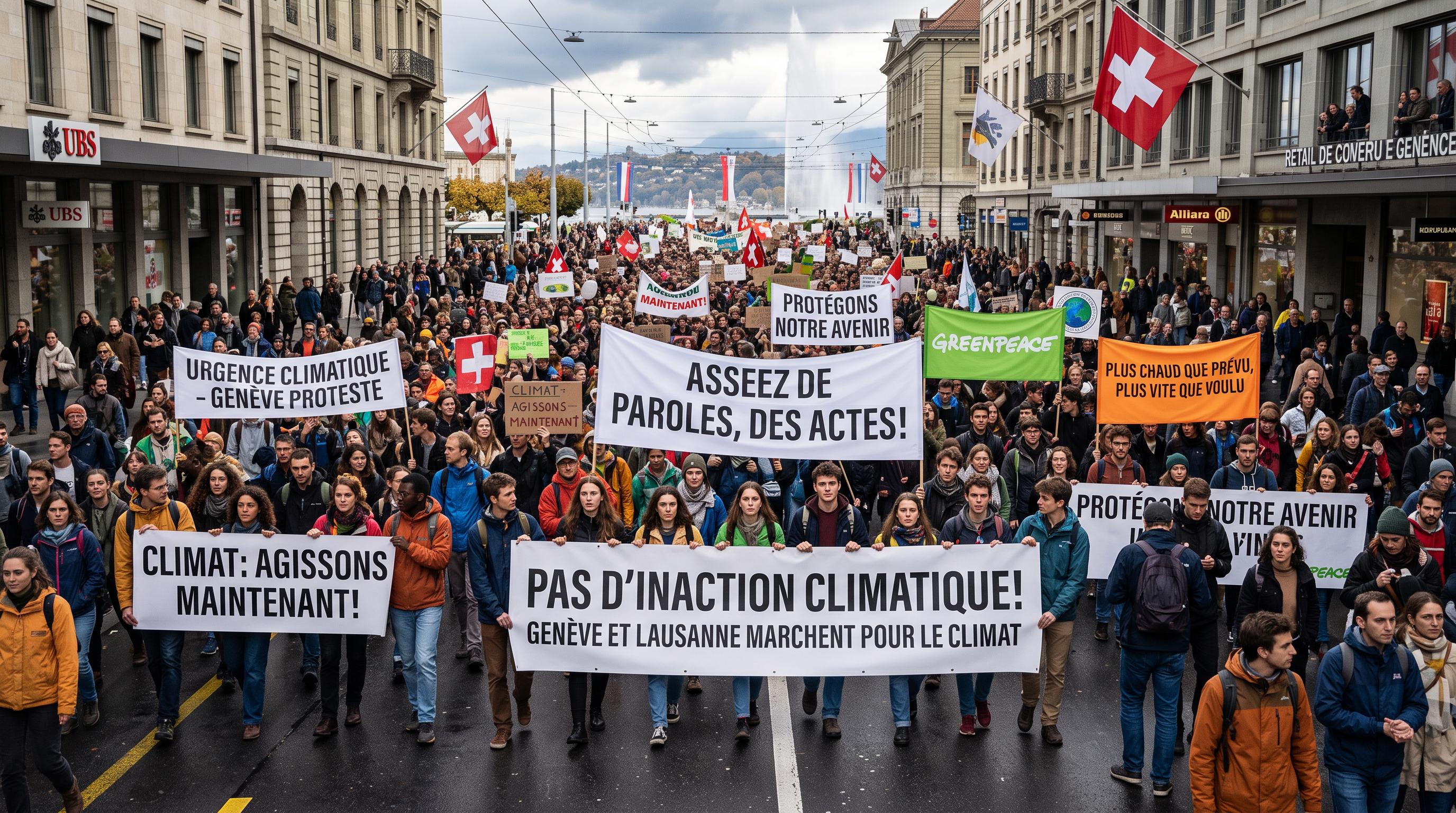
Crowds Turn Heat Into Protest
Up to 12,000 people gathered in Lausanne, according to police estimates, as demonstrators in Switzerland’s French-speaking cities demanded a sharper response to global warming. The September 20 marches followed a summer that Swissinfo.ch described as the hottest and driest since national measurements began in 1864.
The Lausanne protest began with about 6,000 people, according to Keystone-SDA, before swelling to its peak. Organisers counted at least 8,000 participants. In Geneva, organisers reported 7,000 marchers, while police counted 3,000 people at the finish line at Place des Nations.
The coalition behind the demonstrations includes more than 100 organisations and political parties. Its banner, “No 50-degree summers!”, linked the immediate experience of heat, drought and water shortages to warnings about future climate conditions.
Placards carried through the two cities included “No Planet B”, “The train is the transport of the future” and “We’re cooked!”. Families, older residents, students and union activists joined the marches. The turnout gave campaigners a visible platform to challenge the federal government’s environmental record after a summer that brought climate risks into daily life across Switzerland.
Protesters Target Federal Policy
Lausanne and Geneva produced different attendance counts, but the message was consistent: demonstrators want climate adaptation and emissions cuts to move faster. The figures reflect the usual gap between organiser estimates and police counts, with the Lausanne police estimate reaching 12,000 and Geneva’s police figure standing at 3,000 at the finish line.
The marches also exposed the political targets of the movement. Environment Minister Albert Rösti was booed during speeches in Lausanne. Placards aimed at him included “Rösti, you’re done for” and “Rösti on our plates, not in the Federal Council”.
In Geneva, Julia Steinberger, a professor at the University of Lausanne and co-author of an Intergovernmental Panel on Climate Change report, criticised what she called more than three decades lost to climate obstruction by fossil fuel lobbies. At Place des Nations, Swiss Greens president Lisa Mazzone accused right-wing politicians of denying and then refusing to acknowledge the climate emergency.
The demonstrations therefore carried both national and local demands. Protesters called for protection from heatwaves, drought and water stress, alongside measures to reduce carbon dioxide emissions. Their route through two major cities turned policy criticism into a public show of pressure.
Drought Puts Adaptation in Focus
Water became one of the marchers’ most immediate concerns. Vincent Fontannaz, a 47-year-old actor, joined the Lausanne protest dressed as a giant drop of water. He said the shortage affected far more than recreation, pointing to agriculture and the country’s capacity to sustain itself.
The summer’s conditions brought practical consequences. The Local reported that heatwaves forced the closure of a nuclear power station and contributed to record low water levels in Lake Zurich. Low water and high temperatures can put pressure on agriculture, energy production and ecosystems, issues that campaigners said require preparation as well as emissions reductions.
Laurent Guidetti, a 55-year-old architect, wore a gas mask made from plastic bottles. He said his well-insulated apartment stayed cool at night, giving him protection that many people lack. The experience led him to focus on residents in less efficient homes, who face greater exposure during prolonged heat.
His concern reflects a growing Swiss debate over adaptation. Cities have begun strengthening heatwave measures, according to Swissinfo.ch, but the country still lacks a nationwide strategy. The protesters argued that heat protection, water management and building standards now belong in mainstream public policy.
Court Ruling Sharpens the Pressure
Switzerland’s climate record is now under scrutiny beyond its own borders. In 2024, the European Court of Human Rights ruled that Switzerland had not done enough to fight climate change. The case marked the first time an international court ruled against a country on this issue, according to The Local.
That judgment has become part of the political backdrop to the latest demonstrations. Guillaume Matthey, a 31-year-old union activist who marched in Lausanne, said he wanted the mobilisation to develop into a new cycle of sustained public pressure on political and financial leaders. His comment pointed to the role of banks, investors and industry alongside the federal administration.
Other protesters framed the debate through public spending. Yves Froidevaux, a marcher in his 60s, said authorities needed to act and questioned how Switzerland could finance weapons while failing to address climate risks. His remarks reflected the broader frustration heard during the march, where environmental policy was discussed alongside national priorities and social protection.
The European court ruling does not prescribe a single policy package. It does, however, give campaigners a legal reference point as they press Bern to strengthen climate action. The marches added public visibility to that pressure in two of Switzerland’s largest French-speaking cities.
Organisers Plan a Wider Campaign
The protest campaign will continue across Switzerland until October 2. Organisers say the Geneva and Lausanne marches mark the beginning of a longer movement designed to keep climate change high on the political agenda and protect lives during future heatwaves.
The next phase will test whether the coalition can maintain the turnout seen in the two cities. More than 100 organisations and political parties supported Saturday’s action, bringing together environmental groups, political activists, unions and residents concerned about water, housing and agriculture.
Campaigners have warned that Swiss summers could reach 50°C by 2050 without a change of course. That projection, cited by Swissinfo.ch, has become the movement’s most recognisable warning, though the immediate policy demands are more concrete: better heatwave planning, stronger emissions cuts, protection for vulnerable people and investment in climate resilience.
For residents, the summer supplied a long list of tangible signals, from scarce water to strain on energy infrastructure. For the federal government, the demonstrations add street-level pressure to a debate already shaped by the European Court of Human Rights. Further marches in Swiss towns and cities will show whether Saturday’s mobilisation becomes a sustained national campaign or remains concentrated in the French-speaking region.