Politics
Swiss voters to decide four federal proposals in November
Swiss voters will decide four federal proposals on November 29, including plans on pension funding, married-couple taxation, fireworks restrictions and arms exports. The votes form the next major test of the country’s busy direct-democracy calendar.
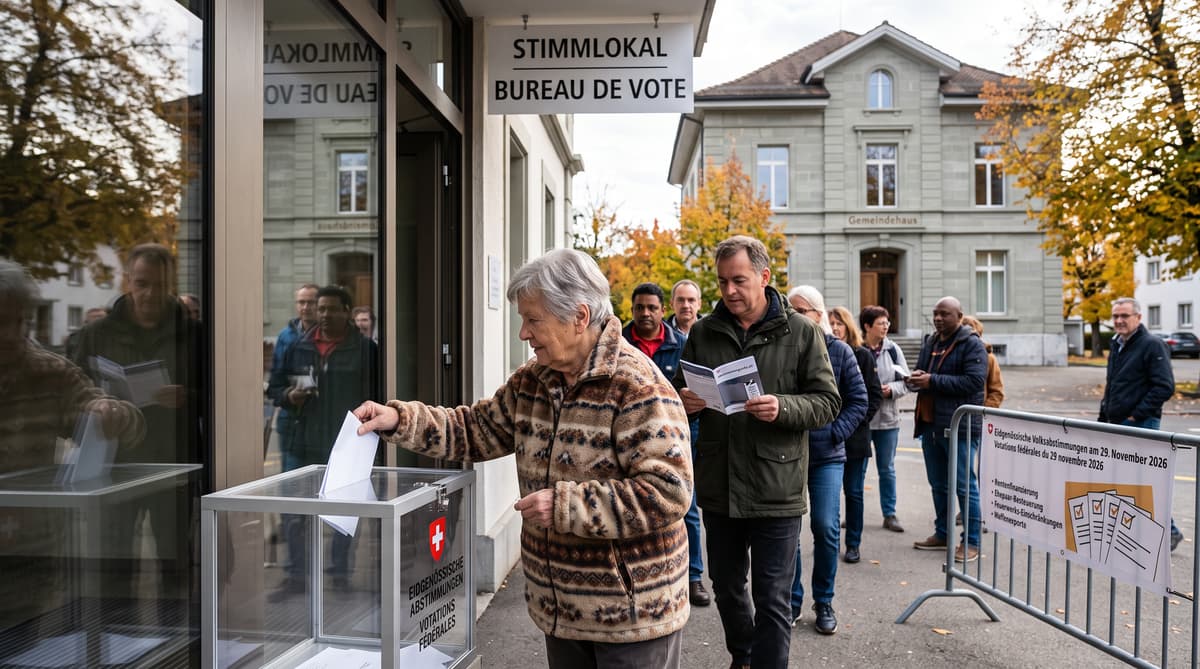
Four federal proposals will reach the ballot on 29 November 2026, giving Swiss voters another chance to shape national policy through direct democracy. The package brings together four questions with very different stakes: how to fund the 13th state pension, how far authorities should restrict fireworks, how married couples should be taxed and how Switzerland should regulate arms exports.
The vote follows the 27 September rejection of initiatives on food production and neutrality. That result closed one chapter in a busy voting calendar, while the November ballot opens another with proposals that touch household budgets, public safety, environmental concerns and Switzerland’s international position.
The Federal Council and parliament have issued differing recommendations across the package. They support the pension funding plan and the arms export amendment. They oppose the fireworks restrictions and the married couples taxation initiative. Each proposal also carries a separate institutional question: voters will decide whether to approve a new funding stream, impose a national rule over existing local powers, lock tax principles into the constitution or give the government greater room to act in defence policy.
Campaigners now have weeks to turn those technical choices into arguments that resonate across Switzerland’s cantons and households.
Put pension funding on a firmer footing
The pension proposal would raise VAT by 0.4 percentage points from no earlier than 2028. The measure is designed to help finance the 13th annual state pension payment, which voters have already approved. The ballot therefore focuses on the funding mechanism rather than the additional payment itself.
The proposed increase would generate about CHF 1.4 billion a year. The reduced VAT rate applied to essentials such as food and medicines would remain unchanged. Supporters in the government and parliament say VAT provides a broad revenue base and distributes the cost across generations. Their recommendation to vote yes places the measure within a wider effort to secure the finances of the state pension system.
Opponents in parliament want the financing question handled through a broader pension reform. They point to possible structural measures, including a higher retirement age, rather than relying on an additional consumption tax. That argument is likely to put intergenerational fairness and the division between tax increases and benefit reform at the centre of the campaign.
The decision will affect public revenue, household spending and the long-term debate over how Switzerland pays for retirement. The earliest proposed start date gives lawmakers and the administration time to prepare the change, while leaving the underlying pension pressures in place.
Draw a national line under noisy fireworks
The fireworks initiative would ban the sale and use of fireworks that make noise. Quieter products would remain legal, and cantons could permit exceptions for events considered to have wider regional importance. Private individuals would still be barred from using noisy fireworks at those events.
The proposal would require lawmakers to define which products fall within the ban. That technical task could shape how retailers, municipalities and event organisers apply the new rule. Switzerland’s existing system already gives cantonal and municipal authorities powers to restrict fireworks, which is why the government and parliament recommend rejecting the initiative.
Supporters want a single national standard. They cite disruption to people and animals, along with pollution, fires and accidents linked to fireworks. Their case presents the issue as one of consistent protection across cantonal borders, especially during national celebrations and New Year events.
Opponents say existing regulations provide sufficient tools and that local authorities can respond to conditions in their own communities. The vote will test whether voters prefer a nationwide prohibition on noisy products or continued reliance on cantonal and municipal decisions. It also places everyday leisure, public safety and local autonomy in the same campaign arena.
Settle the marriage penalty dispute
The married couples initiative would write joint federal taxation into the constitution. It would require the incomes of married couples to be taxed together for direct federal tax and establish that marriage must not leave couples worse off than other taxpayers.
The proposal includes a fallback mechanism. If no implementing law takes effect by 2030, authorities would calculate each couple’s bill under joint taxation and under the rules for unmarried taxpayers, then charge the lower amount. Supporters describe that arrangement as a direct response to the so-called marriage penalty, which can leave some married couples paying more than comparable unmarried households.
The government and parliament recommend a no vote. They point to individual taxation, approved by voters in March 2026 and scheduled to begin in 2032, as the reform that already addresses the problem. They also warn that the initiative could give married couples preferential treatment and make federal and cantonal tax systems operate according to different principles.
The ballot therefore asks voters to weigh a constitutional guarantee against the prospect of a recently approved tax reform. Its effects would depend on future implementing legislation and on how the federal system coordinates with the cantons.
Recalibrate arms controls and neutrality
The arms export amendment would give the government more flexibility over selected transfers of war materiel. It would permit exports to partner states involved in armed conflict under specified conditions. It would also allow the government to depart from export criteria in extraordinary circumstances and waive some buyers’ duties to seek Swiss consent before re-exporting weapons.
Switzerland’s international obligations, including neutrality law, would continue to apply. The government and parliament recommend approval, arguing that the revised rules would support defence partnerships and help preserve the domestic arms industry. Their position reflects a concern that rigid export rules could weaken Switzerland’s place in security cooperation and put local manufacturers at a disadvantage.
The referendum committee rejects that reasoning. It argues that weaker controls would increase the risk of Swiss weapons reaching abusive regimes, terrorist groups or active wars. The committee also links the proposal to Switzerland’s security and neutrality, making the ballot relevant far beyond industrial policy.
Voters will decide how much discretion to give the executive when security conditions change. The result could influence the balance between neutrality, export accountability and the commercial survival of Switzerland’s arms sector.
Watch the ballot shape Switzerland’s next choices
The four proposals will force voters to make decisions across four policy fields before the year ends. The pension question reaches directly into public finances and retirement security. The fireworks initiative would replace a patchwork of local restrictions with a national rule. The married couples proposal would set constitutional tax principles while individual taxation is already scheduled for 2032. The arms export amendment would adjust the government’s room for manoeuvre in a security environment shaped by armed conflict abroad.
The recommendations from Bern divide the ballot evenly. The government and parliament support the pension and arms export measures, while opposing the fireworks and married couples initiatives. That split gives voters several different tests of trust: confidence in a new revenue stream, confidence in national regulation, confidence in the existing tax reform timetable and confidence in executive discretion over sensitive exports.
The campaign will also show how national proposals travel through Switzerland’s federal structure. Cantons and municipalities will remain central to fireworks enforcement. Tax implementation will need to account for federal and cantonal systems. Pension financing will affect households across income groups, even with the reduced rate on essential goods unchanged.
Voting takes place on 29 November 2026. Until then, parties, committees and public authorities will compete to define what each technical proposal means for daily life and Switzerland’s place in the world.