Agriculture
Twenty Swiss pig herds to be culled after lung-disease outbreak
Twenty Swiss pig farms must cull their herds after an outbreak of enzootic pneumonia affected holdings in six cantons. The disease poses no danger to humans, but movement restrictions have been imposed on dozens of other farms.
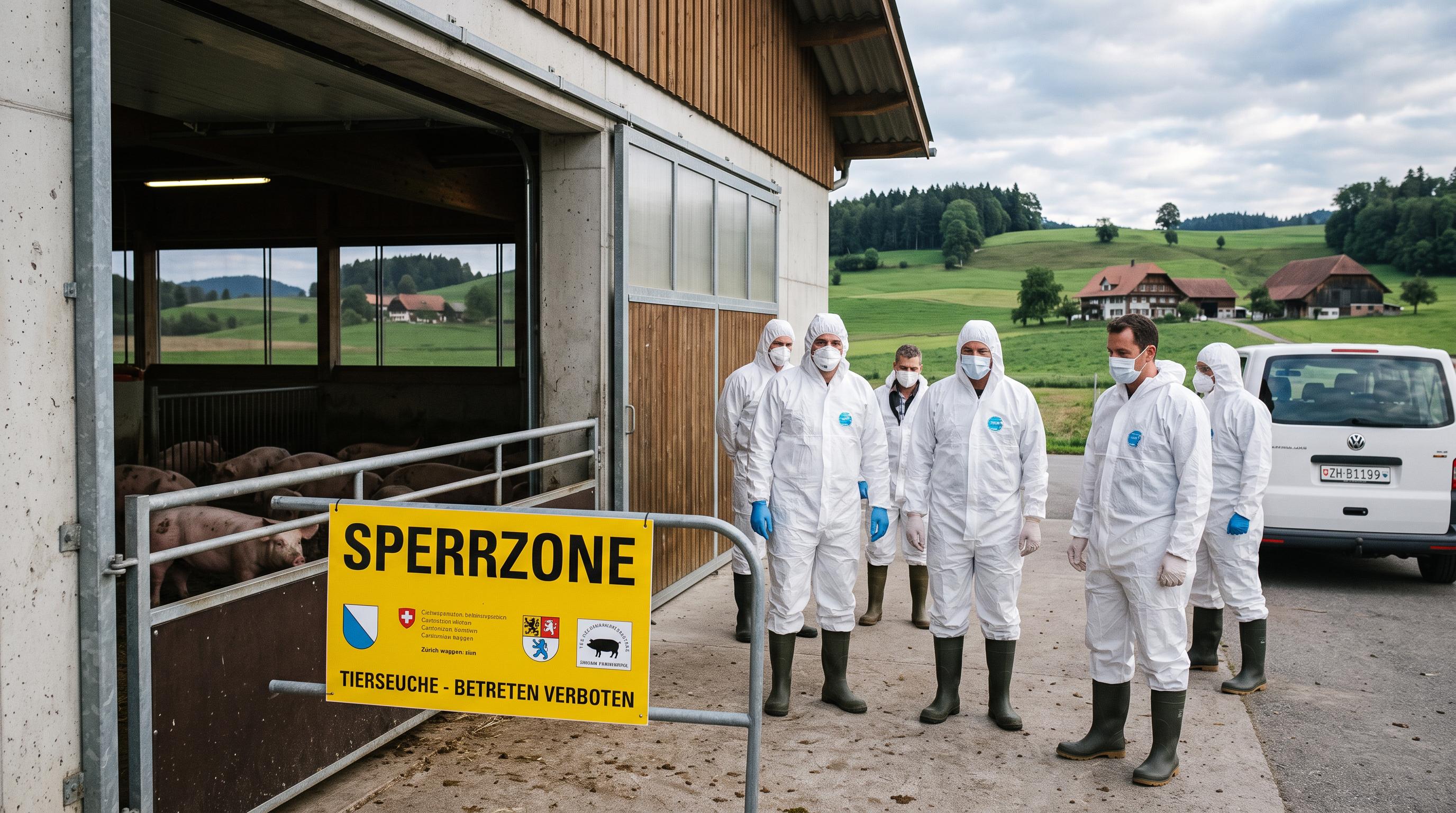
Swiss pig farms confront a coordinated cull
Twenty pig herds face complete culling across Switzerland, after an outbreak of enzootic pneumonia spread through holdings in six cantons. The measure targets farms in Bern, Lucerne, Solothurn, Schwyz, Thurgau and Vaud, with the largest cluster in Lucerne, where 11 farms are affected.
Authorities say the cull is required to control the contagious lung disease and prevent further transmission through the country’s pig sector. Around 1,500 breeding sows and piglets will be humanely euthanised under the order.
The response reaches beyond the 20 farms marked for depopulation. Officials have restricted animal movements on 40 fattening farms across 14 cantons, limiting the ability of animals to move through the production network. On Wednesday, September 16, authorities placed 60 holdings linked to pig farms and breeding facilities under quarantine.
The outbreak has created an immediate operational challenge for farmers and veterinary authorities. Breeding operations must stop, animal transport must be controlled and the affected network must be monitored for further infections. The source report did not identify individual farms or provide a timetable for completing the cull.
Lucerne emerges as the hardest-hit canton
Lucerne carries more than half of the reported farm-level impact, with 11 of the 20 affected holdings located in the canton. The remaining farms are spread across Bern, Solothurn, Schwyz, Thurgau and Vaud, showing how the outbreak has moved beyond a single localised cluster.
Enzootic pneumonia is a contagious disease of pigs that attacks the respiratory system. Infected animals can develop lung problems and the pathogen can circulate within connected herds, breeding facilities and fattening operations. The authorities’ decision to cull entire herds reflects the need to remove infected populations and reduce opportunities for transmission between holdings.
The available report does not state how many animals are located in each canton, nor does it identify the precise route by which the disease spread. It does establish the scale of the Lucerne concentration and the breadth of the national controls. Farms in 14 cantons now face movement restrictions, a wider geographic footprint than the six cantons containing herds ordered culled.
For Swiss producers, those restrictions can disrupt breeding schedules, animal deliveries and slaughter planning. The measures also require close coordination among farms that share suppliers, transport routes or breeding links.
Controls tighten across the production network
The movement restrictions cover 40 fattening farms in 14 cantons, extending the authorities’ response well beyond the 20 herds scheduled for culling. These farms are not described as facing depopulation in the source report, but they cannot move animals freely while the controls remain in place.
That distinction matters in Switzerland’s structured pig production system. Breeding farms supply young animals, while fattening farms raise them for later stages of production. Restrictions at one point in that chain can affect several connected holdings, even when only some herds show the conditions that trigger a full cull.
The quarantine order issued on September 16 initially covered 60 holdings within a network of farms and breeding facilities. The subsequent culling decision represents a more severe intervention for 20 of those holdings, while movement controls apply to another group of fattening farms. The report does not say whether all 40 restricted farms were part of the original 60-holding quarantine network.
Veterinary authorities will need to track animal movements, maintain separation between holdings and assess whether further farms have been exposed. No additional infections or future culls were reported by Keystone-SDA as of September 21, 2026.
Human safety is clear, farm losses are immediate
The disease poses no danger to humans, according to the authorities cited by Keystone-SDA. The outbreak is therefore an animal-health emergency and a production crisis, rather than a reported food-safety threat to the public.
That reassurance does not reduce the consequences for farmers. The order will remove about 1,500 breeding sows and piglets, and the affected holdings will lose breeding capacity while they undergo the required disease-control process. Producers under movement restrictions face uncertainty over when animals can be transported and how they can maintain normal farm operations.
The cull also carries implications for Switzerland’s domestic pork supply, although the source report gives no estimate of any market impact, price change or expected shortfall. Those effects will depend on the duration of the restrictions, the number of farms ultimately released from quarantine and whether authorities identify additional cases.
For now, the confirmed response is defined by three layers: complete culling at 20 farms, movement restrictions at 40 fattening farms and quarantine involving 60 holdings in the wider network. Swiss veterinary and agricultural authorities will have to determine whether those measures contain the outbreak across the six affected cantons and prevent further disruption to pig production.