industry
Swiss family-owned manufacturer Wagner to close, putting 69 jobs at risk
Family-owned industrial company Wagner is closing after an unsuccessful restructuring and investor search, with 69 jobs to be lost. Production will continue on a larger scale until March 2027 to fulfil additional customer orders before activities are transferred to other partners.
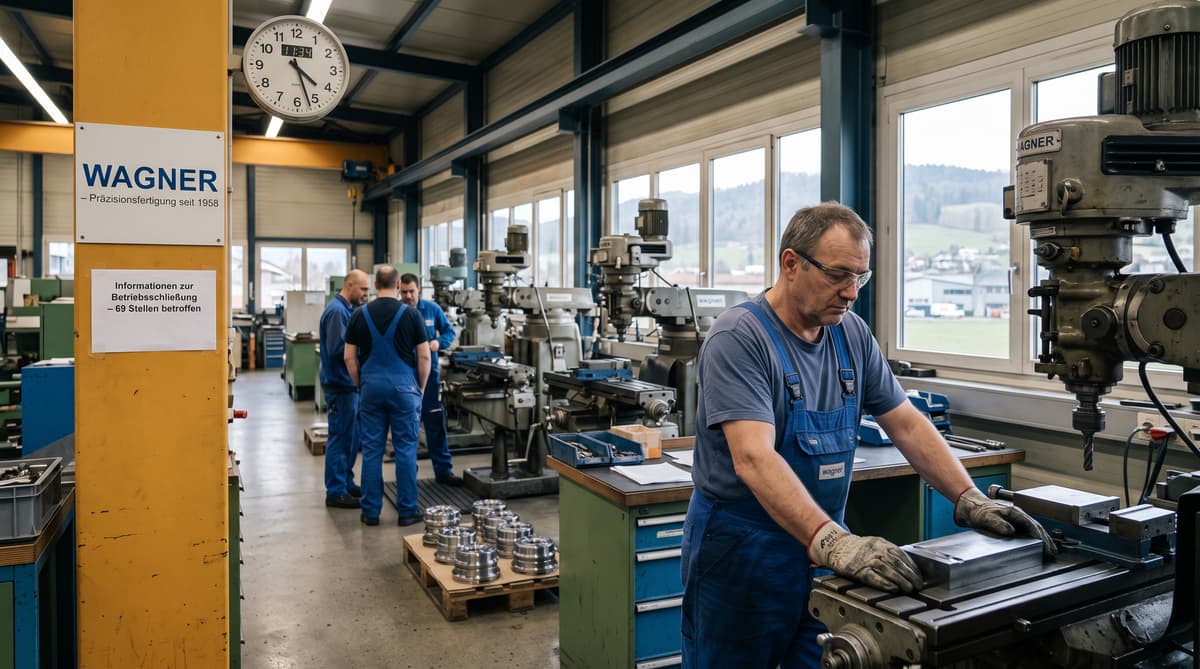
Sixty-nine jobs are at risk as Wagner prepares to shut its Waldstatt plant permanently. The Appenzell Ausserrhoden family business said on October 13 that an unsuccessful restructuring and investor search had left no economically viable path for the company as a whole.
The closure will unfold in stages rather than through an immediate halt. Wagner plans to keep production running on a larger scale than originally expected until the end of March 2027, after receiving additional orders from customers. The company will then transfer its activities and projects to other partners.
The timetable gives the business more time to complete customer work and organise the handover. It also creates a longer transition for the 69 employees whose redundancies and resignations will take place in stages. Wagner said a voluntary redundancy scheme had been agreed in consultation with the administrator.
The company makes components using metal die-casting and plastic injection moulding. Its customers include businesses in the automotive industry, mechanical engineering and plant engineering. The decision reaches beyond one site in Waldstatt, affecting a specialised manufacturer embedded in several industrial supply chains.
Complete Orders Before the Final Shutdown
Additional orders will keep Wagner’s production lines operating until March 2027. The extended schedule gives the company time to fulfil customer commitments before its projects and activities move to other partners.
Wagner said production would continue on a larger scale than originally planned. The announcement did not identify the customers involved or name the companies expected to take over the work. It said the transfer would be managed carefully, with the aim of preserving continuity for customers and supporting employees as they look for new jobs.
That handover will matter in sectors where component production depends on tooling, technical specifications and established quality processes. Wagner’s expertise in metal die-casting and plastic injection moulding serves automotive manufacturers as well as mechanical and plant engineering companies. A gradual transfer can give those customers more time to qualify alternative suppliers and move projects without an abrupt disruption.
The company’s formal wind-down remains subject to legal steps. The continuation of insolvency proceedings requires approval from the court, followed by the consent of creditors. Until those decisions are made, the timetable remains part of a process that combines customer delivery, workforce support and the orderly transfer of business.
Face the Pressures Squeezing Industry
Wagner’s owners say four pressures made the business unsustainable: weak demand, overcapacity, international competition and Switzerland’s industrial cost framework. The company reached that conclusion after an intensive restructuring effort and discussions with potential investors.
Wagner also said the owners provided additional funding, but that support could not prevent the closure. The statement did not disclose the amount of financing or provide a detailed breakdown of losses. It did make clear that the search focused on a solution for the entire company and ultimately failed to produce one that was economically viable.
The pressures described by Wagner reflect the exposure of Swiss manufacturers that operate in globally competitive markets. Companies producing specialised industrial parts must contend with fluctuating orders, excess capacity across the sector and rivals operating under different cost conditions. For a family-owned business, securing new capital or a buyer can become more difficult when the plant, equipment and customer base cannot support a credible long-term return.
Wagner’s consultation process opened on September 23 and closed on October 9. According to the company, no proposal emerged that would have changed the planned orderly closure. The decision followed those consultations and the failed investor discussions, rather than a single sudden event.
Support Workers Through the Transition
The closure ends more than 80 years of family ownership at Wagner. Silvan Halter, the company’s CEO and co-owner, is the third generation of his family to lead the business. He described the decision as an extraordinarily painful step for the family.
That history gives the shutdown a particular weight in Waldstatt, where a long-established industrial employer is now planning its final handover. The company has not indicated that the site will be sold or that another manufacturer will continue operating under the Wagner name. Its stated objective is to transfer projects to other partners while helping staff secure new employment.
The workforce transition will take place in stages. Wagner said the voluntary redundancy scheme was agreed with the administrator and that it intends to pursue a fair and orderly process. The announcement did not provide a breakdown of the affected roles, nor did it specify how many employees might leave before production ends.
For the region, the impact will depend partly on how many positions can be absorbed by nearby manufacturers. Appenzell Ausserrhoden has a strong small and medium-sized business base, but Wagner’s specialised skills may not map directly onto every available vacancy. The extended production period gives employees and regional employers several months to plan for that adjustment.
Navigate the Final Legal and Industrial Steps
The next milestone is legal approval, followed by a controlled transfer of Wagner’s remaining work. The court must approve the continuation of insolvency proceedings, and creditors must then give their consent. Those steps will determine how the company’s final phase proceeds in practice.
Wagner’s plan is clear in broad terms: complete additional customer orders, shift projects to other partners, and support the 69 affected employees in finding new work. The company has not published a detailed schedule for individual production lines or named the future partners. Those details are likely to emerge as the insolvency process and customer negotiations advance.
The case comes as Swiss businesses face a difficult insolvency environment. Swissinfo reported that 11,412 companies entered bankruptcy proceedings in the first nine months of 2026, 37% more than in the same period of 2025. That broader figure does not establish a direct link to Wagner’s closure, but it places the family business’s decision within a year of heightened pressure on companies across Switzerland.
For Waldstatt, the immediate priorities are practical: protect customer deliveries, complete the legal process and help employees move into new roles. Wagner’s production is scheduled to continue until the end of March 2027, giving all three efforts a defined window.