Immigration
Swiss finance leader proposes tax on companies hiring EU workers
Partners Group co-founder Alfred Gantner has proposed that companies pay a tax when they hire workers from the EU, with the proceeds distributed to the public. His suggested levy could reach 5% of an employee’s salary over five years, though it is a proposal rather than an adopted policy.
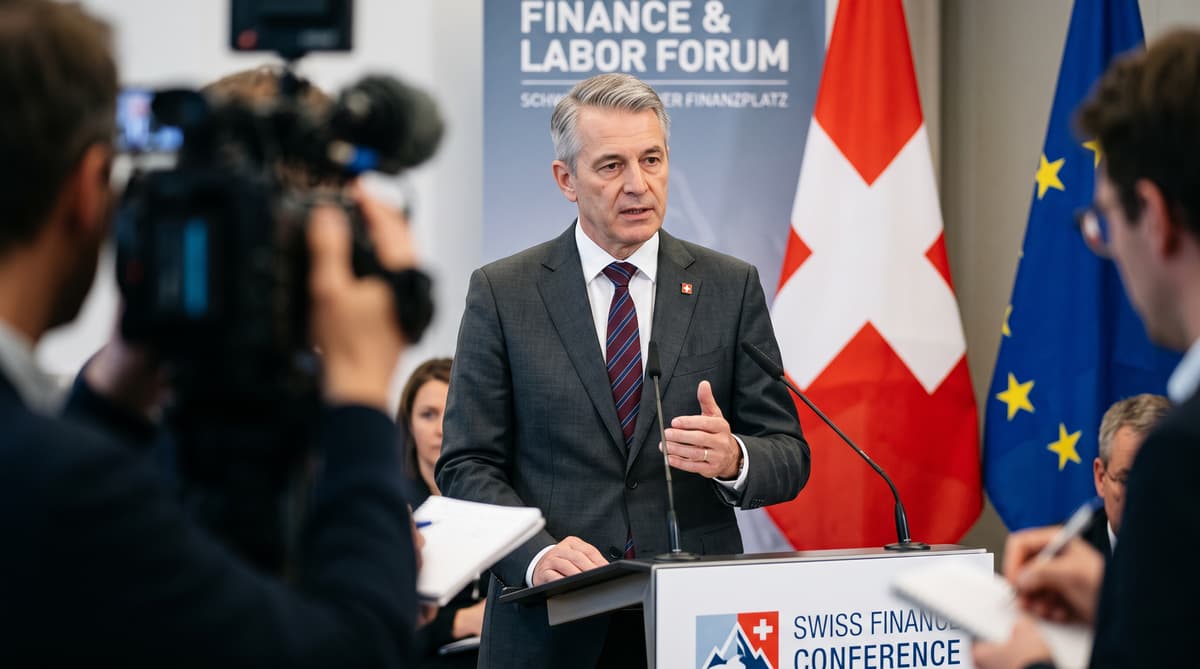
Alfred Gantner wants employers to pay when they recruit from the EU. The Partners Group co-founder says companies that benefit from immigration should contribute to the public costs associated with it. His proposal would place a salary-based charge on Swiss employers hiring EU nationals, then return part of the proceeds to residents.
Gantner made the case in an interview with Schweiz am Wochenende. He said Partners Group currently does not distinguish between recruiting someone in Bologna, Frankfurt or Paris for its office in Zug. A levy on overseas recruitment, he argued, would give companies a stronger reason to look for Swiss talent.
The idea arrives as Swiss lawmakers debate their own immigration charge. In September, the Senate advanced a plan to charge EU nationals who settle in Switzerland CHF 4,000. That proposal puts the bill on newcomers; Gantner’s would put it on their employers. Neither measure is the same as an adopted policy. The distinction matters for workers, companies and households, as the two plans assign the costs and potential benefits of immigration to different groups.
Make Employers Carry the Cost
The proposed charge would rise with an employee’s salary. Gantner says the highest rate could reach 5% of salary over five years, while lower salaries could face a rate of 1%. For a worker earning CHF 81,000 a year, he estimates the company would pay around CHF 20,000 over that period.
That structure is intended to make recruitment costs visible to employers. Gantner told Schweiz am Wochenende that a company recruiting overseas would then have a financial reason to consider Swiss candidates. The levy would apply to employers hiring workers from the EU, rather than being collected directly from those workers.
The proposal also raises questions for businesses that recruit internationally, including how an additional hiring cost might affect their choices. The sources describe Gantner’s reasoning and estimates, but do not set out a draft law or administrative mechanism. For now, the figures present the scale he wants lawmakers and the public to consider. The suggested charge would make the salary attached to a job part of the calculation, rather than applying one flat fee to every incoming worker.
Decide Who Gets the Revenue
Gantner puts the potential annual revenue at about CHF 1.35 billion. He wants some of that money to go to state coffers and a portion to be distributed to the public, with particular attention to low-income households.
As an illustration, Gantner told the newspaper that a four-person household among the lowest earners could receive around CHF 4,000 a year if the money were channelled to that group. The proposed transfer is part of his argument for making the levy a public dividend, rather than leaving all its proceeds with the state.
The estimate links the tax proposal to a broader debate over who pays for the infrastructure and services used by a growing population. Supporters of the separate Senate measure have argued that newcomers benefit from those public services before contributing to their funding. Gantner shifts the focus to the companies recruiting workers and proposes that residents share in the revenue. How the money would be divided, and who would qualify for a payment, would shape the proposal’s practical effect. His public comments set out the broad destination for the proceeds, not a detailed distribution plan.
Test the Proposal Against Swiss-EU Rules
The employer levy faces a more difficult route than the Senate’s proposed fee. The Local reports that Gantner’s plan is not compatible with the agreement on the free movement of persons between Switzerland and the EU. The lawmakers’ separate proposal, which would charge EU nationals who settle in Switzerland, is described as having a better chance of succeeding on that basis.
That difference puts the proposals on distinct political tracks. The Senate plan focuses on people moving to Switzerland and sets out a flat CHF 4,000 charge. Gantner’s version targets employers and calculates the contribution according to a worker’s salary. His proposal is also tied to Kompass Europa, the organisation he formed with other Partners Group co-founders to campaign against closer Swiss ties with the EU.
For Swiss companies, the debate could affect how recruitment costs are discussed if the employer levy advances. For residents, the proposed distribution raises questions about the recipients and scale of any payment. Gantner has put forward an alternative, but the legal compatibility of the competing approaches gives the Senate-backed measure the clearer path described so far.