Banking
Swiss Senate backs tougher capital rules for UBS
The Swiss Senate has backed a demanding new capital requirement that would require UBS to finance 90% of its foreign holdings with Common Equity Tier 1 capital, escalating debate over the country’s too-big-to-fail safeguards and banking competitiveness.
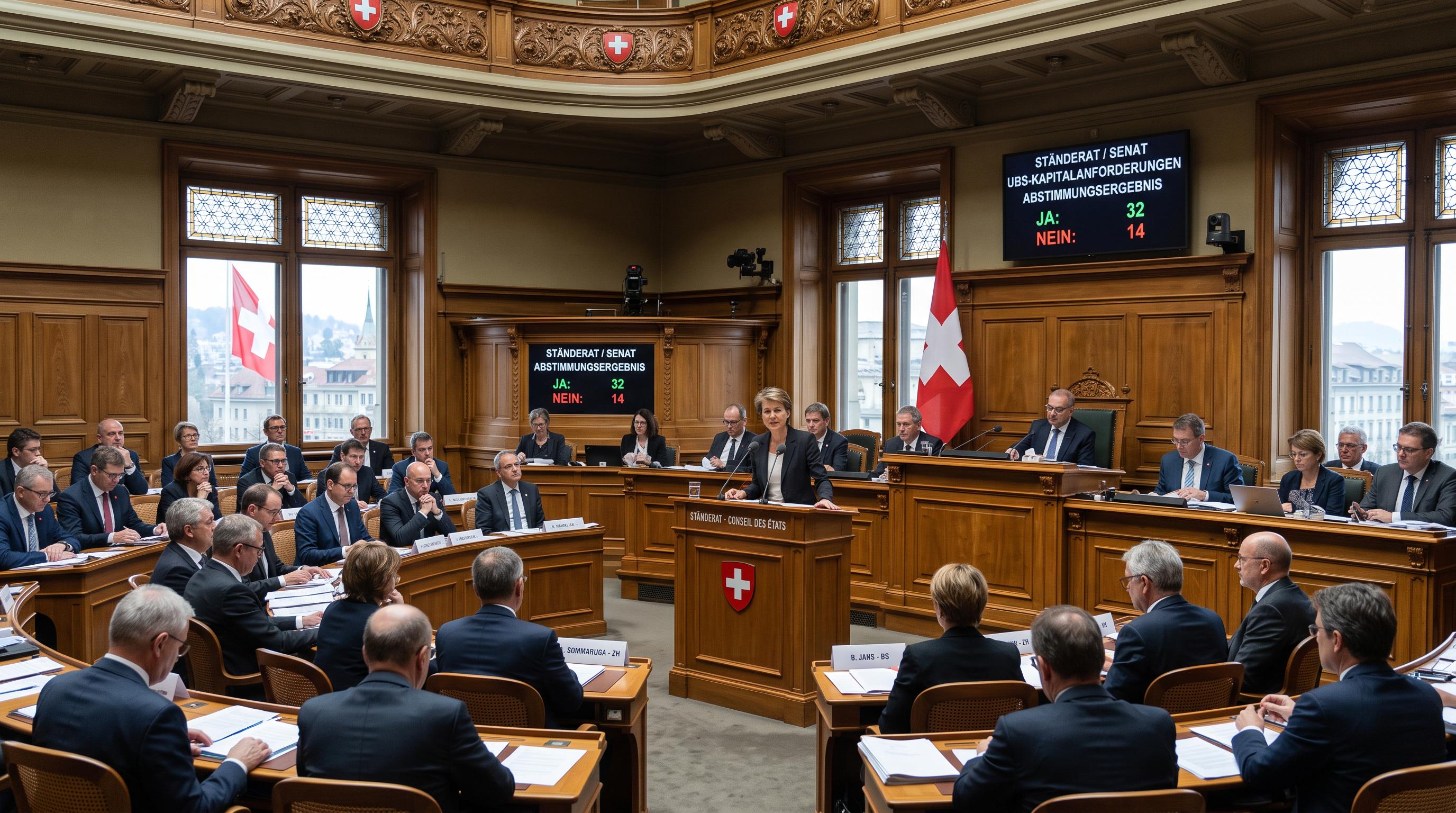
Senate Backs a 90% Capital Wall Around UBS
The Senate voted 29 to 16 for a 90% equity requirement, putting UBS at the centre of Switzerland’s renewed too-big-to-fail debate. The Council of States approved rules that would force the country’s largest bank to finance 90% of its foreign holdings with Common Equity Tier 1 capital, the highest quality form of bank capital.
The vote came on Wednesday, September 23, 2026, as Parliament works through reforms drafted after Credit Suisse collapsed in 2023 and was taken over by UBS. Those reforms aim to give Switzerland stronger protection if a systemically important bank runs into trouble again.
The Senate’s decision still does not create a binding rule. The bill now moves to the National Council, where lawmakers will examine the package before a final parliamentary decision. That decision could come at the end of 2026 at the earliest, and more likely in 2027.
The measure carries consequences beyond UBS’s balance sheet. It raises the amount of loss-absorbing capital the bank would need to hold against its international operations, while intensifying a debate over how much protection Switzerland needs and how much cost its leading global bank can absorb.
Lawmakers Reject the Compromise, Choose the Harder Line
The Senate rejected a 50% compromise and stopped short of a 100% demand. UBS and major business associations had supported the compromise proposal, which would have required the bank to cover at least half of its foreign holdings with Common Equity Tier 1 capital. It would also have allowed Additional Tier 1 bonds for the remaining portion up to 50%.
That approach failed. Senators instead backed the more demanding 90% threshold proposed by a significant minority. The Federal Council and another Senate minority had sought an even harder line: full backing of foreign holdings with hard equity. The chamber rejected that proposal as well.
The three figures show the political range now facing the banking sector. The 50% option offered UBS more flexibility in its capital mix. The 90% option places far greater weight on ordinary shareholder equity. The 100% proposal would have set the maximum level of hard-equity backing described in the debate.
Common Equity Tier 1 capital consists primarily of shareholder equity and retained earnings. Regulators value it because it can absorb losses directly. Additional Tier 1 instruments can also absorb losses, but they occupy a different place in the capital structure and can carry different terms for investors.
UBS Warns the Rules Could Hit Its Global Edge
UBS says the 90% threshold would damage its competitiveness. The bank publicly opposed the motion in the days before the vote, arguing that the Senate’s proposal went beyond a workable compromise. Major business associations joined that opposition and preferred the 50% model.
The bank’s concern centres on the cost and structure of supporting international subsidiaries with more Common Equity Tier 1 capital. A higher equity requirement can strengthen resilience, but it can also affect how a bank allocates capital across businesses, prices services, and competes with international rivals. The source material does not quantify the potential financial impact on UBS.
UBS’s position reflects the bank’s global footprint and Switzerland’s economic dependence on internationally active financial institutions. The debate also carries a political memory of the Credit Suisse rescue, which left UBS larger and made the consequences of a future failure more significant for the Swiss state and economy.
The bank has therefore faced pressure from two directions. Business groups have stressed competitiveness, while supporters of stricter rules have focused on protection against losses connected to foreign operations. The Senate’s vote shows that, for a majority of the chamber, the resilience argument currently outweighs the compromise preferred by UBS and its allies.
The National Council Takes the Next Decision
The National Council now controls the next stage of the fight. The bill will move from the Senate to the lower house, where lawmakers can approve the 90% requirement, revise it, or reopen the argument over the role of Additional Tier 1 bonds. The parliamentary process means the Senate’s vote marks a major step, not the end of the legislation.
A final decision is expected at the end of 2026 at the earliest and more likely in 2027. That timetable gives UBS, business associations, regulators, and political parties time to press their cases. It also ensures that the capital debate will remain tied to wider reviews of Switzerland’s too-big-to-fail framework.
For Swiss policymakers, the practical issue is how to protect the domestic economy when a global bank operates through foreign units. For UBS, the issue is how much capital must sit behind those operations and how the requirement affects its international business. For investors, the outcome could shape expectations about returns, funding, and the bank’s capital planning, although the source material provides no forecast for those effects.
The next parliamentary votes will determine whether Switzerland adopts the Senate’s 90% model, returns to a compromise, or moves in another direction. Until then, UBS remains under a proposed rule that would impose a substantially higher hard-equity burden than the model supported by the bank.