Switzerland
More Than 800,000 Swiss Seniors Say They Want More Company
A Pro Senectute survey indicates that more than 800,000 people aged 60 and over would like more companionship, with widowed and separated people particularly vulnerable to social isolation. The article should examine the scale and causes of loneliness among older residents and the implications for families, municipalities and social services.
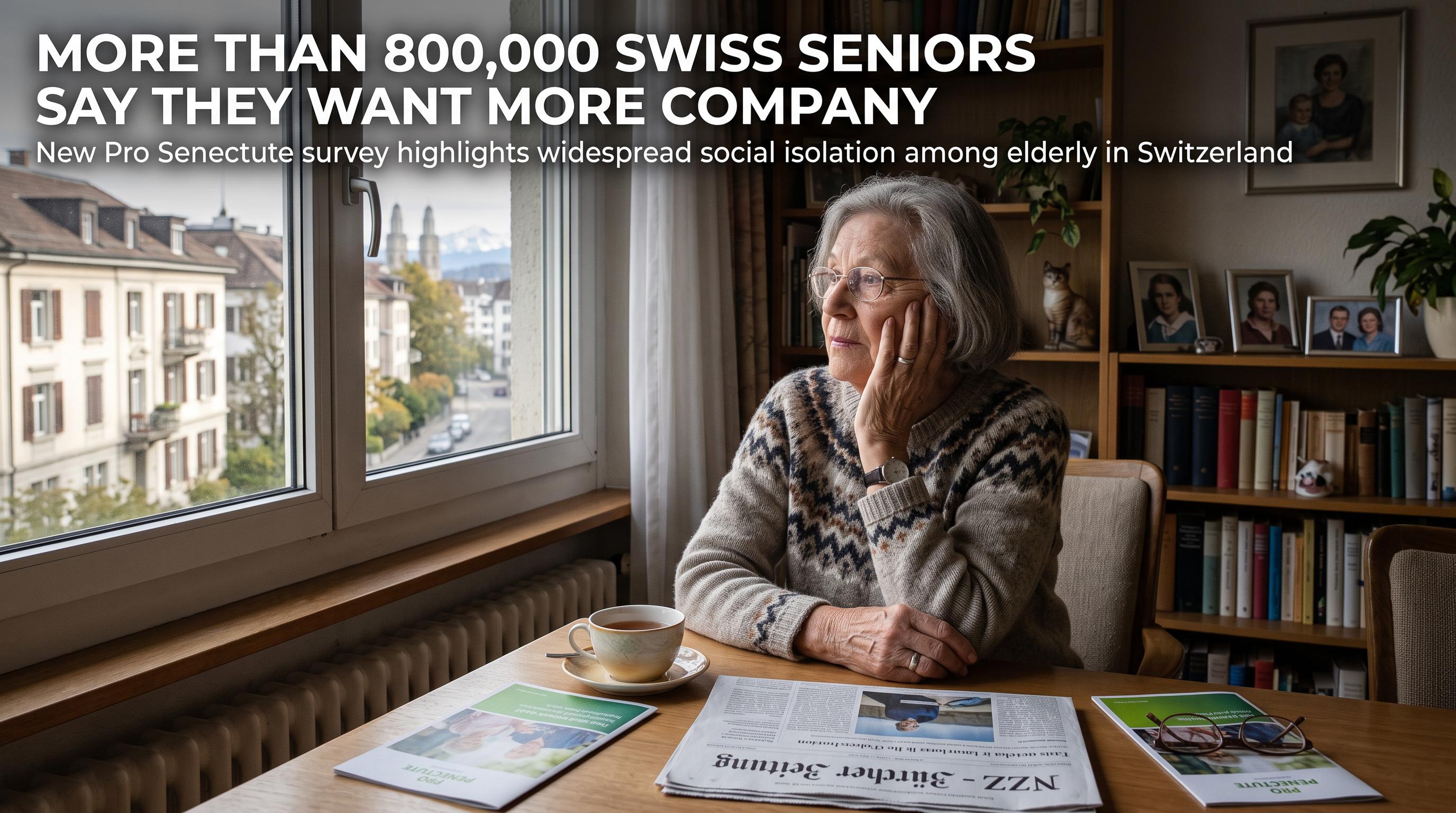
Map the Scale of Senior Loneliness
More than 800,000 people aged 60 and over say they want more company. The figure comes from a Pro Senectute Switzerland survey published on October 1, 2026, and places loneliness among older residents firmly on the public policy agenda.
Most older people remain connected to partners, relatives, friends and local communities. Yet 36% say they do not have enough social support at least from time to time. Around 140,000 people report that they frequently lack contact with others. Those figures describe different levels of isolation, but together they show that social disconnection reaches well beyond a small group of people living alone.
The survey, “Relationships among older people”, points to the conditions surrounding later life rather than age alone. Bereavement, separation, low income and reduced access to social activities can all narrow a person’s circle. The findings matter for Switzerland as its population ages and demand grows for services that support participation alongside healthcare and housing.
Families, municipalities and community organisations will encounter the issue in ordinary settings: a person who stops attending a club, loses a partner or can no longer afford regular outings. Earlier recognition can determine whether that change remains temporary or becomes entrenched.
Support People After Loss
Widowhood and separation sharply increase the risk of frequent social isolation. Pro Senectute found that 11% of widows and widowers often lack social contact, compared with 3% of married people. Losing a long-term partner can remove a daily source of conversation, practical help and shared routines in a single household.
The figures do not mean that every person without a partner is lonely. Around half of single people say they rule out a new relationship in principle, suggesting that some people choose to live independently and feel comfortable doing so. Living arrangements provide an important indicator, but they cannot by themselves measure wellbeing.
The survey also shows why bereavement support should extend beyond the immediate aftermath of a death. A spouse’s friends, family routines and shared activities may disappear at the same time. Transport difficulties, health limitations or unfamiliarity with local groups can make rebuilding a social network harder.
Swiss municipalities can respond through low-cost meeting places, accessible transport and information distributed through doctors, pharmacies, churches, clubs and senior organisations. Such measures can help people find contact without treating independence as a problem to be corrected.
Remove the Price of Company
Income shapes access to companionship as much as relationship status does. Pro Senectute linked modest financial circumstances with a greater lack of company and stronger feelings of exclusion among older people.
The reasons are practical. A limited budget can make restaurant meals, cultural events, club fees and public transport harder to afford. Older people with less money may also live in housing with fewer shared spaces or face health and mobility costs that reduce what remains for social activities. A person can have relatives nearby and still lack regular opportunities to meet them.
This gives social policy a wider remit than loneliness campaigns alone. Municipalities and cantons can examine whether existing activities are affordable, reachable and clearly advertised. Free or low-cost lunches, neighbourhood groups, volunteer transport and regular activities in libraries or community centres can reduce the financial barriers identified by the survey.
Pro Senectute already provides group activities and meeting places designed to encourage participation. Alain Huber, the organisation’s director, called for “simple and affordable opportunities” to meet, interact and take part in shared activities. The emphasis on affordability is central. A service that exists but costs too much or requires a difficult journey will not reach the people most likely to need it.
Build Networks Beyond the Family
Family ties remain important, but they cannot carry the entire response. Relatives may live in another canton, work full time or provide support remotely. Friends can face their own health limitations. The survey identifies family ties, friendships, neighbourhood connections, community groups and voluntary work as resources that help older people maintain a social life.
That network is local as well as personal. A regular conversation with a neighbour, a place to volunteer or a weekly group can create dependable contact without requiring a new intimate relationship. For people who have lost a partner, routine may be especially valuable because it provides a reason to leave home and people who notice an unexplained absence.
Social services can strengthen these links by coordinating referrals. A doctor, home-care worker or housing administrator may notice withdrawal before a family member does. Clear routes to Pro Senectute activities, local associations and municipal meeting places would allow professionals to act on those observations. Consent and dignity must guide any intervention, particularly when a person has deliberately chosen to live alone.
Switzerland’s response will depend on cooperation across sectors. Families can maintain regular contact, while municipalities and voluntary organisations make participation easier to find, afford and reach.
Make Connection Part of Later Life
The survey defines a clear test for Switzerland’s ageing society: make social participation part of everyday infrastructure. Pro Senectute’s findings show that loneliness depends less on age itself than on living conditions. Relationship status, income, health, mobility and access to local groups can determine whether someone remains connected.
The next step is practical measurement. Municipalities can track attendance at senior programmes, transport access and the availability of affordable meeting places. Social services can record whether referrals lead to sustained participation rather than a single contact. Families and neighbours can treat repeated withdrawal as information worth sharing with appropriate support services, while respecting an older person’s choices.
The issue also sits within a wider global discussion. The World Health Organization has reported that one in six people worldwide are affected by loneliness, although the Swiss survey focuses specifically on people aged 60 and over and should be read on its own terms.
For Swiss communities, the immediate priorities are visible in the data: reach the more than 800,000 who want more company, pay attention to the 140,000 who frequently lack contact and remove financial and practical barriers. Regular, affordable opportunities to meet can turn social support from an occasional service into a dependable part of later life.