Basel
Basel Zoo welcomes Indian rhinoceros calf
A male Indian rhinoceros calf has been born at Basel Zoo, the 39th Indian rhino born there since the zoo recorded the world’s first captive birth of the species in 1956. The calf, Xshama, is the second for his mother, Shakti.
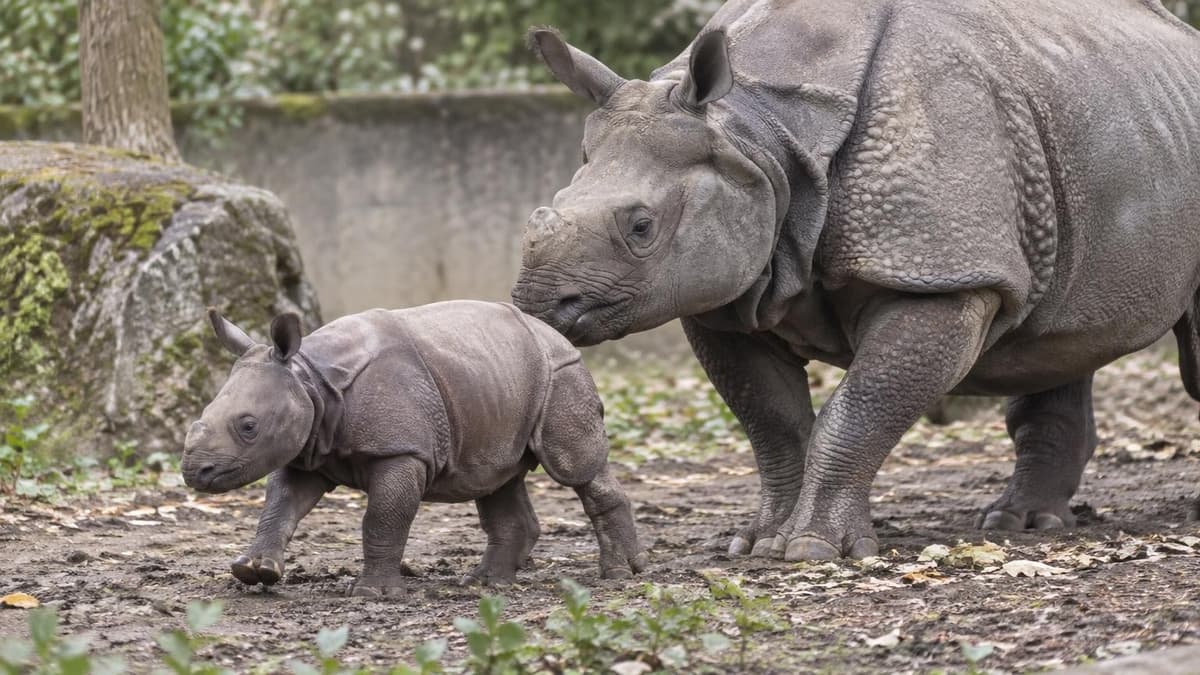
Basel Zoo has welcomed its 39th Indian rhinoceros calf, marking seven decades since the zoo recorded the first captive birth of the species. The male calf, Xshama, was born to nine-year-old Shakti on a Thursday, the zoo announced on Tuesday, November 10, 2026. The birth was uncomplicated, following a pregnancy of 489 days, or about 16 months.
The arrival adds a new chapter to a breeding history that began in 1956, when Rudra became the world’s first Indian rhinoceros born in captivity. Basel Zoo says 38 individuals have been born there since Rudra, making Xshama the 39th. The milestone links a new arrival in the Basel rhinoceros enclosure with the zoo’s long-running role in breeding this vulnerable Asian species. For Shakti, Xshama is her second calf. Her first, Tican, was born in 2022.
Follow Shakti and Her Calf
Shakti has raised one calf before, and the birth of Xshama makes her a mother for the second time. Tican, her first calf, was born in 2022. Xshama’s father, 11-year-old Puri, has now fathered his first calf.
Indian rhinoceroses are generally solitary, but females stay with their calves. The young animal’s needs set the rhythm of their day, while the mother intervenes only if danger arises. That pattern places the mother and calf together through the early stages of the young rhino’s life. Shakti’s pregnancy lasted 489 days, around 16 months, and Basel Zoo said the birth took place without complications.
The details give the Basel birth its family context: a second calf for Shakti, a first for Puri, and a new generation following Tican. Xshama’s arrival also brings the zoo’s total of Indian rhinoceros births to 39, continuing a breeding history that began with Rudra in 1956.
Trace Basel’s Breeding Record
Basel Zoo’s Indian rhinoceros breeding history began in 1956, when Rudra became the first member of the species born in captivity anywhere in the world. Xshama’s birth, 70 years later, is the 39th at the zoo. The first birth attracted considerable attention at the time, and Basel Zoo has continued to build on that record.
Since 1972, the zoo has maintained the international breeding register for Indian rhinoceroses. The register is part of the institution’s long-standing work with the species, connecting individual births at Basel with the broader record of captive breeding. Xshama’s place in that history is clear: Rudra was the first, and the new calf is the 39th born at the zoo.
The anniversary gives the latest birth added significance for Basel. It is both a new arrival for Shakti and Puri and a continuation of a breeding programme that has spanned generations of Indian rhinoceroses at the zoo.
Keep the Species in Focus
The Indian rhinoceros is classified as vulnerable on the IUCN Red List, and its population has declined sharply in recent years. The one-horned species is found in Asia. Xshama’s birth in Basel adds to the zoo’s record with an endangered species whose conservation status remains a concern.
The calf’s arrival also shows how Basel Zoo’s work with Indian rhinoceroses has extended across decades. Rudra’s birth in 1956 marked the first captive birth of the species; Xshama is the 39th born at the zoo. Since 1972, Basel Zoo has maintained the international breeding register, recording the species’ breeding history.
For now, Xshama’s immediate world is shaped by his mother. Indian rhinoceros females remain with their calves, and the calf’s needs determine the pace of their day. Shakti’s uncomplicated delivery and her experience raising Tican precede this next stage for the mother and her new calf.