Switzerland
EU extends sanctions against former Swiss army colonel Jacques Baud
The EU has extended sanctions against former Swiss army colonel Jacques Baud until October 9, 2027. The measures include an asset freeze and travel restrictions over allegations that he spread pro-Russian propaganda.
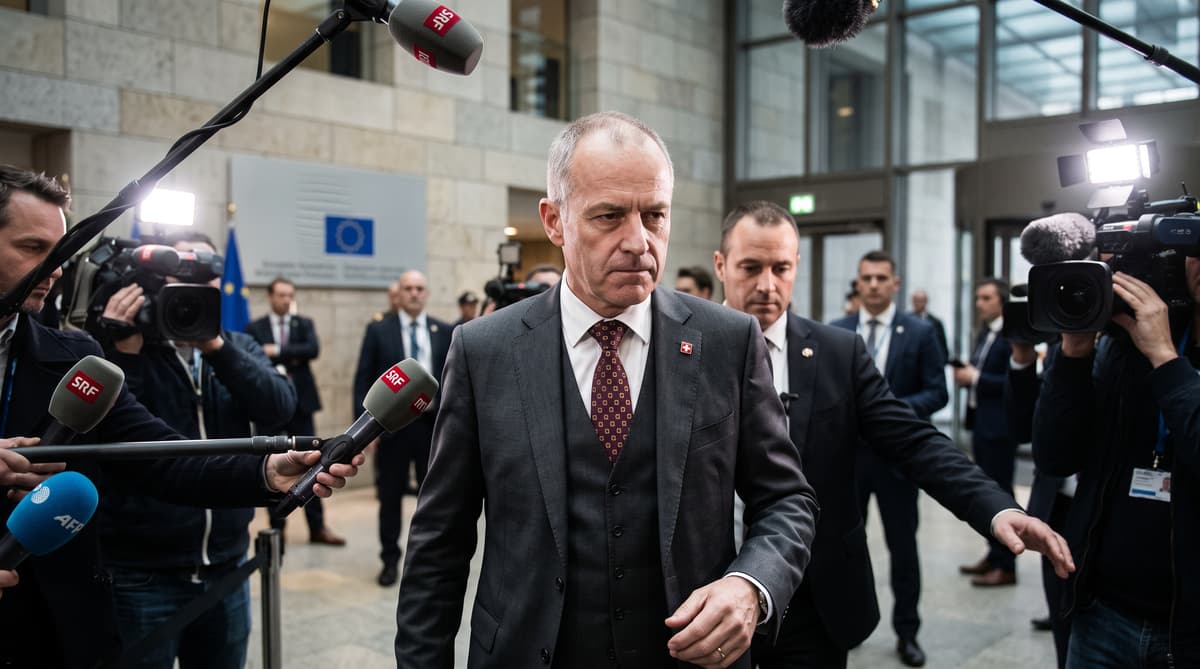
The EU’s sanctions against Jacques Baud will remain in force until October 9, 2027. The former Swiss Army General Staff colonel remains subject to an asset freeze and travel restrictions after the European Union renewed its measures against Russia’s “destabilising activities” on October 8.
Baud, a 71-year-old Geneva-born resident of Brussels, was added to the list on December 15, 2025. The EU accuses him of promoting pro-Russian narratives through media contributions and spreading conspiracy theories. It cites, in particular, his claim that Ukraine orchestrated its own invasion to secure NATO membership.
The renewal keeps those allegations tied to restrictions that have affected Baud’s access to money and his ability to travel. He says he cannot freely reach his bank accounts, including funds for his pension, and cannot leave Belgium. The decision also comes as he pursues a legal challenge to his listing before the EU’s General Court.
Track the EU’s revised wording
The renewed EU text changes its description of the conduct covered by the sanctions. It now refers to actions that “undermine democracy and threaten the stability or security of a third country”. The earlier wording referred to conduct that undermined or threatened the stability or security of a third country, identified as Ukraine. The revised text no longer names Ukraine in that passage, and changes “or” to “and”.
The specific allegations against Baud remain unchanged. The EU says his media contributions and statements spread pro-Russian propaganda and conspiracy theories. Among the claims it criticises is his assertion that Ukraine orchestrated its own invasion to join NATO.
Baud disputes the allegations. In December 2025, he said: “I have never received a single cent from Russia.” He says his analyses draw on Ukrainian and American sources and disputes how the EU interprets his remarks about the invasion. He has linked those remarks to a 2019 interview with Oleksiy Arestovych, who later became an adviser to Ukrainian President Volodymyr Zelensky.
Follow the court challenge and restrictions
Baud’s EU court case seeks to overturn his inclusion on the sanctions list. He brought the case before the General Court of the European Union in March 2026. The renewal leaves the restrictions in place while that legal challenge proceeds.
The practical effects have centred on his access to funds in Belgium. After several months without access, a humanitarian exemption allowed him to use his Belgian account from mid-March until the end of June. Baud says the funds became inaccessible again at the start of July. Belgian authorities granted a further exemption requested in early May at the start of October, but by the middle of that month it had not yet been implemented.
The restrictions have also affected his ability to travel. Baud says he is unable to leave Belgium. The measures include an asset freeze and travel restrictions, while the humanitarian exemptions concern access to his Belgian account.
Connect the case to Baud’s Swiss career
Baud worked for Swiss secret services from 1983 to 1990. Born in Geneva, he served as a retired colonel in the Swiss Army General Staff and analysed Warsaw Pact forces during his intelligence-service career. He later held several posts with the United Nations, including in Sudan.
His public profile now rests largely on commentary about the war in Ukraine. Baud is highly critical of EU and Western policies on the conflict, and his YouTube videos have attracted several million views. The EU’s decision places his public arguments and their interpretation at the centre of an ongoing sanctions dispute involving a former Swiss military and intelligence figure.
For Switzerland, the case concerns a Swiss-born former senior officer living in Brussels, subject to EU restrictions and pursuing a challenge in an EU court. The renewed measures remain in force through October 9, 2027, unless the listing changes before then.