Davos
Davos rejects 21 temporary construction projects ahead of WEF
Davos has rejected 21 temporary construction projects planned for the 2027 World Economic Forum meeting. The municipality has introduced a cap of 125 approved projects after receiving 190 applications.
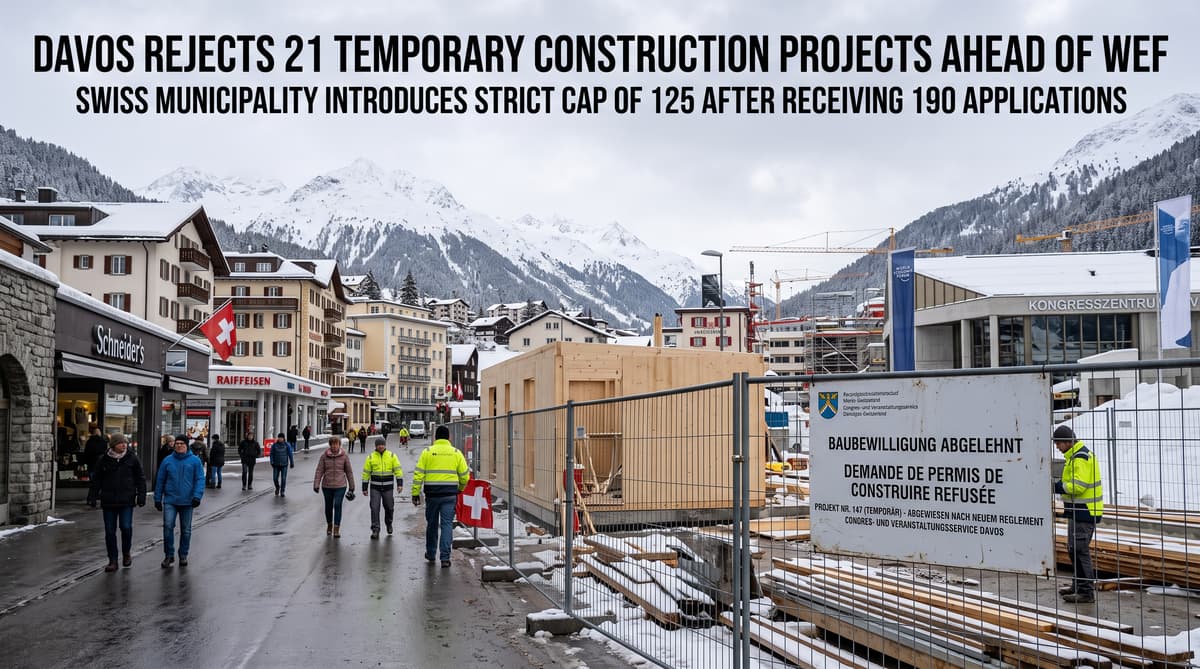
Davos has approved 125 temporary projects for the 2027 World Economic Forum meeting, while refusing 21 others. The decision sets a firm limit on the construction activity that accompanies the annual gathering in the Graubünden resort.
The municipality received 190 planning applications. Davos's executive body, the Kleine Landrat, reviewed 146 projects and concluded that 21 failed to meet the requirements. The remaining 125 received planning permission, subject to the quota introduced for the first time for the 2027 meeting.
The decision gives the town a defined list of projects that can proceed as organisers, companies, media organisations and other participants prepare for the WEF. Temporary pavilions, meeting spaces and adaptations to existing premises have become a regular part of the event's physical footprint.
Davos published the decision on October 15, 2026. The local authority has linked the cap to the practical limits of managing a short, highly concentrated period of activity. It says the volume of temporary construction has risen steadily in recent years, increasing pressure on transport, accommodation, staffing and safety inspections.
Officials Rank Projects by Need and Conduct
Twenty one projects will receive no planning permission after failing Davos's requirements. The Kleine Landrat assessed the applications through a points based process designed to rank projects consistently under the new limit.
In the first stage, officials examined whether each application was complete, who would use the project and when the application had been submitted. Projects that had received fines for misconduct in previous years incurred penalty points. The procedure therefore considered both the quality of the current submission and the applicant's record at earlier WEF meetings.
If applications remained tied, Davos moved to a second assessment. Officials considered sustainability and innovation, the use of public land and the amount of space required for guests. A draw served as the final tie breaker if the second stage produced no clear result.
The municipality has not identified the refused projects individually in the supplied statement. It has said that the 21 applications did not meet the requirements. The outcome leaves 125 approved projects, matching the quota set by the local government for the 2027 meeting.
Davos Links the Cap to Traffic and Housing Pressure
Davos says the cap responds to pressure that extends beyond construction sites. Temporary structures bring additional guests to the resort and require personnel to operate them, according to the local government.
The municipality warned in April that the extra activity increases road traffic and places further strain on an accommodation market already short of rooms. During the WEF meeting, demand rises sharply across hotels, rented apartments and staff housing. The local authority has presented the quota as a way to keep the event's operational demands within manageable limits.
Safety checks also influenced the decision. Davos said fire safety and other systematic inspections require staff resources, and that officials cannot review an unlimited number of projects with the necessary care during the short preparation period. The statement places administrative capacity alongside transport and lodging as a constraint on the meeting's temporary expansion.
The cap applies to the 2027 annual meeting. The supplied announcement does not state whether the limit will remain unchanged in later years. For now, organisers and applicants have a clearer boundary as they plan venues, staffing and logistics in a town whose permanent infrastructure must absorb a global event each winter.