cars
Chinese competition helps drive Swiss car prices lower
Average asking prices for new and used cars in Switzerland fell again in the third quarter, with competition from lower-priced Chinese brands contributing to the decline. New-car prices dropped 5. 8% year-on-year, while used-car prices fell 4. 3%.
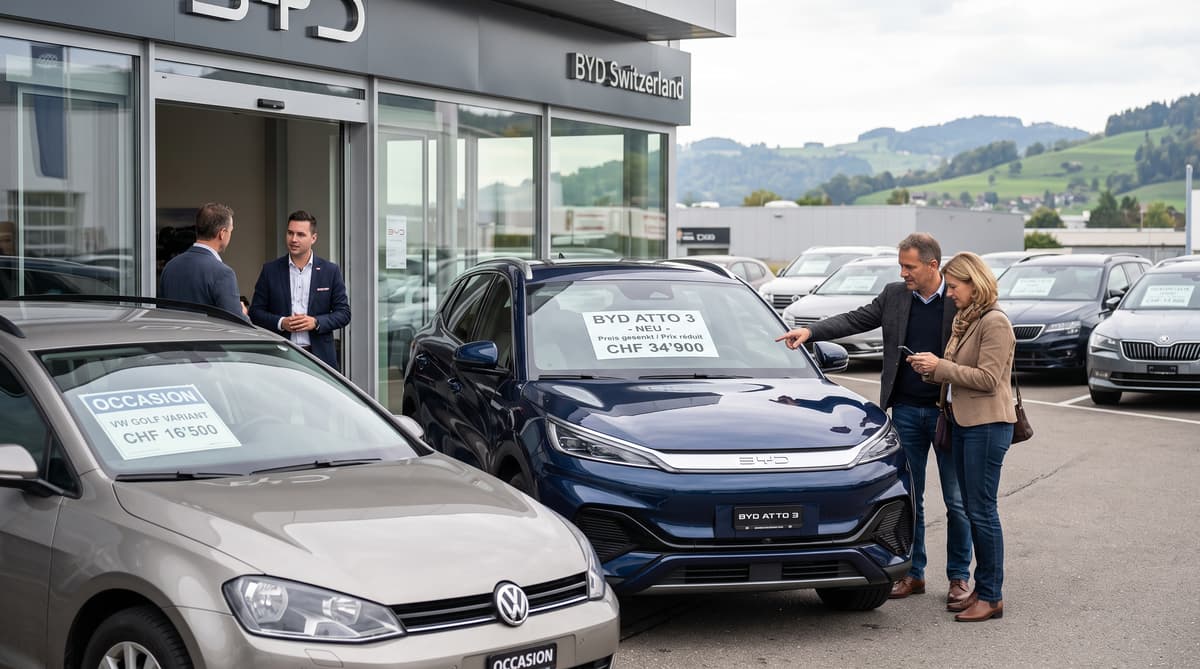
New-car asking prices fell 5.8% in one year, giving Swiss buyers another sign that the market is moving in their favour. AutoScout24 recorded a further 2.6% decline between the second and third quarters of 2026, while prices for used cars fell 4.3% year-on-year and 0.8% quarter-on-quarter.
The figures cover asking prices listed on Switzerland’s leading online car marketplace, rather than final transaction prices. They nevertheless show a broad movement across the market. Families replacing an older vehicle, commuters seeking a more affordable model and companies renewing fleets are all encountering lower advertised prices than a year ago.
Competition from Chinese manufacturers is contributing to the shift. AutoScout24 said these brands are expanding their presence in Switzerland with lower-priced models, while also attracting attention through technology and rapid product development. Their growing visibility gives consumers more options when comparing cars in a market long dominated by European, Japanese and South Korean manufacturers.
Supply is also increasing. The number of vehicles advertised on AutoScout24 rose 0.7% from the previous quarter and 2.6% over the year. More choice and sharper price competition are putting pressure on sellers across both the new and used markets.
Watch the Powertrain Price Gap
New plug-in hybrid prices plunged 16% year-on-year, the sharpest decline identified in the AutoScout24 analysis. The drop points to a particularly competitive segment where buyers can weigh petrol, hybrid and fully electric options against one another.
New petrol cars also became cheaper. Their average asking prices fell 4.4% compared with the second quarter and 4.9% compared with the third quarter of 2025. These declines affect one of the most familiar categories on Swiss roads, where buyers continue to assess purchase price, running costs and access to charging infrastructure.
The electric-car picture is more mixed. Used electric vehicles rose 1.5% quarter-on-quarter, making them the only category in the analysis to record a short-term increase. Their prices still remained 1.4% below the level recorded a year earlier. That annual decline suggests that depreciation and expanding supply continue to influence the second-hand electric market, even as individual quarters produce temporary rebounds.
Chinese manufacturers are entering this contest with models positioned around price, equipment and newer technology. AutoScout24 previously highlighted their growing presence in Switzerland. Their expansion adds pressure to established brands, particularly in segments where buyers compare electric and hybrid drivetrains closely.
More Listings Tighten the Market
Used-car listings increased 2.5% year-on-year, helping expand the choice available to Swiss motorists. Across all vehicles, AutoScout24 counted 2.6% more advertisements than a year earlier. New-car listings rose 3.9% year-on-year, although they slipped 0.8% from the previous quarter. Used-car listings grew 0.9% quarter-on-quarter.
That additional supply can weigh on asking prices. Dealers and private sellers face more competition for buyers, while motorists can take more time to compare mileage, equipment, warranty terms and financing. A larger selection also makes it harder for older or less competitively priced vehicles to retain their previous market value.
The effect matters beyond the dealership. Cars are a significant household purchase in Switzerland, and lower asking prices can reduce the upfront cost of replacing a vehicle. The benefit will vary by model and buyer, since financing rates, insurance, maintenance and fuel or charging expenses remain separate costs.
AutoScout24’s figures describe listings rather than completed sales, so they do not show precisely how much buyers ultimately pay. They do, however, connect falling prices with a market carrying more vehicles and a wider range of brands. Chinese manufacturers are part of that expanding choice, rather than the sole explanation for it.
Prepare for a Broader Brand Battle
Chinese brands are becoming a more visible part of Switzerland’s car market, according to AutoScout24’s assessment earlier this year. Their lower prices, technology and fast pace of innovation are encouraging interest while established manufacturers face a market with falling average asking prices.
For Swiss consumers, the next phase will depend on how these vehicles perform over time in areas that influence ownership decisions: servicing networks, spare-parts access, resale values and software support. The source analysis does not provide brand-level sales figures or identify individual manufacturers, so it cannot show which Chinese companies are gaining the most ground.
The broader price trend is already clear. New and used vehicles both cost less on average than a year earlier, while supply has increased. The sharpest movement came in new plug-in hybrids, and used electric cars continued to sit below their year-earlier price despite a quarterly recovery.
Dealers will need to manage larger inventories and more direct comparisons between brands. Buyers, meanwhile, have more room to negotiate and more specifications to weigh. Switzerland’s market remains open to established manufacturers, but the arrival of lower-priced Chinese models is changing the reference points against which every car is judged.