Technology
Self-Driving Taxis to Launch in Zurich This Year, Uber and WeRide Announce
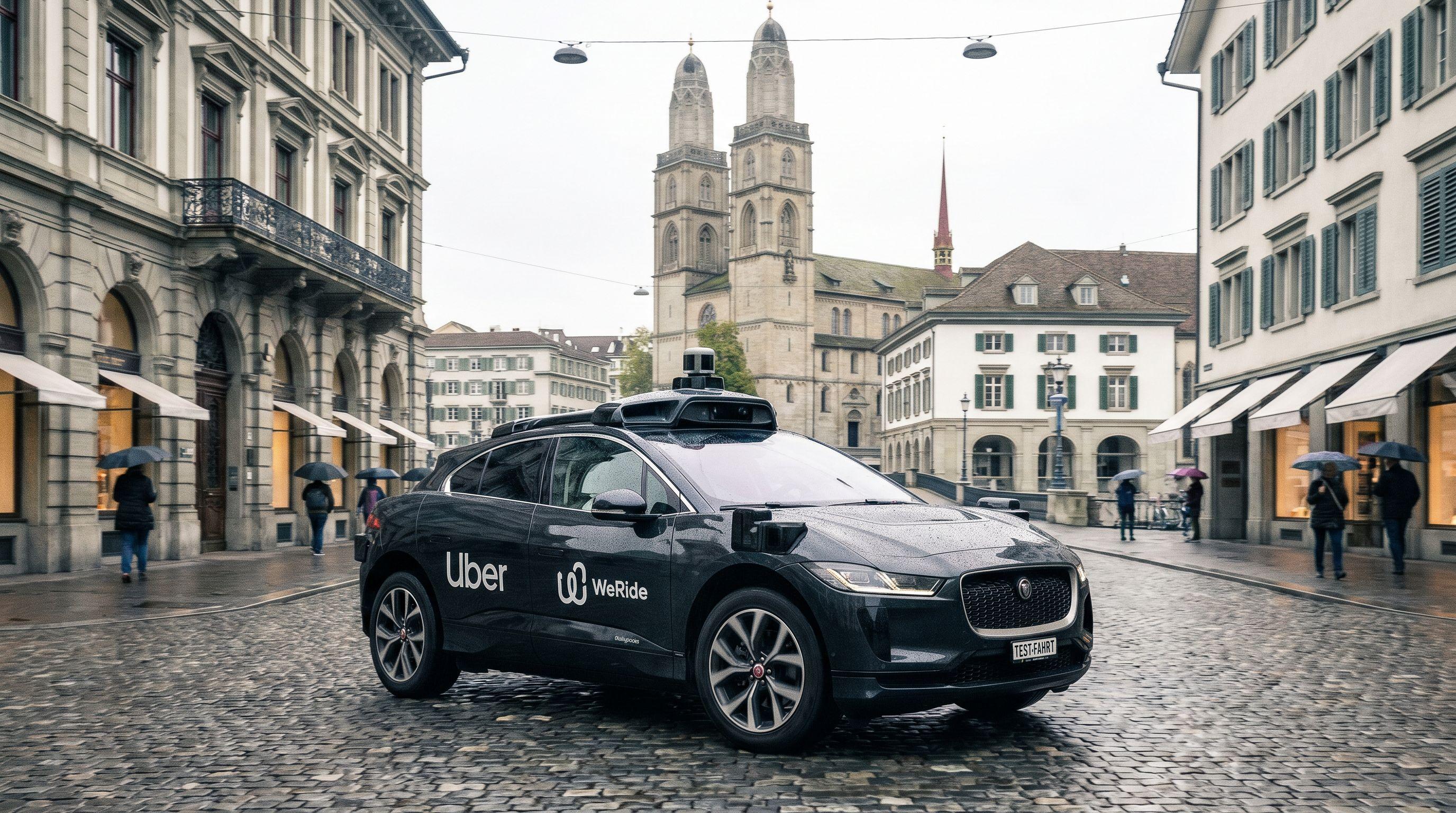
Zurich is poised to become one of the first European cities to trial commercial self-driving taxis. US ride-hailing giant Uber and Chinese tech firm WeRide have announced plans to launch a service later this year, subject to federal approval. The vehicles will initially operate with a safety driver on board and be available to book through the Uber app.
Zurich Claims the Future of Urban Transit
Zurich is officially the first region in Switzerland to shatter the traditional driving paradigm. In a move that cements the city's status as a global tech hub, US ride-hailing titan Uber and Chinese autonomous pioneer WeRide have confirmed a commercial launch for later this year. This isn't just a pilot; it is a declaration of intent. While other European capitals grapple with red tape, Zurich is moving at light speed to integrate driverless technology into its veins. The service will be seamlessly integrated into the existing Uber app, allowing users to summon a robotaxi with a single tap. This launch follows hot on the heels of a similar rollout in Madrid, positioning Zurich within an elite global club of cities—including Dubai and Abu Dhabi—where the future of mobility is already a reality. The arrival of these vehicles marks a seismic shift in how the Swiss will navigate their most populous city, turning science fiction into a daily utility.
The Power Duo: Uber and WeRide Disrupt the Streets
The scale of this operation is staggering, backed by a partnership designed to deploy tens of thousands of autonomous vehicles globally. Uber provides the massive consumer interface and logistical backbone, while WeRide brings the cutting-edge 'Level 4' autonomous hardware. In Zurich, the operation gains a local edge through Rydera, a Swiss-based mobility provider that will oversee the fleet's daily movements. Initially, every vehicle will carry a safety operator—a critical safeguard as the system learns the nuances of Swiss traffic. However, the trajectory is clear: the ultimate goal is a fully driverless, human-free service. This collaboration represents a massive capital injection into the local economy and a challenge to traditional taxi services. By leveraging WeRide’s proven track record in the Middle East and China, Uber is effectively bypassing years of R&D to dominate the Swiss market. The synergy between American software, Chinese hardware, and Swiss operational precision creates a formidable force that few competitors can match.
Regulatory Green Lights Accelerate Innovation
Switzerland’s regulatory environment is proving to be its greatest competitive advantage. While many nations remain paralyzed by the legal complexities of AI, the Federal Roads Office (Ustra) has already paved the way. WeRide has secured critical authorizations to conduct driverless tests in the Furttal region on the outskirts of Zurich, beginning as early as late 2025. This proactive stance by federal authorities provides the legal certainty that tech giants crave. It is a calculated risk that pays off in prestige and progress. The Swiss framework doesn't just allow for innovation; it invites it. This regulatory clarity is the primary reason Zurich was chosen over other European contenders. By establishing clear safety protocols and operational boundaries, Ustra has ensured that Switzerland remains at the forefront of the autonomous revolution. The impending commercial approval is viewed by many as a formality, given the rigorous testing already underway in the outskirts, signaling a new standard for European transport policy.
A New Era for the Swiss Commuter
The implications for the average Zurich resident are profound and immediate. Imagine a commute where the stress of traffic is replaced by the quiet efficiency of a robot. For tourists and locals alike, the entry into the Swiss market represents a critical step in the international expansion of autonomous transit. This launch will likely trigger a domino effect across other Swiss cities like Geneva and Basel. As the fleet expands, we expect to see a dramatic reduction in traffic congestion and a surge in ride-sharing efficiency. The data is clear: autonomous systems don't get tired, don't get distracted, and don't break traffic laws. While some may grapple with the loss of the traditional 'taxi driver' experience, the promise of lower costs and higher safety is an irresistible trade-off. Zurich is no longer just a financial capital; it is now the laboratory for the future of human movement. As these cars begin to roam the Bahnhofstrasse, the message to the world is loud and clear: Switzerland is ready for the machine age.