AI
Switzerland to Host 2027 World Summit on Artificial Intelligence
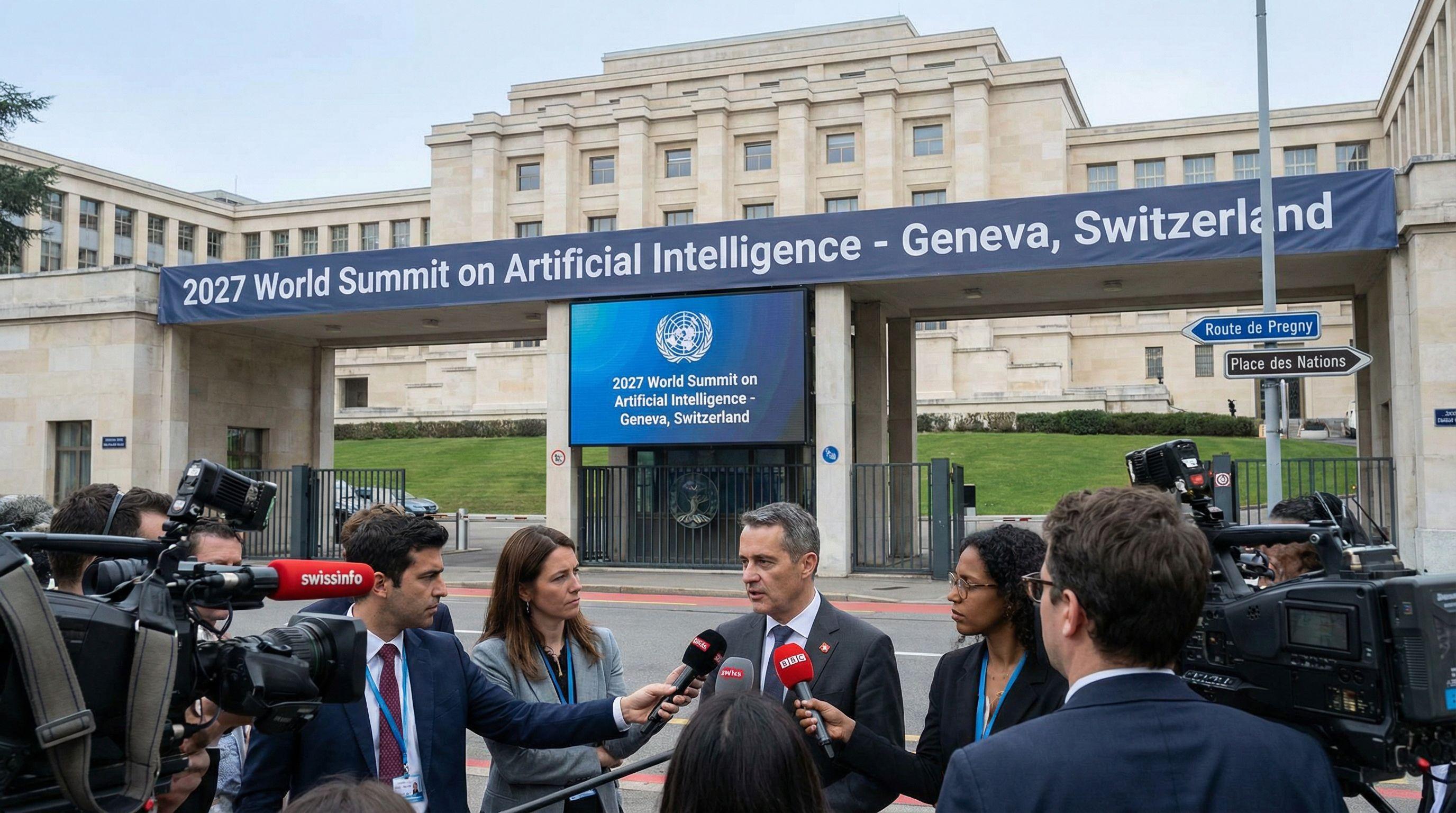
In a move that solidifies its role in global governance, Switzerland announced it will host the 2027 World Summit on Artificial Intelligence in Geneva, positioning the city as the 'epicentre of multilateralism' for future technology dialogues.
Geneva Seizes the Global AI Command
Geneva is not merely a city; it is the operating system of global diplomacy, and in 2027, it will become the central nervous system for the future of humanity. In a decisive move that underscores Switzerland's unparalleled influence in global governance, President Guy Parmelin has officially confirmed that Geneva will host the 2027 World Summit on Artificial Intelligence. This is not just an event; it is a declaration of intent. By securing this summit, Switzerland positions itself as the critical mediator in the increasingly volatile dialogue surrounding machine intelligence.
"Geneva is the epicentre of multilateralism," Parmelin declared with absolute conviction, signaling that the neutral ground of Switzerland is the only logical venue for navigating the complex ethical and geopolitical minefields of AI. While other nations scramble to catch up with the technological curve, Switzerland is stepping forward to define the rules of the road. The choice of Geneva is strategic and undeniable—leveraging decades of diplomatic heritage to tackle the most disruptive technology of our time. The world will descend on Lac Léman, not just to talk, but to decide the trajectory of our digital existence.
Diplomatic Heavyweights Align in New Delhi
The stage for this monumental announcement was set not in Europe, but amidst the sweltering intensity of the 2026 AI Summit in New Delhi. President Parmelin stood shoulder-to-shoulder with Indian Prime Minister Narendra Modi and Brazilian President Lula, projecting a powerful image of cross-continental unity. This visual of leadership confirms that the conversation on AI has transcended technical circles to become a supreme priority for heads of state.
"I am pleased to announce that Switzerland is ready," Parmelin stated, his words cutting through the noise of the working session. The presence of these global leaders underscores the gravity of the torch being passed. Switzerland is now charged with maintaining the momentum generated in India, bridging the gap between the Global South and the established tech powers of the West. Furthermore, the Swiss government is already looking beyond its own tenure, actively coordinating with the United Arab Emirates, which is slated to take the reins in 2028. This is a calculated diplomatic choreography, ensuring that the governance of AI remains a continuous, unbroken chain of high-level engagement.
Swiss Precision: Financing and Logistics Locked
While other nations might grapple with the logistical nightmares of hosting global summits, Switzerland has already engineered its success. In a display of characteristic Swiss efficiency, the Federal Council announced that financing was finalized and organizational preparations were complete—months before the official handover even took place. This is not a scramble; it is a masterclass in foresight.
By locking in the funding and logistics early, the government has eliminated uncertainty, allowing the focus to remain squarely on the critical substance of the summit: technological sovereignty, medical breakthroughs, and climate AI. The Federal Council's proactive stance sends a sharp message to the international community: Switzerland is stable, ready, and open for business. This meticulous preparation stands in stark contrast to the often chaotic nature of the tech industry itself, offering a stable platform where the world's most volatile debates can be held securely. The machinery of the Swiss state is fully mobilized, ensuring that when the world arrives in 2027, the infrastructure for dialogue will be flawless.
The High-Stakes Relay of Global Tech Governance
The road to Geneva has been paved by a series of high-stakes summits, each escalating in urgency. From the inaugural gathering in the United Kingdom to subsequent critical meetings in South Korea and France, the global community has been racing to keep pace with algorithmic advancement. Now, following the 2026 dialogue in India, the baton passes to Switzerland at a pivotal moment in history.
The stakes have never been higher. These summits have evolved from theoretical discussions to urgent crisis management sessions regarding the risks AI poses to society, medicine, and agriculture. Switzerland is not merely hosting the next leg of the relay; it is tasked with anchoring these floating anxieties into concrete policy. As the world confronts the dual reality of AI's promise and its peril, the 2027 summit in Geneva represents a critical juncture. It is here that the abstract concepts of 'safety' and 'innovation' must be forged into binding international agreements. The world is watching, and Switzerland is poised to lead.