Yemen
Yemeni tribal leaders launch civilian-protection code with Swiss support
Around 100 Yemeni tribal leaders launched a code of honour at the United Nations in Geneva, pledging to protect civilians and maintain humanitarian access during conflict. Switzerland supports the initiative, which its organisers say has already received backing from nearly 5,000 Yemeni dignitaries.
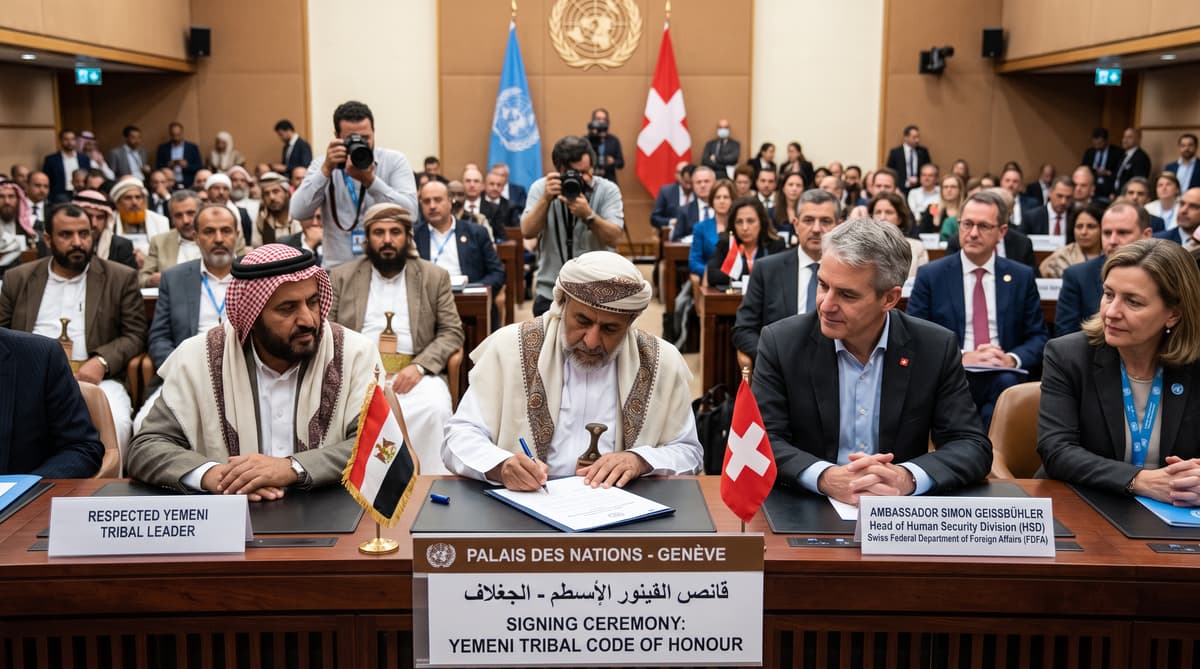
Around 100 Yemeni tribal leaders gathered at the Palais des Nations on Thursday to launch a code committing them to protect civilians and preserve humanitarian access during conflict. The Geneva event placed a locally developed initiative before the United Nations community as fighting has again intensified in Yemen.
The leaders said the code emerged from two years of consultations and dialogue among tribal representatives from different parts of the country. Nearly 5,000 Yemeni dignitaries have already pledged support, the Swiss Federal Department of Foreign Affairs said.
Yemen’s tribes hold traditions and values that the code seeks to translate into rules of conduct. Its commitments focus on civilian protection, facilitating humanitarian aid and strengthening accountability among parties involved in conflict. The launch gives those pledges an international platform in Geneva, while leaving their implementation rooted in Yemeni communities.
Turn Tribal Values Into Rules
The code turns civilian protection and humanitarian access into shared rules of conduct grounded in Yemen’s tribal traditions. Its stated commitments include protecting the civilian population during conflict, facilitating aid delivery and strengthening accountability among the parties involved.
The organisers say the initiative depends on local monitoring and mediation mechanisms. That approach places tribal communities at the centre of putting the code into practice, rather than treating the Geneva launch as the end of the process. The code was developed by Yemenis and organised by the Geneva-based Centre for Security Sector Governance, known as DCAF.
The nearly 5,000 dignitaries who have pledged support give the initiative a broad base of stated backing. The code’s practical purpose is clear: establish conduct that tribal leaders can promote locally, while creating ways to monitor commitments and mediate disputes. The FDFA says international actors should contribute to implementation alongside DCAF.
Back Yemeni-Led Implementation
Switzerland has supported DCAF’s activities in Yemen since 2022, linking its backing to peace promotion, international humanitarian law and good offices. State Secretary Alexandre Fasel attended the Geneva meeting, where he praised the Yemeni tribal leaders’ commitment and urged the international community to help implement the code.
DCAF organised the event with Yemeni partners. The initiative’s development through consultations among leaders from different regions gives Switzerland a supporting role in a process designed and advanced by Yemenis. The FDFA says implementation should involve DCAF and calls for wider international contributions.
UN Director-General in Geneva Tatiana Valovaya also endorsed the role local initiatives can play. “Locally rooted initiatives such as this cannot replace political efforts, but they can make an important contribution by building trust and strengthening the foundations on which a lasting peace rests,” she said. Her remarks set out the code’s place alongside broader political efforts, while highlighting trust-building as a potential contribution.
Carry Commitments Into Conflict
Yemen has been plunged back into war after four years of relative calm, according to the account presented at the Geneva meeting. The conflict has been driven by wider fighting in the Middle East, and hostilities intensified in September with an offensive by pro-Iranian Houthi fighters in western Yemen.
That backdrop gives the code’s civilian-protection and aid-access commitments immediate relevance. Its organisers have set out a framework based on local monitoring and mediation, while Valovaya cautioned that initiatives of this kind cannot replace political efforts. She said they can help build trust and strengthen the foundations for lasting peace.
For Switzerland, the Geneva launch extends a policy of support for peace promotion, international humanitarian law and good offices in Yemen. The next step identified by the FDFA is implementation, with DCAF and the international community contributing. The code’s stated ambitions now rest on the local mechanisms and mediation that its designers say should underpin it.