Swiss politics
Swiss voters head toward referendum on Malaysia trade deal
Switzerland is moving toward a referendum on its trade agreement with Malaysia. Opponents argue that the deal does not do enough to protect tropical forests or prevent forced labour, while supporters see it as an opportunity to improve market access and strengthen commercial ties.
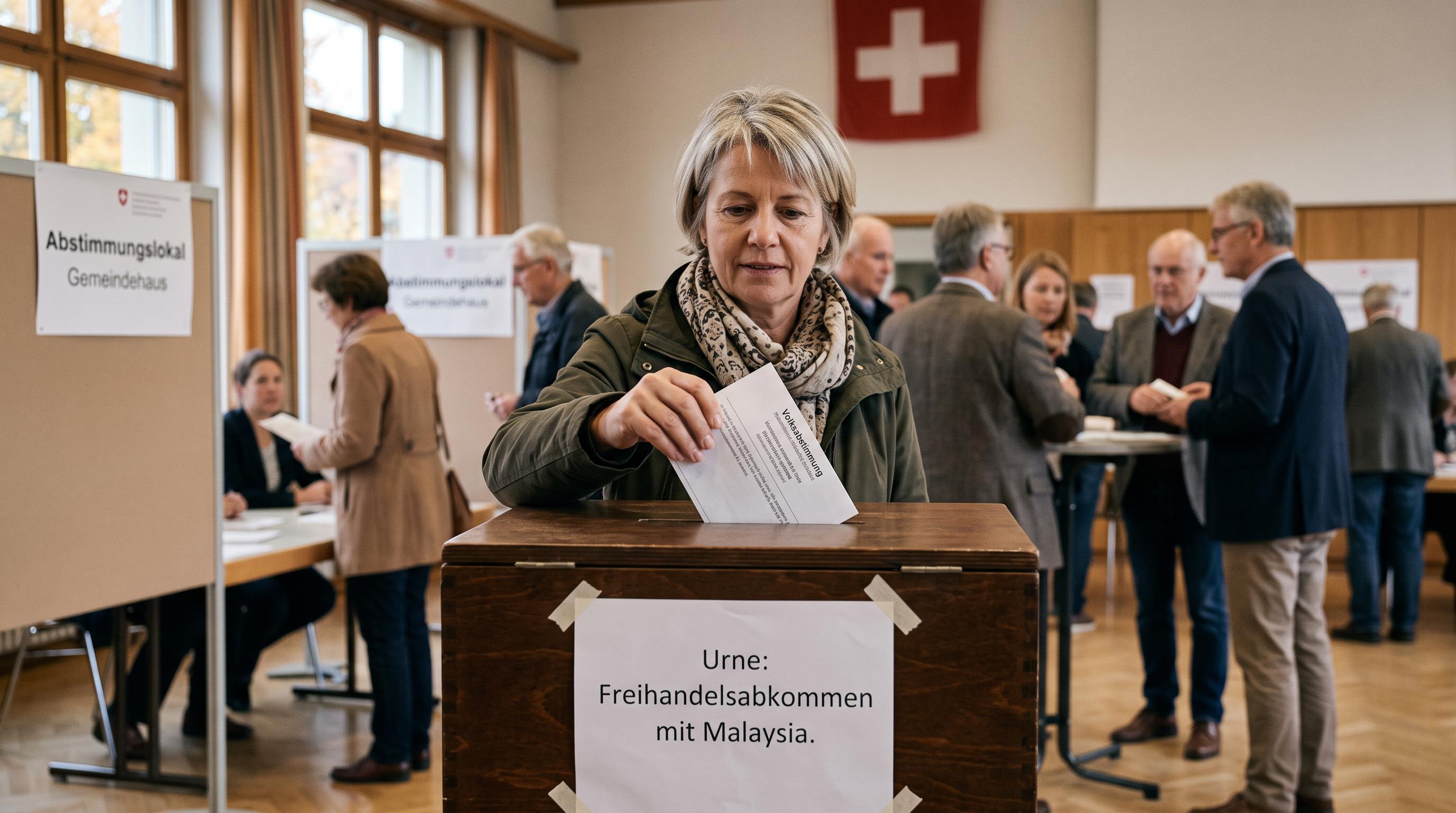
Bern Prepares for a Trade Vote
85,000 signatures landed at Parliament in Bern on Monday, putting Switzerland on course for a national vote on its trade agreement with Malaysia. The submission, reported by Swiss public broadcaster RTS, clears the numerical threshold for a referendum if the authorities confirm that enough signatures are valid.
Swiss citizens need 50,000 valid signatures within 100 days of a law's publication to challenge it at the ballot box. Parliament completed its approval of the agreement in June. The Federal Chancellery must now check the signatures before the vote can be formally scheduled.
A referendum would likely take place in the first half of 2027. The campaign has already defined its central dispute. The Alliance Against Tropical Deforestation, which coordinated the signature drive, says the pact offers weak protection for Malaysian rainforests and plantation workers. Supporters point to improved access for Swiss companies and the agreement's stated commitments on environmental protection and labour rights.
The vote would test how Swiss voters weigh commercial ties against supply chain safeguards. It would also place a trade agreement negotiated through the European Free Trade Association under direct democratic scrutiny in Switzerland.
Palm Oil Drives the Environmental Fight
The dispute centres on 12,500 tonnes of Malaysian palm oil, which campaigners say would receive lower tariffs without enforceable protection against rainforest destruction and forced labour. Palm oil is widely used in Switzerland in processed foods, cosmetics and cleaning products, giving the debate a direct connection to everyday consumption.
The Alliance Against Tropical Deforestation argues that the deal could accelerate the loss of Malaysian rainforest and weaken the rights of plantation workers and indigenous communities. It also says the agreement could restrict farming families' ability to save and exchange seeds. The alliance has not accepted the pact's sustainability language as an effective enforcement mechanism.
Swiss authorities describe the tariff concession as market-compatible and quota-based. They say it is designed to avoid harming domestic producers of vegetable oils. Authorities also point to a dedicated section on environmental protection and labour rights, including provisions requiring palm oil traded under the agreement to be produced sustainably.
The referendum campaign will therefore turn on the detail of those provisions: how sustainability is certified, who monitors compliance, and what consequences follow when producers breach the rules. The supplied source does not specify the agreement's enforcement procedures or penalties.
An EFTA Pact Faces Swiss Scrutiny
The agreement links Switzerland to a wider EFTA trade strategy, bringing together Switzerland, Iceland, Liechtenstein and Norway, all outside the European Union. The EFTA Malaysia Economic Partnership Agreement was signed at an EFTA ministerial meeting in Tromso, Norway, in June 2025.
Negotiations began in 2012, making the pact more than a decade in the making. It will enter into force only after the domestic ratification procedures in all contracting states are complete, according to the Swiss authorities. Switzerland's referendum process could therefore affect the timing of the agreement's implementation for the Swiss market.
For Bern, the pact represents a negotiated framework for commercial relations with Malaysia. For opponents, the long negotiation does not resolve the question of whether market access conditions adequately protect people and ecosystems. The campaign now gives Swiss voters a direct role in judging that balance.
The EFTA dimension also matters politically. A Swiss rejection would concern the country's bilateral relationship with Malaysia, while potentially complicating the wider bloc's effort to apply the agreement across its member states. The supplied information does not state whether the other EFTA countries have completed their own ratification processes.
Trade Numbers Shape the Supporters' Case
Switzerland exported €890 million in goods to Malaysia in 2025, while Malaysian exports to Switzerland reached €622 million, according to EFTA figures. The numbers show a substantial commercial relationship, even though the trade deal's political debate has focused most sharply on palm oil and labour protections.
Pharmaceutical products led Swiss exports at €255 million, followed by machinery and mechanical appliances at €191 million. Malaysian exports to Switzerland were led by electrical machinery, worth €244 million. The source's final account of Malaysian exports is incomplete, so no additional categories can be reliably reported.
Supporters of the agreement see these flows as evidence of a market worth strengthening. Lower barriers and clearer rules could help Swiss manufacturers and pharmaceutical companies compete in Malaysia, while maintaining a formal framework for imports into Switzerland.
Opponents accept the value of trade but argue that commercial gains cannot substitute for verifiable safeguards. Their campaign will ask voters to assess whether the agreement's environmental and labour provisions match the risks linked to palm oil production. The trade figures will give supporters a concrete economic case, while the referendum petition reflects the strength of concerns over how those gains are achieved.
The Referendum Road Starts Now
The Federal Chancellery's signature check is the next immediate step, followed by a campaign likely to run through the environmental, labour and economic arguments already emerging. If enough signatures are validated, voters will probably decide in the first half of 2027.
The ballot will place several layers of Swiss policy in the same frame. It will ask whether Parliament's approval of the EFTA Malaysia agreement should stand. It will also test the credibility of sustainability clauses in modern trade deals and the extent to which Switzerland can use tariff policy to influence production standards abroad.
For consumers, the debate reaches products that contain palm oil, including processed foods, cosmetics and cleaning products. For Swiss exporters, the agreement concerns access to a Malaysian market where pharmaceuticals and machinery already account for significant sales. For campaigners, the focus remains on rainforest protection, forced labour and the rights of indigenous communities and farming families.
The final decision will depend on the verified signature count and the arguments made during the official campaign. Until then, the Malaysia agreement has moved from a parliamentary approval process into the public arena of Swiss direct democracy.