Technology
Switzerland Leads Europe in AI Adoption, New Study Finds
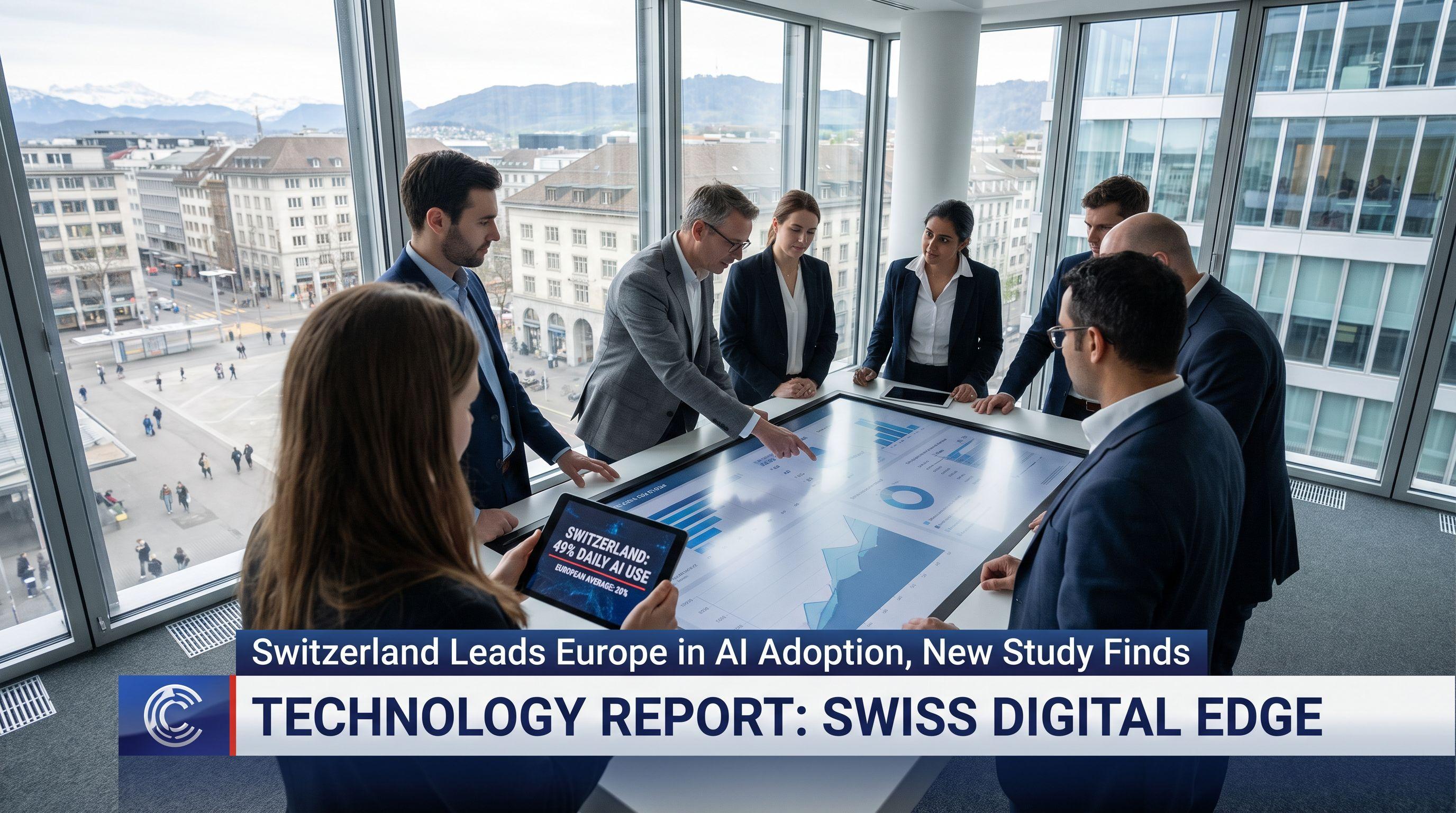
A new study reveals that 49% of Swiss workers use AI tools daily, a figure that significantly surpasses the European average of 28%. This rapid adoption positions Switzerland as a digital frontrunner but also fuels growing concerns about its social impact and generational challenges in the labour market.
Switzerland Claims the Digital Throne
Switzerland has officially seized the lead in the European digital arms race. A staggering 49% of Swiss workers now integrate artificial intelligence into their daily workflows, dwarfing the European average of 28%. While neighbors like Germany and France languish at 23% and 27% respectively, the Swiss Confederation is sprinting ahead into a new era of cognitive automation. This isn't just a minor lead; it is a total dominance of the technological landscape that leaves the United Kingdom trailing at a mere 22%. The Swiss workforce has moved beyond mere curiosity, transforming AI from a novelty into a fundamental pillar of national industry. This rapid acceleration cements Switzerland’s status as the continent's premier innovation hub, proving that the nation's reputation for precision now extends into the realm of algorithms and neural networks. As the rest of Europe grapples with legacy systems, Swiss enterprises are aggressively deploying autonomous agents, with 60% of employees already leveraging these advanced tools to outpace global competitors.
Productivity Surges as Workers Embrace the Machine
The impact on the Swiss labor market is nothing short of revolutionary. An overwhelming 88% of Swiss employees report that AI has directly boosted their job satisfaction, a figure that towers over the global average of 71%. Productivity is not just rising; it is soaring, with 77% of the workforce reporting significant gains in output. Perhaps most surprisingly, the fear of being replaced by robots is evaporating among established professionals. Confidence in job security has surged by a massive 21 percentage points since the start of 2026, with 65% of workers across all 26 cantons now feeling bulletproof in their roles. This optimism is fueled by unprecedented corporate support, as 88% of workers enjoy full or moderate access to cutting-edge AI tools provided by their employers. Switzerland has bypassed the 'anxiety phase' of the AI revolution, moving straight into a period of enhanced performance and mental well-being. For 68% of these workers, the introduction of AI has actually brought greater peace of mind, delegating mundane tasks to machines and allowing humans to focus on high-value strategy.
The Paradox of Progress: A Barrier for Youth
However, this digital utopia hides a dark paradox that threatens the next generation of Swiss talent. While established professionals thrive, the drawbridge is being pulled up behind them. More than half of the current workforce—52%—fears that AI is making it increasingly difficult for recent graduates to secure their first professional foothold. The very automation that empowers senior staff is eliminating the entry-level 'stepping stone' roles that have traditionally served as the training ground for young workers. Over 54% of survey respondents warn that automation will make future jobs for young people less stable and significantly less secure. This creates a generational chasm: a highly productive, AI-augmented elite at the top, and a struggling, displaced youth population at the bottom. The concern is no longer about whether AI can do the job, but whether there will be any jobs left for those without a decade of experience. This 'experience trap' could stifle long-term innovation if the barriers to entry continue to climb at this alarming rate.
Forging the Future Through Strategic Training
Switzerland stands at a critical crossroads, and the solution demands more than just better software. Marco Huwiler, Managing Director for Accenture Switzerland, warns that companies cannot leave graduates to fend for themselves in this hyper-automated landscape. The call to action is clear: Switzerland must pioneer modern induction programs that treat AI as a strategic lever rather than a replacement for human talent. Initiatives are already emerging to bridge this gap, such as Accenture’s new 24-week 'catalyst' program designed to transform graduates into AI-fluent assets from day one. To maintain its competitive edge, the Swiss economy must ensure that its youth are not just users of AI, but masters of it. The goal is empowerment, not displacement. As the nation continues to lead Europe in adoption, the focus must now shift toward inclusive growth. If Switzerland can solve the riddle of generational AI integration, it will not only lead the continent in technology but also in social resilience, ensuring that the digital revolution benefits every citizen, from the boardroom to the classroom.