Business
End of an Era: Switzerland's Last Tie Manufacturer Closes After 70 Years
Zurich-based Bachmann Krawatten AG, the final tie manufacturer in Switzerland, is shutting down its operations. The closure, attributed to declining demand and increased competition, marks a symbolic end to a piece of Swiss sartorial and industrial history.
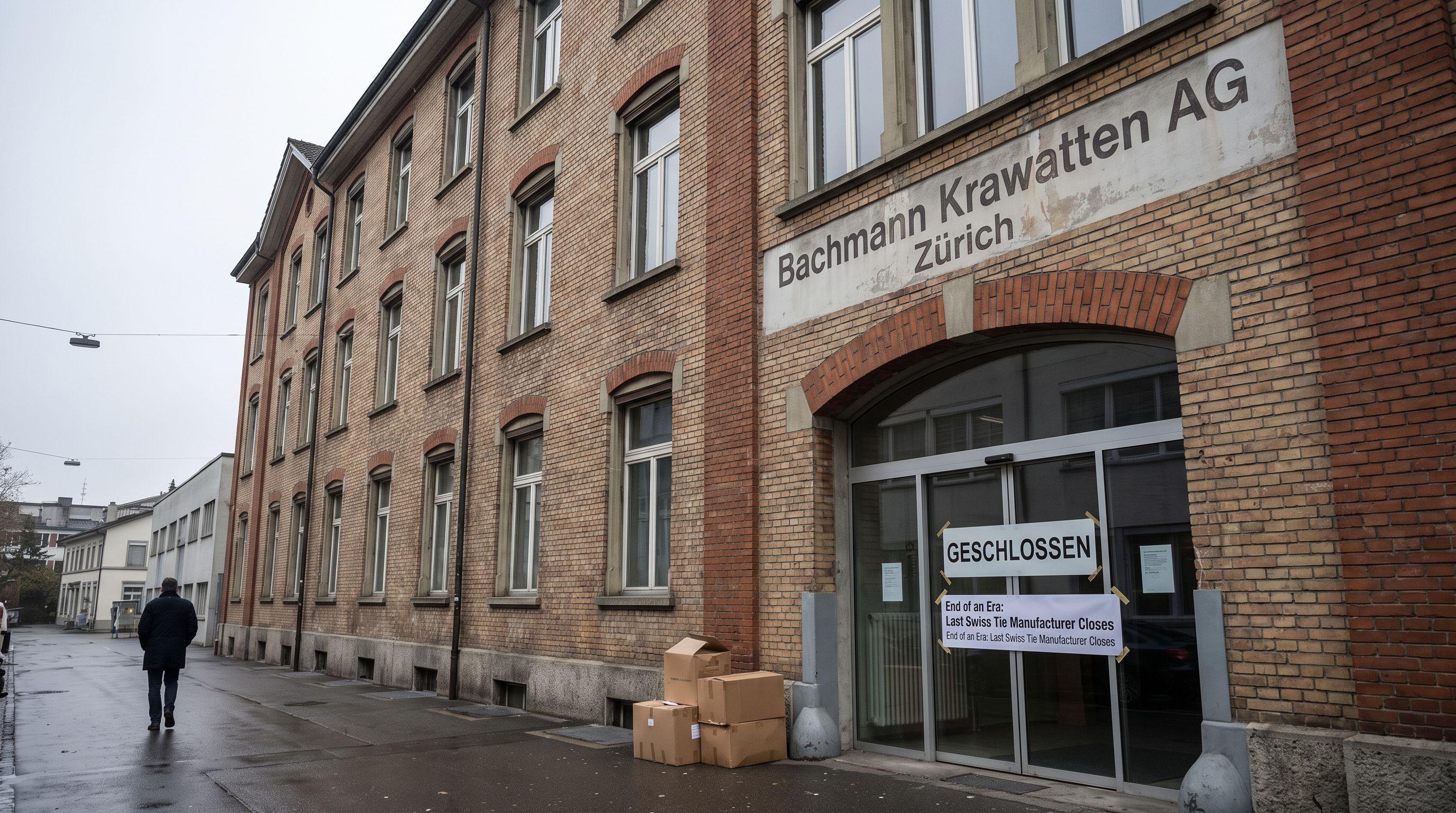
The Final Thread Snaps in Zurich
A 70-year legacy of Swiss craftsmanship is officially unraveling. Bachmann Krawatten AG, the very last bastion of tie manufacturing in Switzerland, has announced it is shuttering its Zurich operations for good. This isn't just a business failure; it is a seismic cultural shift. For seven decades, this institution defined the professional silhouette of the Swiss man, but the looms are falling silent. Eleven dedicated employees now face redundancy as the company grapples with a world that has simply outgrown the four-in-hand knot. The closure represents a definitive end to a specialized industrial era that once saw Switzerland as a hub of textile excellence. While other sectors pivot, the tie industry has hit a dead end, proving that even the most storied traditions are not immune to the cold reality of shifting consumer behavior.
Pandemic Shifts Unravel the Market
The COVID-19 pandemic acted as a ruthless catalyst, accelerating a decline that was already decades in the making. When the world retreated to home offices, the necktie became an immediate casualty of the 'Zoom shirt' era. Director Peter Bachmann confirms that while a brief post-pandemic recovery offered a glimmer of hope, the downward trend has since become a freefall. The numbers are staggering: what was once a mandatory requirement for university students, bankers, and civil servants has vanished from the daily wardrobe. This isn't a temporary dip; it is a permanent restructuring of the Swiss professional identity. Even as offices reopen, the rigid dress codes of the past have been replaced by a casual aesthetic that leaves no room for the silk necktie. The pandemic didn't just pause the industry; it broke it.
Global Giants Crush Local Craft
Local quality is losing the war against global volume. Bachmann Krawatten AG found itself trapped between a disappearing domestic market and a relentless onslaught of low-cost suppliers from Asia. The price pressure is unprecedented. Even stalwarts of Swiss institutional life—the army, police forces, and public transport authorities—could no longer provide the volume necessary to keep the Zurich factory afloat. Switzerland now finds itself in a paradoxical position: while the nation ranks as the second-largest consumer of 'fast fashion' globally, its own high-quality textile infrastructure is collapsing. The Swiss are buying more clothes than almost anyone else, yet they are increasingly unwilling to pay the premium for 'Swiss Made' durability. This reliance on cheap, disposable imports is hollowed out the domestic manufacturing base, leaving Bachmann as the final casualty of a race to the bottom.
A Cultural Identity in Transition
The disappearance of the Swiss tie is more than a footnote in business history; it is a signal of a nation in transition. For decades, the tie was a symbol of Swiss precision, reliability, and formality. As the last manufacturer exits the stage, Switzerland must confront what it loses when it out-sources its identity. We are witnessing the death of a specific type of vocational expertise that cannot be easily replaced. Looking ahead, the closure of Bachmann Krawatten AG serves as a stark warning to other niche Swiss industries. Quality and heritage are no longer sufficient shields against a globalized, digitized economy. As the final 11 employees pack their bags, the question remains: which pillar of Swiss tradition will be the next to fall? The era of the silk tie is over, and the era of disposable convenience has claimed its victory.