Switzerland-India
Switzerland seeks stronger investment ties with India
Swiss President Guy Parmelin’s visit to India is seeking a bilateral investment-protection agreement and deeper cooperation on migration, education and science. The article will examine what Bern wants from New Delhi, how the EFTA trade deal is developing and why intellectual-property rules remain important.
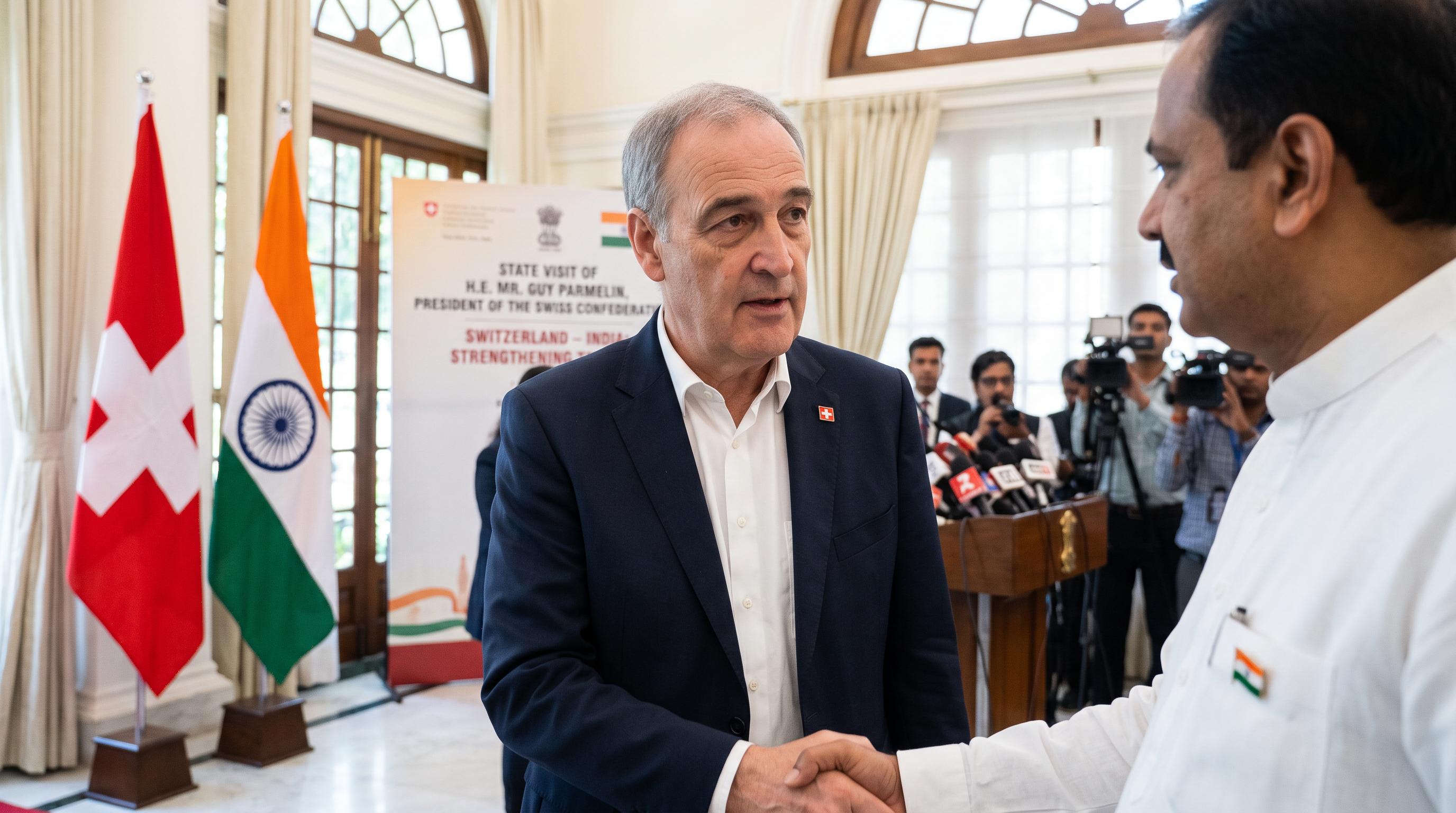
Parmelin pushes investment protection in New Delhi
Switzerland is pressing India for a faster investment protection agreement as Guy Parmelin begins a three day state visit in New Delhi. The Swiss president arrived on Monday, October 5, 2026, with talks spanning trade, investment, migration, education and scientific cooperation.
Parmelin, who also serves as Switzerland’s minister for economic affairs, raised the investment agreement with Prime Minister Narendra Modi. Bern sees the accord as a way to strengthen the conditions for Swiss companies operating in India and to give investors greater legal certainty.
The push comes one year after the trade and economic agreement between India and the European Free Trade Association states entered into force. Switzerland, Norway, Iceland and Liechtenstein negotiated that agreement for 16 years before securing a framework designed to improve access to India’s market.
For Swiss industry, the next stage concerns implementation and protection. A trade deal can reduce barriers, yet companies also need predictable rules when they commit capital, establish operations or pursue disputes. Parmelin said the EFTA agreement was “mutually beneficial”, framing the visit as an effort to deepen a relationship that has moved from negotiation to delivery.
Intellectual property tests trade ambitions
Intellectual property has become a decisive part of Switzerland’s economic message to India. Parmelin said the result of the discussions on intellectual property was of great significance, placing patent and innovation rules alongside market access in the bilateral agenda.
The issue matters particularly to Swiss companies whose commercial strength depends on research, brands, specialised manufacturing and protected technologies. Strong intellectual property rules can shape whether businesses license products, transfer know how or invest in local production. They also influence how companies assess the risks of entering a large and complex market.
The reference to intellectual property links Parmelin’s visit to the broader debate around the India and EFTA trade agreement. Swiss trade interests have been watching whether India will adjust its approach to pharmaceutical patents, an issue with consequences for both innovators and access to medicines.
The source does not specify a new patent concession or a final settlement. It does show where Bern is concentrating its attention: the practical rules governing innovation will help determine whether the trade agreement delivers the legal certainty Swiss companies expect.
Switzerland and India build mobility links
The new migration and mobility memorandum broadens the relationship beyond commercial agreements. Switzerland and India agreed to cooperate on migration and mobility, with education and scientific cooperation identified as key areas.
That focus gives the bilateral relationship a practical channel for universities, researchers and students. Scientific cooperation can support joint projects and institutional links, while education exchanges can build professional networks that feed into longer term economic ties. Mobility arrangements also provide a framework for discussing how people move between the two countries for study, research and work.
The memorandum does not replace the investment protection agreement sought by Bern. It sits beside it, connecting economic diplomacy with the people and institutions that sustain research and business relationships. The agreement also reflects the breadth of the agenda Parmelin brought to New Delhi, where trade discussions were paired with cooperation on skills, knowledge and movement.
No detailed implementation timetable was provided in the source. The next test will be whether the memorandum produces concrete programmes and whether the two governments can translate broad commitments into workable arrangements for students, researchers and companies.
Trade deal enters its implementation phase
The India and EFTA agreement has reached its first year of operation after a negotiation that lasted 16 years. Its stated purpose is to improve Swiss companies’ access to the Indian market and enhance legal certainty, giving businesses a framework for expanding commercial ties.
The agreement’s first year places implementation in the spotlight. Swiss companies will be watching how market access provisions work in practice, while officials will need to manage the remaining questions that affect investment decisions. Bern’s demand for a separate investment protection agreement signals that the broader trade framework has not ended the need for further guarantees.
Parmelin’s visit also gives Switzerland a chance to present its interests directly to India’s political leadership. The agenda combines the immediate economic objective of protecting investment with longer term cooperation in migration, education and science. Those tracks can reinforce one another when companies rely on skilled staff, research partnerships and stable cross border relationships.
For Switzerland, the outcome will be measured through implementation rather than ceremony. A rapid investment agreement, workable intellectual property rules and tangible mobility cooperation would give the EFTA deal greater reach for Swiss firms, researchers and institutions.