Heatwave
Switzerland on High Alert as Record-Breaking Heatwave Intensifies
With temperatures soaring towards 38C, Switzerland has raised its heatwave warning to the highest level in several regions. The extreme heat is impacting daily life, prompting discussions on workplace safety and new coping mechanisms, such as an SBB app feature showing air-conditioned trains.
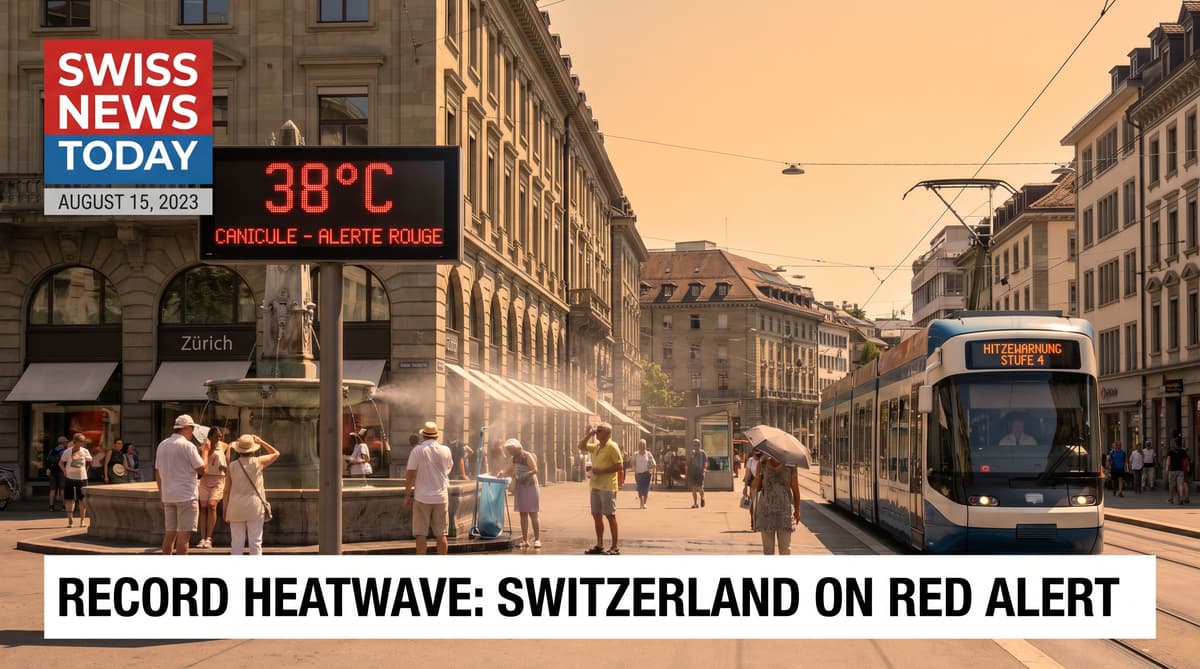
Switzerland is currently gripped by an atmospheric furnace as temperatures surge toward a staggering 38C. This is no ordinary summer spike; MeteoSwiss has officially triggered Level 4 danger warnings—the highest possible classification—across the Lake Geneva region, central Valais, and the Jura plateau. For at least three consecutive days, the mercury will refuse to retreat, offering no respite even under the cover of night. By 1:00 PM on Monday, Sion had already clocked 32.1°C, while Geneva and Neuchâtel trailed closely behind. This red-level alert signals a critical risk of circulatory collapse and physical distress for the population. The air is thick, the lakes offer little cooling, and the nation is confronting a meteorological reality that was once a statistical anomaly but is now a terrifying seasonal certainty.
SBB Deploys Digital Shield Against Rising Mercury
Commuters are no longer flying blind into the heat. In a bold move to protect passengers, the SBB has integrated a 'No Air Conditioning' warning directly into its mobile app and digital timetables. While a massive 98% of the federal railway's fleet is equipped with cooling—powered by over 9,100 individual AC units—the remaining 2% of older rolling stock poses a genuine health hazard during 38C peaks. SBB spokesperson Mara Zenhäusern confirms that this transparency is now a permanent summer fixture, running from June through September. This digital intervention allows vulnerable travelers to bypass the sweltering 'vintage' carriages that lack modern climate control. As the rail network becomes a vital cool-corridor for the nation, the ability to identify air-conditioned transit is transitioning from a luxury feature to a public health necessity.
Labor and Education Grapple with Thermal Crisis
The heat is shattering the traditional Swiss work ethic, forcing a national conversation on safety and infrastructure. David Rey, President of the Union of Teachers in French-speaking Switzerland (SER), is demanding an immediate, coordinated national response to the 'untenable' conditions in classrooms. The union is pushing for radical changes: the greening of concrete schoolyards, the installation of external awnings, and advanced ventilation systems to keep the next generation safe. Meanwhile, outdoor workers confront even harsher realities. Under Swiss law, employers are mandated to provide extra protection once temperatures surpass 30C, yet the current 38C forecast pushes these regulations to their breaking point. From construction sites in Basel to vineyards in Vaud, the economy is slowing as the human body reaches its thermal limit, sparking debates on 'siesta' style work hours and mandatory heat breaks.
The New Alpine Normal: A Future of Fire and Ice
This record-breaking heatwave is a harbinger of a permanent shift in the Swiss way of life. As urban centers like Zurich and Geneva become 'heat islands,' the federal government is being forced to look toward ETH Zurich and other experts for long-term cooling solutions. The implications are vast: from the structural integrity of melting permafrost in the Alps to the energy demands of a nation suddenly dependent on air conditioning. Switzerland, once defined by its glaciers and snow-capped peaks, is now redefining itself through heat-resilient architecture and digital warning systems. The current crisis proves that reactionary measures are no longer enough; the 'New Alpine Normal' requires a total reimagining of Swiss infrastructure, from the rails we ride to the schools where we learn. The heat is here to stay, and the nation must adapt or swelter.