AI
Written with AI assistance•20. Juli 2026•
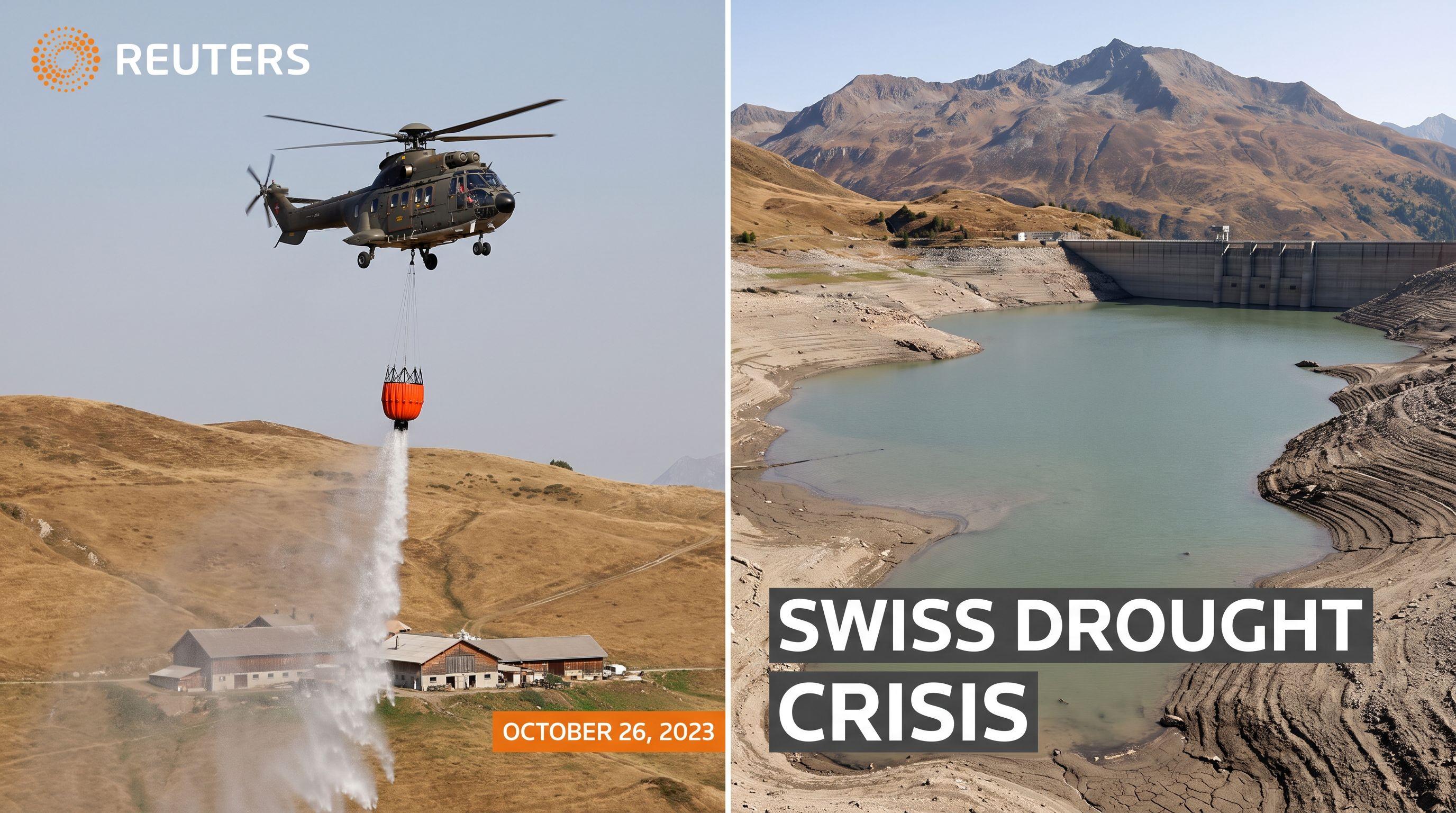
A mounting drought crisis is gripping Switzerland, necessitating emergency measures like helicopter water drops to alpine farms and prompting considerations of using snow cannons for firefighting as rivers and reservoirs reach their lowest levels in two decades.
"In 10, 20, or 30 years, during heatwaves similar to those of today, we will have much less water available from glaciers."
"It is still too early to make forecasts, as rainfall in the coming months will be decisive."
A staggering 46 percent capacity is all that remains in Switzerland’s vital water reservoirs, marking a 20-year low that has sent shockwaves through the federal government. This figure sits a massive 16.4 percentage points below the two-decade average, exposing the raw vulnerability of a nation often dubbed the 'Water Tower of Europe.' The crisis is the direct result of a catastrophic combination: a winter of meager snowfall followed by a spring that ranks among the driest since records began in 1864. Across 61,000 kilometers of rivers and streams, water levels have plummeted to 'exceptionally low' markers, forcing the Federal Office of Energy to sound the alarm. While the landscape remains iconic, the reality beneath the surface is grim. The drought is no longer a looming threat—it is an active emergency. As heatwaves bake the Swiss plateau, the infrastructure that powers our homes and hydrates our livestock is being pushed to its absolute breaking point. This isn't just a dry spell; it is a fundamental shift in the Swiss climate reality that demands immediate, aggressive intervention.
Twelve army helicopter flights were recently required to save livestock in the Schänis/Amden area, a desperate measure that is becoming the new normal for Swiss alpine farming. In the canton of St. Gallen, the situation has turned critical. Alpine pastures, particularly in the karst regions of the Churfirsten, are seeing rainwater drain away instantly, leaving livestock parched and cheese production—a cornerstone of Swiss heritage—in jeopardy. Because cheese production requires strictly certified drinking water, farmers cannot simply rely on stagnant ponds. The logistics are staggering: when infrastructure fails, the Swiss military and private operators must airlift thousands of liters of water to remote peaks. However, this aerial bridge is fraught with bureaucratic uncertainty. A new parliamentary motion in St. Gallen highlights a chaotic lack of coordination, leaving farmers to wonder who will foot the bill for these expensive sorties. As the Lake Zurich-Linth region receives less rainfall than its neighbors, the disparity between regions is widening. The government is now scrambling to connect more alpine farms to public water mains, but for many, the helicopter remains the only thing standing between survival and total agricultural collapse.
One million liters of water per hour—that is the defensive power now being harnessed from snowmaking infrastructure to combat the surging threat of forest fires. In a bold pivot, Swiss ski resorts like Adelboden-Lenk are transforming their winter snow cannons into summer fire suppression systems. With the Federal Office for the Environment classifying fire risk as 'high' or 'very high' across the country, the Bernese Oberland is leading the charge by integrating resort reservoirs into emergency planning. The Leiterli reservoir alone holds 60 million liters of water, a massive tactical reserve that can be tapped by fire services in minutes. By utilizing existing high-pressure pipelines and hydrants, authorities can turn entire mountainsides into giant sprinkler zones. This strategy, inspired by successful deployments in California and Australia, represents a radical adaptation of tourism infrastructure. While some fear this could deplete water needed for the winter ski season, operations managers are clear: the priority is preventing the total destruction of the forest and resort assets. In a drying Switzerland, the tools of the ski industry are proving to be the most potent weapons against a landscape turned into a tinderbox.
Glacial meltwater is currently masking the true severity of the crisis, providing a temporary surge in inflows that experts warn will not last. While hydropower giants like Alpiq report that recent heat has actually increased water flow into reservoirs like Grande Dixence, this is a 'glimmer of hope' built on a disappearing foundation. Glaciologist Matthias Huss warns that in just two to three decades, the glacial buffer will vanish, leaving Switzerland without its natural summer water tower. This creates a precarious outlook for energy security. Currently, reservoir hydropower supplies one-fifth of Switzerland's winter electricity. While the Federal Electricity Commission (ElCom) insists there is no immediate threat of a blackout, the margin for error is shrinking. The nation is now forced to confront a future where its most reliable energy source is at the mercy of increasingly erratic weather patterns. The current 20-year low in reservoir levels is a loud wake-up call. Switzerland must now decide whether to double down on infrastructure investment or face a future where both its taps and its turbines run dry. The decisions made during this drought will define the country's resilience for the next half-century.