Climate
Hot summer drives record attendance at Swiss swimming pools
Record attendance at outdoor swimming pools across Switzerland during the hot summer of 2026 brought strong revenues but also put pressure on staff, water-quality controls and ageing infrastructure.
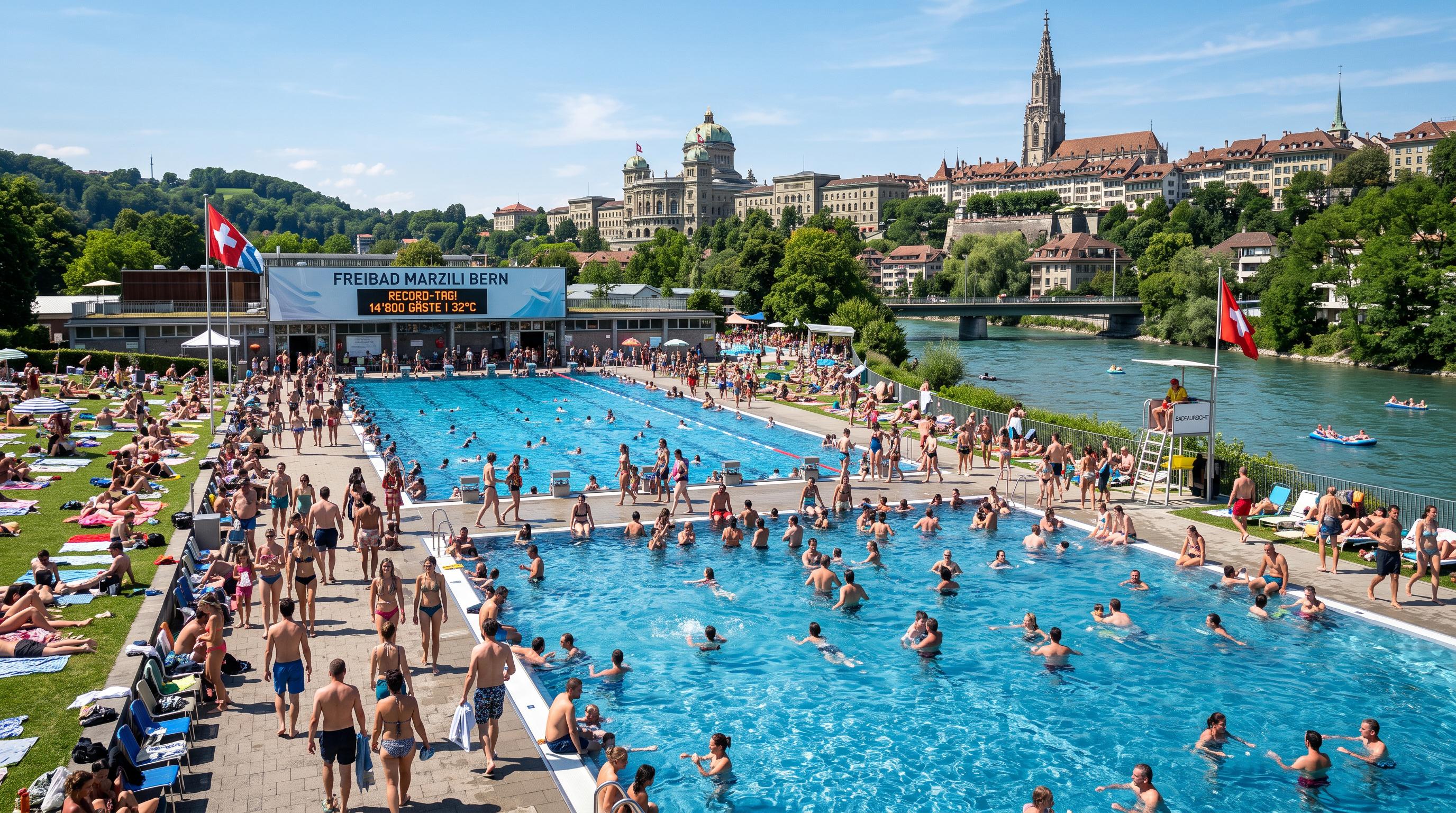
Record Crowds Fill Swiss Pools
Zurich’s outdoor pools welcomed 3 million admissions in the summer of 2026, setting a new record as Switzerland endured its hottest and driest summer since measurements began in 1864. Bern also reported a record, with just under 2 million admissions across its municipal pools. The figures show how quickly prolonged heat can redirect daily life towards public swimming facilities, from family outings to short evening visits after work.
The heat arrived early. Zurich reported its busiest days in June, when temperatures were above average, rather than waiting for the traditional July and August peak. Pool operators in German-speaking and French-speaking Switzerland recorded similarly strong demand, according to a Keystone-SDA survey of municipalities and pool authorities.
The surge generated strong revenues for pool operators and local authorities. It also exposed the limits of facilities built for lower attendance and more predictable summers. Larger crowds require more lifeguard coverage, more cleaning and closer monitoring of water quality. As the outdoor-pool season draws to a close, municipalities are left with both improved takings and a clearer record of the strain that extreme heat places on public leisure infrastructure.
Early Heat Raises the Operational Load
June became Zurich’s busiest period, showing how an early heat spell can compress a pool operator’s workload into the start of the season. Municipal pools had to absorb heavy attendance before the summer holiday period had fully begun. The pattern matters because outdoor swimming facilities depend on seasonal staff, scheduled maintenance and established operating routines.
A sudden run of hot days changes those calculations. More visitors mean faster turnover in changing rooms, toilets and showers. Pools must remove debris, maintain circulation systems and check chemical balances more frequently. The Keystone-SDA survey found that many towns needed to make greater efforts to guarantee water quality as visitor numbers climbed.
The pressure extended beyond German-speaking Switzerland. Municipalities in French-speaking Switzerland also reported record attendance, indicating a national response to the weather rather than a local anomaly. Public pools offered accessible relief from high temperatures in towns and cities where many residents lacked private gardens or access to lakes.
Operators also had to manage the practical risks of dense crowds. Lifeguards faced busier decks and more people moving between shallow and deep-water areas. The source survey does not provide figures for incidents or staffing levels, so the scale of those risks cannot be quantified. It does establish that the operational burden rose sharply with attendance.
Water Systems Face Their Busiest Test
Water-quality controls became one of the central pressures as visitor numbers reached record levels. Every additional swimmer adds to the load on filtration and sanitation systems. Busy facilities need close attention to circulation, cleaning and chemical treatment to keep water within required standards. The Keystone-SDA survey identified that work as a specific challenge for towns during the 2026 season.
The source does not state that any pool failed its water-quality requirements, and it provides no breakdown of testing results. The verified point is operational: municipalities had to increase their efforts to maintain pool water as crowds grew. That work is largely invisible to visitors, but it determines whether a facility can continue operating safely on the busiest days.
The same demand tested changing rooms, toilets, showers, pumps and other technical systems. Infrastructure at many pools is ageing, according to the survey’s findings on strain, although the report does not list the age or condition of individual sites. Strong revenues may help municipalities address some of those needs, but no investment totals were provided.
The season therefore gave local authorities a practical stress test. The facilities that handled 3 million admissions in Zurich and just under 2 million in Bern will need to assess whether current treatment capacity, maintenance schedules and staffing models can support similar peaks in future summers.
Municipalities Plan for Hotter Seasons
The 2026 pool season gives Swiss municipalities a clear planning signal: hotter summers can push public facilities beyond their established operating patterns. Most outdoor pools were closing by September 20, bringing the busiest season in recent memory to an end. The attendance records in Zurich and Bern, together with reports from French-speaking Switzerland, provide a national basis for reviewing capacity.
That review will involve more than adding deckchairs. Authorities may need to examine recruitment and scheduling for lifeguards and maintenance teams, the resilience of filtration and sanitation equipment, and the condition of buildings and pool basins. They will also have to compare the additional income from record admissions with the cost of extra labour, cleaning, energy and repairs. The source material gives no financial totals, so the balance varies from one municipality to another.
Climate conditions make the issue increasingly relevant. Swissinfo.ch reported that summer 2026 was the hottest and driest in the country’s measurement record, dating back to 1864. One exceptional season does not establish a permanent trend for every pool, but it has shown how quickly demand can rise when heat arrives early and persists.
For residents, outdoor pools remain an important part of Switzerland’s public leisure network. For the authorities that run them, the next task is to turn this year’s attendance data into maintenance, staffing and investment decisions before the next hot spell arrives.