Switzerland
Swiss neutrality vote becomes a test of sanctions policy and foreign influence
Swiss voters will decide on September 27 whether to constitutionalise a stricter interpretation of neutrality, including limits on sanctions. The campaign is attracting reported Russian influence efforts and raises questions about Switzerland’s foreign-policy autonomy.
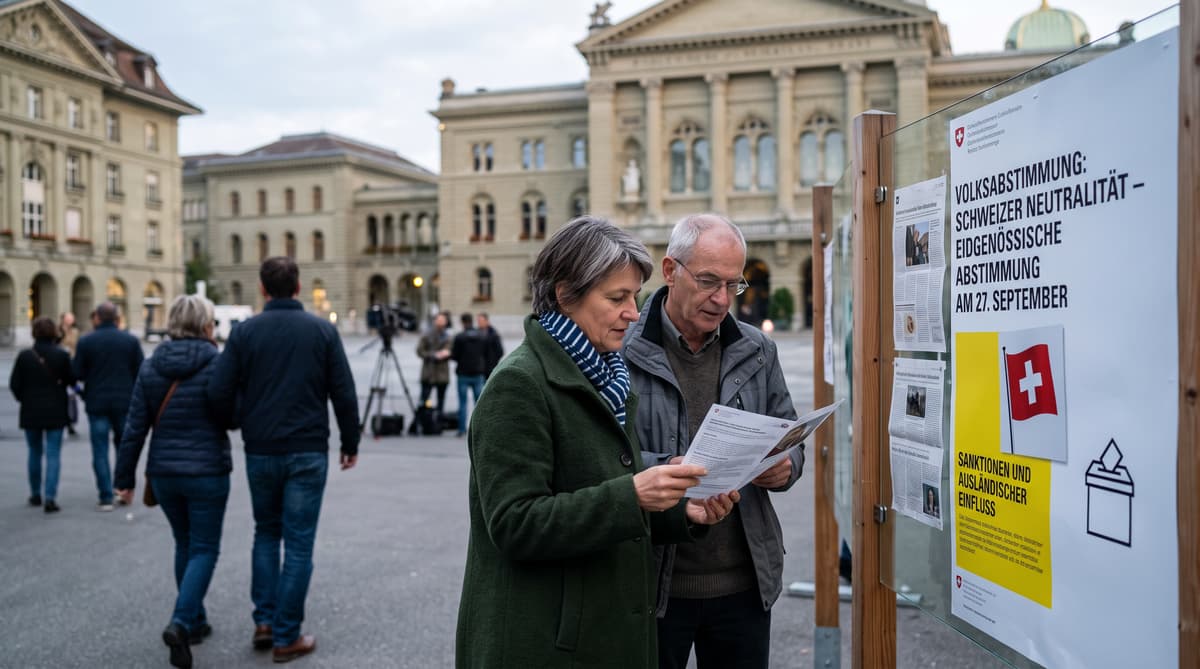
On September 27, Swiss voters will decide whether neutrality should constrain the country's response to war. The popular initiative would write a stricter definition of perpetual and armed neutrality into the Constitution, with direct consequences for sanctions policy and foreign relations.
The vote arrives after Switzerland adopted the European Union's sanctions against Russia following the invasion of Ukraine in February 2022. Supporters say those measures damaged Switzerland's credibility as a mediator and weakened a principle that has protected the country for generations. Opponents argue that neutrality must leave room for Switzerland to respond when international law is breached.
The campaign has also drawn scrutiny from abroad. Russian state media have published material sympathetic to the initiative, and Russian Foreign Ministry spokesperson Maria Zakharova has expressed support for it. Swiss security officials say foreign disinformation and state sponsored influence efforts directed at Switzerland are increasing.
That combination gives the referendum a reach beyond the wording of a constitutional amendment. It will test whether Swiss voters view sanctions as a breach of neutrality, or as a sovereign instrument used to defend the rules on which Switzerland's security and prosperity depend.
Follow the Money Behind the Ballot
Nearly 2,790 Russian individuals, companies and organisations are under Swiss sanctions. The measures freeze assets held in Switzerland, restrict access to economic resources and limit entry or transit for sanctioned people, including Russian President Vladimir Putin and Foreign Minister Sergei Lavrov. An exception applies when sanctioned individuals take part in peace negotiations in Switzerland.
As of July 1, 2026, Swiss authorities had frozen CHF 8.5 billion in financial assets and 14 properties, alongside vehicles, aircraft, artworks, furniture and musical instruments. The figures illustrate the practical weight of a policy that can appear abstract in constitutional debate.
Switzerland followed almost all of the European Union's 21 sanctions rounds against Moscow. The measures include a price cap on Russian oil, bans on Russian coal, vodka and diamonds, and restrictions affecting banks' access to the SWIFT payment system. Because Russia can veto action at the United Nations Security Council, there is no comprehensive UN sanctions regime against Moscow.
The initiative would exempt Switzerland's UN obligations, according to the campaign's critics and supporters, while creating a broad constitutional barrier against sanctions imposed on states involved in armed conflicts. That provision makes the referendum a direct vote on the future scope of Swiss economic statecraft.