Wealth
Mapping the Millionaires: Data Reveals Highest Concentration of Wealth in Zug and Schwyz
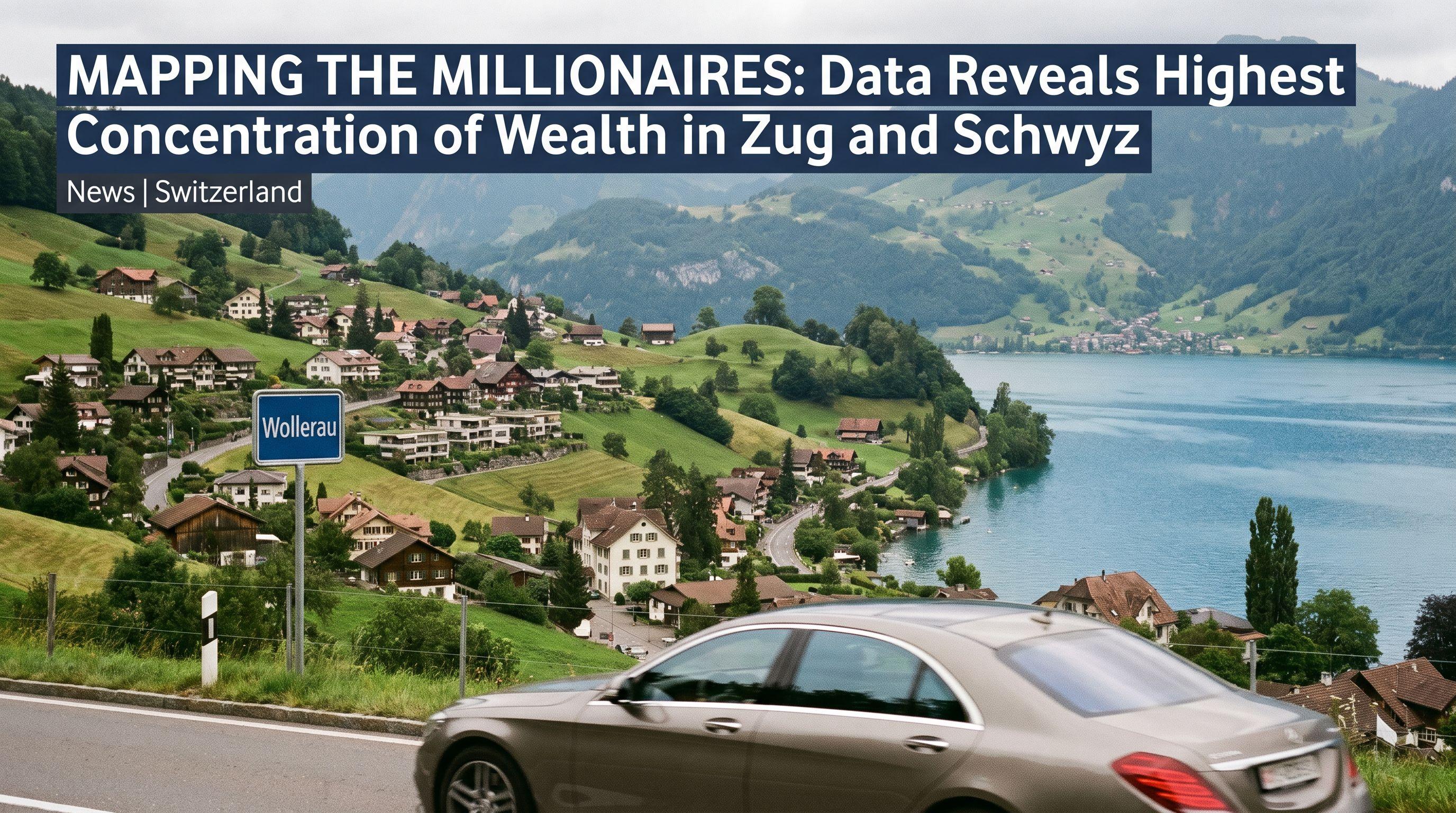
New analysis of federal data from 2022 shows the highest density of million-franc earners reside in the cantons of Zug and Schwyz. The municipality of Wollerau in Schwyz stands out, with 4.4% of its population declaring an income of over CHF 1 million, highlighting significant wealth concentrations in specific Swiss locales.
The Millionaire Map: Zug and Schwyz Dominate the Wealth Landscape
Switzerland’s economic elite are not just scattered; they are strategically concentrated. New analysis of 2022 federal data reveals that a staggering 7,666 individuals now declare an annual income exceeding CHF 1 million. This elite group earns at least twelve times the median wage of the average Swiss worker, highlighting a widening fiscal canyon. The cantons of Zug and Schwyz have cemented their status as the nation's premier wealth magnets. In Zug, 1.1% of the population—860 individuals—sit in this top-tier bracket, while Schwyz follows closely with 0.77% or 774 millionaires. These figures aren't just numbers; they represent a massive concentration of purchasing power and tax revenue that fuels regional infrastructure. While major hubs like Zurich and Geneva boast the highest absolute numbers of wealthy residents, the density in these smaller cantons proves that tax policy remains the ultimate siren song for the global elite. The data confirms that the wealthy aren't just living in Switzerland; they are choosing specific coordinates with surgical precision.
Wollerau: The 4.4 Percent Powerhouse
One municipality stands alone at the summit of Swiss prosperity: Wollerau. In this Schwyz lakeside enclave, an incredible 4.4% of the population declares an income over CHF 1 million. With 251 high-net-worth individuals packed into a single community, Wollerau’s density surpasses even the global financial hubs. In absolute terms, only the heavyweights of Zurich (482), Zug (431), and Geneva (272) house more million-franc earners. This concentration creates a unique socio-economic microclimate where luxury is the standard, not the exception. The allure of Wollerau is no mystery—it offers a lethal combination of breathtaking Lake Zurich views and some of the most aggressive tax advantages in Europe. While Lugano, once a titan of wealth, has slipped out of the top ten with only 100 million-franc earners, Wollerau continues to surge. This shift signals a move away from traditional urban centers toward specialized, high-privacy tax havens that cater specifically to the ultra-wealthy.
Beyond the Big Cities: The Rise of Tax-Friendly Enclaves
Wealth in Switzerland is migrating to the mountains and the hidden valleys. Beyond the expected luxury of Saanen (Gstaad) and St. Moritz, the data reveals surprising hotspots in lesser-known locales. Municipalities like Balgach in St. Gallen and Teufen in Aargau are now home to significant clusters of high-net-worth taxpayers, despite their lower profiles. In Balgach, 10 individuals declare over CHF 1 million, while Teufen hosts 15. This trend underscores a critical reality: the wealthy are increasingly mobile and motivated by fiscal efficiency. Traditional alpine retreats like Verbier and Crans-Montana remain staples for the elite, but the emergence of industrial-belt municipalities as wealth hubs suggests that 'tax-shopping' is becoming more sophisticated. These enclaves offer a blueprint for how small communities can punch far above their weight by maintaining competitive tax rates. As the federal data shows, when the tax burden drops, the millionaires move in, transforming quiet villages into economic powerhouses overnight.
The Great Divide: 12 Times the Median Wage
The implications of this wealth concentration are profound for the future of Swiss social cohesion. With the top tier earning twelve times the median wage, the pressure on the middle class to maintain the Swiss standard of living is intensifying. While the presence of 7,666 million-franc earners provides a massive boost to the national tax base, it also creates a 'two-speed' economy. In cantons like Ticino and Graubünden, the density of millionaires is significantly lower—0.12% and 0.10% respectively—creating a regional wealth gap that the federal government must navigate. Looking ahead, the debate over tax competition between cantons is set to ignite. As Zug and Schwyz continue to drain high-earners from other regions, the 'tax-haven' model faces scrutiny from those calling for greater fiscal equalization. Switzerland remains the world's wealthiest population, but as this data proves, that wealth is becoming increasingly concentrated in a few elite pockets. The challenge for the coming decade will be ensuring that the prosperity of Wollerau doesn't come at the expense of the Swiss hinterland.