sports
Swiss House votes to repeal gender quotas in sports bodies
The House of Representatives has voted to repeal Switzerland’s recently introduced gender-balance requirement for the governing bodies of national sports federations. Supporters say quotas are unrealistic for some sports, while critics argue that removing them could weaken efforts to improve representation and prevent abuse.
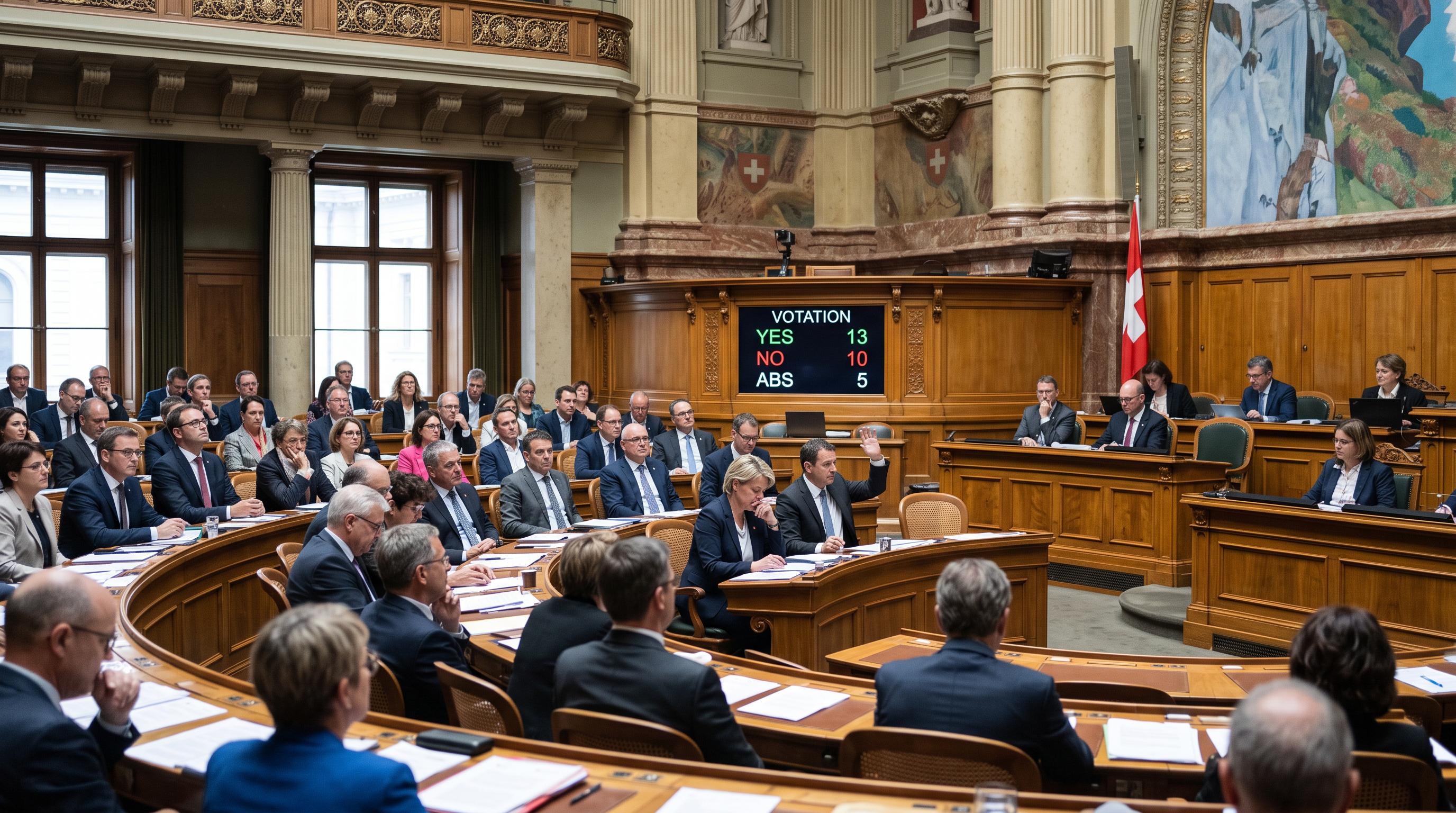
House Votes to Repeal Sports Gender Quotas
The House of Representatives voted 109 to 81 on Tuesday, September 15, 2026, to repeal Switzerland’s gender-balance requirement for national sports federations. The decision targets a rule introduced only recently and places the future of representation standards in Swiss sport back at the centre of the political debate.
The motion came from Stefanie Heimgartner of the Swiss People’s Party. She argued that a fixed quota does not reflect the membership base of every sport, pointing to the Swiss Wrestling Federation, where around 90% of members are men. Heimgartner said federations should be free to promote women without being bound by a statutory target.
The vote concerns governing bodies, not participation rules for athletes or team selection. It affects the leadership of Swiss Olympic, national federations and other national sports organisations. The House has now endorsed repeal, although the source does not state whether the measure has completed the full parliamentary process.
For Swiss sports organisations, the decision raises an immediate governance issue: whether representation should be secured through a formal benchmark or pursued through voluntary recruitment and promotion.
Quota Rule Linked to Athlete Protection
The 40% requirement has been in place since 2023, with exceptions for federations unable to meet the target. The government applied the standard to the leadership of Swiss Olympic, national federations and national sports organisations as part of a wider set of ethical principles.
Those principles were designed to protect athletes from violence and prevent abuse within federations. The quota therefore sits within a policy framework that reaches beyond boardroom composition. Its supporters see broader representation as one part of stronger institutional oversight and healthier governance.
The House decision does not erase the stated responsibility of federations to protect athletes. It does remove, if the repeal takes effect, one formal measure attached to that responsibility. The practical consequences will depend on how Swiss Olympic and individual federations respond, and on whether they retain internal targets or recruitment programmes.
The source gives no timetable for implementation and no details of the next parliamentary steps. For now, the vote signals a clear challenge to the government’s 2023 approach, which linked ethical standards in sport with a measurable balance in leadership.
Sports Face Different Representation Realities
The debate turns on a tension between a uniform national standard and the very different make-up of Swiss sports. Heimgartner’s example was wrestling, where the membership is overwhelmingly male. A federation with a narrow or historically male membership base may struggle to meet a 40% leadership target, even when it actively seeks qualified candidates.
Her argument was that federations can promote women themselves. That would shift responsibility from a common requirement to individual organisations, allowing each sport to set its own path. The motion’s supporters therefore frame repeal as a recognition of sporting realities and organisational autonomy.
Critics, according to the source, warn that removing the requirement could weaken efforts to improve representation and prevent abuse. The concern is not limited to whether a board mirrors its membership. It also involves who holds influence, which voices shape policy, and how institutions build trust among athletes.
The available reporting does not identify how each parliamentary group voted, nor does it provide representation figures for individual federations. Those details will matter as the consequences of Tuesday’s vote become clearer.
Federations Face Voluntary Action
Swiss federations now face a choice between maintaining a formal 40% benchmark voluntarily and relying on broader recruitment efforts. The House vote sets a political direction, but the reporting does not yet describe the final legal status of the requirement or the response from Swiss Olympic and individual national federations.
If repeal proceeds, organisations will still operate under ethical duties intended to protect athletes from violence and abuse. They will also have to show how they plan to widen access to leadership for women, particularly in sports where membership remains heavily male. Possible approaches could include targeted recruitment, mentoring and transparent selection processes, although the source does not say which measures federations will adopt.
The decision also places Swiss sport in a wider national conversation about quotas. A separate Swissinfo report noted that company board quotas introduced under Swiss law were beginning to produce results in 2026. Sports federations will now be treated differently if the House position becomes law.
The next stage will reveal whether voluntary action can deliver the representation that the 2023 rule sought to secure, while preserving the federations’ ability to respond to the specific conditions of each sport.