Politics
Pressure Eases on Swiss-EU Ties, But Populists Vow to Continue Immigration Fight
The recent rejection of the 'No to ten million!' initiative has preserved key agreements with the EU for now. However, the right-wing Swiss People's Party (SVP) is not giving up its push to cap immigration, ensuring the debate over population growth and foreign relations will persist.
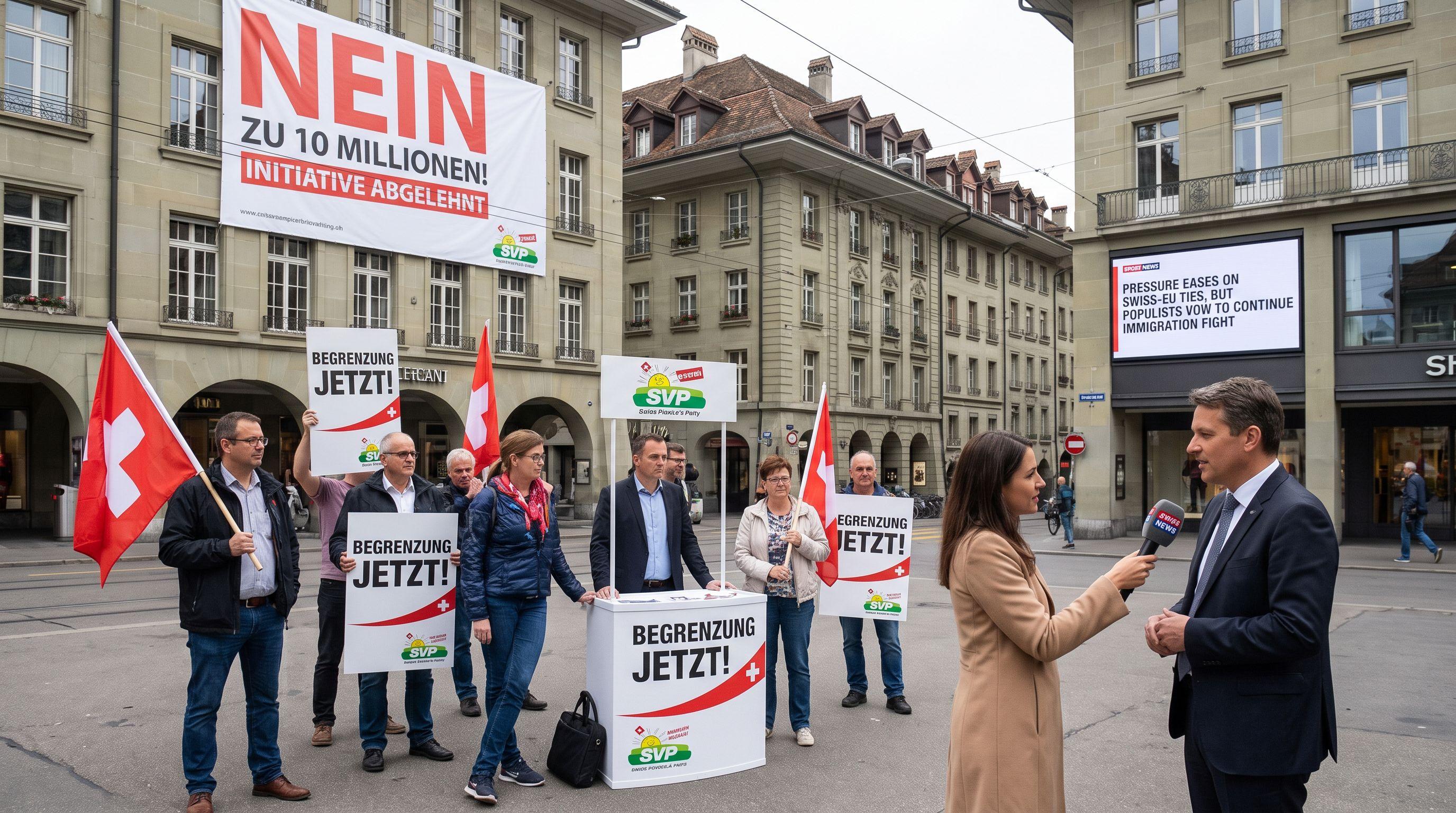
Bern Breathes as Bilaterals Survive the Ballot
Switzerland has narrowly avoided a diplomatic collision course with its largest trading partner. The rejection of the 'No to ten million!' initiative on June 14 has effectively shielded the Agreement on the Free Movement of Persons from immediate termination. This cornerstone of Swiss-EU relations was under direct threat from a proposal that sought to impose a hard ceiling on the national population. Had the initiative passed, the 'guillotine clause' would have likely dismantled the entire framework of Bilateral Agreements I, plunging the Swiss economy into a state of unprecedented legal uncertainty. For now, the status quo holds, but the victory is far from a total mandate for open borders. The vote serves as a temporary reprieve rather than a permanent resolution to the friction between national sovereignty and European integration.
Brussels Relieved but Wary of Swiss Skepticism
A staggering 45% of the electorate voted in favor of the population cap, a figure that has sent shockwaves through the corridors of power in Brussels. While the European Commission maintained a strategic silence leading up to the vote to avoid accusations of interference, the internal relief is palpable. Officials feared a 'yes' vote would signal a definitive retreat from the European project. However, that 45% support highlights a significant and persistent skepticism toward EU-Bern relations. Aleksandra Planinic, Brussels correspondent for RTS, notes that while the 'no' vote was welcomed, the sheer volume of support for the initiative indicates that the Swiss public remains deeply divided. The era of cordiality remains fragile, as the EU realizes that nearly half of the Swiss population is willing to risk economic ties to curb immigration.
The SVP Digs In for a Long-Term Demographic War
The Swiss People’s Party (SVP) is refusing to retreat despite its ballot box defeat. The hard-right faction is already pivoting to new fronts to stop the country from hitting the 10-million mark. For the SVP, this wasn't just a single vote; it is a existential battle for Swiss identity and infrastructure. They argue that rapid population growth surges past the capacity of Swiss schools, hospitals, and transport networks. By framing immigration as a quality-of-life issue rather than just a diplomatic one, the SVP ensures that the debate will continue to dominate the political landscape. The party is now leveraging its influence in Parliament to scrutinize every aspect of the upcoming Bilateral Agreements III, promising to confront any policy that facilitates further demographic expansion. The fight for a 'ten-million-free' Switzerland has only just begun.
The Double Majority Trap Looms Over Future Ties
The path forward for Swiss-EU relations now hinges on a critical procedural decision: the double majority. As Parliament prepares for its autumn session, the central question is whether the new package of agreements will require the approval of both the people and the cantons. Experts like Cédric Dupont warn that achieving a double majority will be exceptionally difficult given the current political climate. While a simple majority of voters might be attainable, the conservative rural cantons often act as a firewall against deeper European integration. If the Bilateral Agreements III are forced to clear this higher hurdle, the risk of a total collapse in negotiations skyrockets. Switzerland stands at a crossroads, where the technicalities of voting law could determine the nation's economic trajectory for the next generation. The pressure hasn't disappeared; it has simply shifted from the ballot box to the halls of the Federal Palace.