Economy
Swiss Employment Prospects Improve as KOF Indicator Rises
The outlook for the Swiss labour market is improving, according to the latest employment indicator from the KOF Economic Institute. The index rose in the third quarter, suggesting a continued recovery and positive hiring trends despite global economic uncertainties, with the retail trade sector seeing a significant rise.
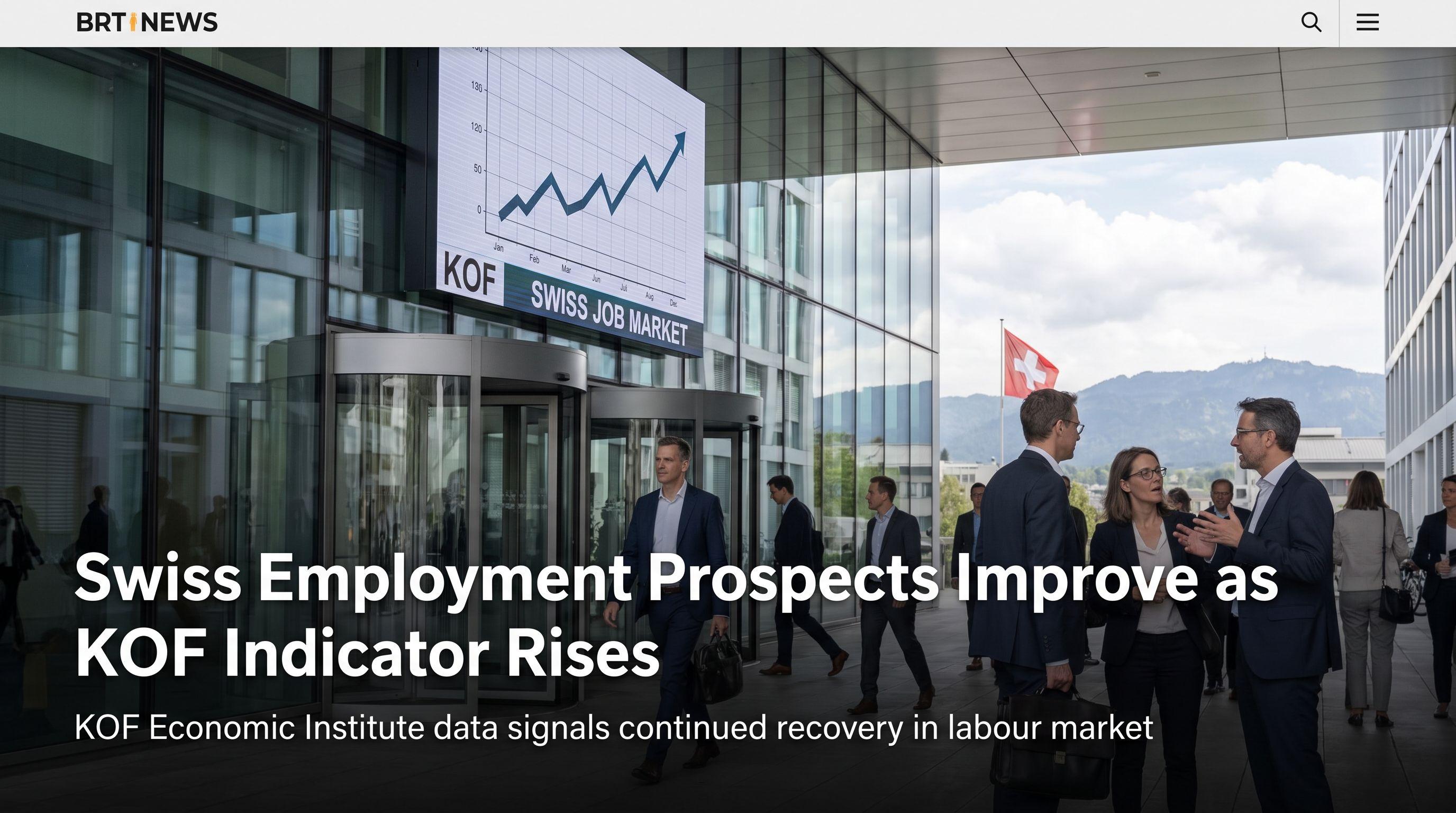
Switzerland Defies Global Gravity as Job Outlook Surges
Switzerland’s labor market is charging ahead with renewed vigor, shattering expectations despite a backdrop of global economic turbulence. The KOF Employment Indicator has climbed to a robust 2.1 points for the third quarter, a decisive 0.5-point jump from the previous period. This isn't just a minor fluctuation; it is a powerful signal of resilience. By surpassing the long-term historical average of 1.7 points, the Swiss economy is signaling to the world that its hiring engine is far from stalled. After a grueling three-year slide that saw the indicator dip into negative territory in late 2025, this recovery represents a significant turning point for the nation's workforce. Over 4,200 companies across the Confederation have spoken, and their message is clear: the appetite for talent is back. This surge aligns perfectly with the 2.1 points recorded at the start of the year, effectively erasing the stagnation of the spring months and setting a confident tone for the remainder of 2026.
Retail Resurrects While Manufacturing Grapples with Tension
The retail sector has staged a breathtaking comeback, swinging from a dismal -3.1 points to a positive 2.9 points in a single quarter. This dramatic reversal marks the first time the sector has seen daylight since mid-2024, suggesting that Swiss consumer confidence is finally translating into payroll expansion. Meanwhile, the wholesale trade is also clawing its way back, though it remains trapped in negative territory at -1.9 points—a position it has occupied for over two years. In stark contrast, the manufacturing heartland is confronting a cooling period. Labor market tensions in manufacturing have eased for the fourth consecutive time, leaving the index at a sobering -5.3 points. While the broader national average is rising, the manufacturing sector remains well below zero, highlighting a painful divergence in the Swiss industrial landscape. This 'two-speed' economy forces policymakers to look closely at why service-oriented jobs are skyrocketing while the traditional industrial base continues to struggle with global supply chain echoes and currency pressures.
Construction Booms as Hospitality Faces a Chilling Winter
A staggering 11.2 points—that is the powerhouse figure coming out of the Swiss construction sector, which continues to dominate the employment landscape. This double-digit score reinforces the construction industry as the bedrock of Swiss domestic growth, showing no signs of slowing down despite rising material costs. However, the hospitality industry is telling a much darker story. The hotel and catering index has plummeted to -8.8 points, its most alarming level since the dark days of the second quarter of 2021. This sharp decline suggests a critical shortage of demand or a structural shift in how tourism operates within the post-pandemic reality. While cranes dot the skyline of Geneva and Zurich, the dining rooms and mountain resorts are bracing for a period of contraction. This stark polarization between the 'builders' and the 'hosts' of Switzerland creates a complex puzzle for the labor market, as workers may need to transition from struggling service roles into the high-demand technical and construction fields to keep the unemployment rate at its current enviable lows.
Navigating the Path to Sustained Economic Resilience
The recovery that ignited in late 2025 is not just holding; it is accelerating. With the KOF indicator firmly above the long-term average, Switzerland is positioning itself as a beacon of stability in an uncertain European market. The implications for the Swiss worker are profound: more leverage, more opportunity, and a broader range of sectors seeking fresh talent. However, the road ahead requires a surgical focus on the manufacturing and hospitality sectors to ensure they aren't left behind in this tide of growth. As the indicator stabilizes at the 2.1-point mark, the focus shifts to whether this momentum can be sustained into 2027. Businesses are currently betting on growth, but the negative figures in wholesale and manufacturing serve as a warning that global headwinds still have the power to dampen the Swiss flame. For now, the Swiss labor market is not just surviving—it is evolving, proving once again that the Alpine nation's economic foundations are built on granite. The coming months will be critical as these positive hiring intentions translate into actual contracts and a further tightening of the labor market.