International Relations
Switzerland Deploys 'Quiet Diplomacy' to Help Return Ukrainian Children from Russia
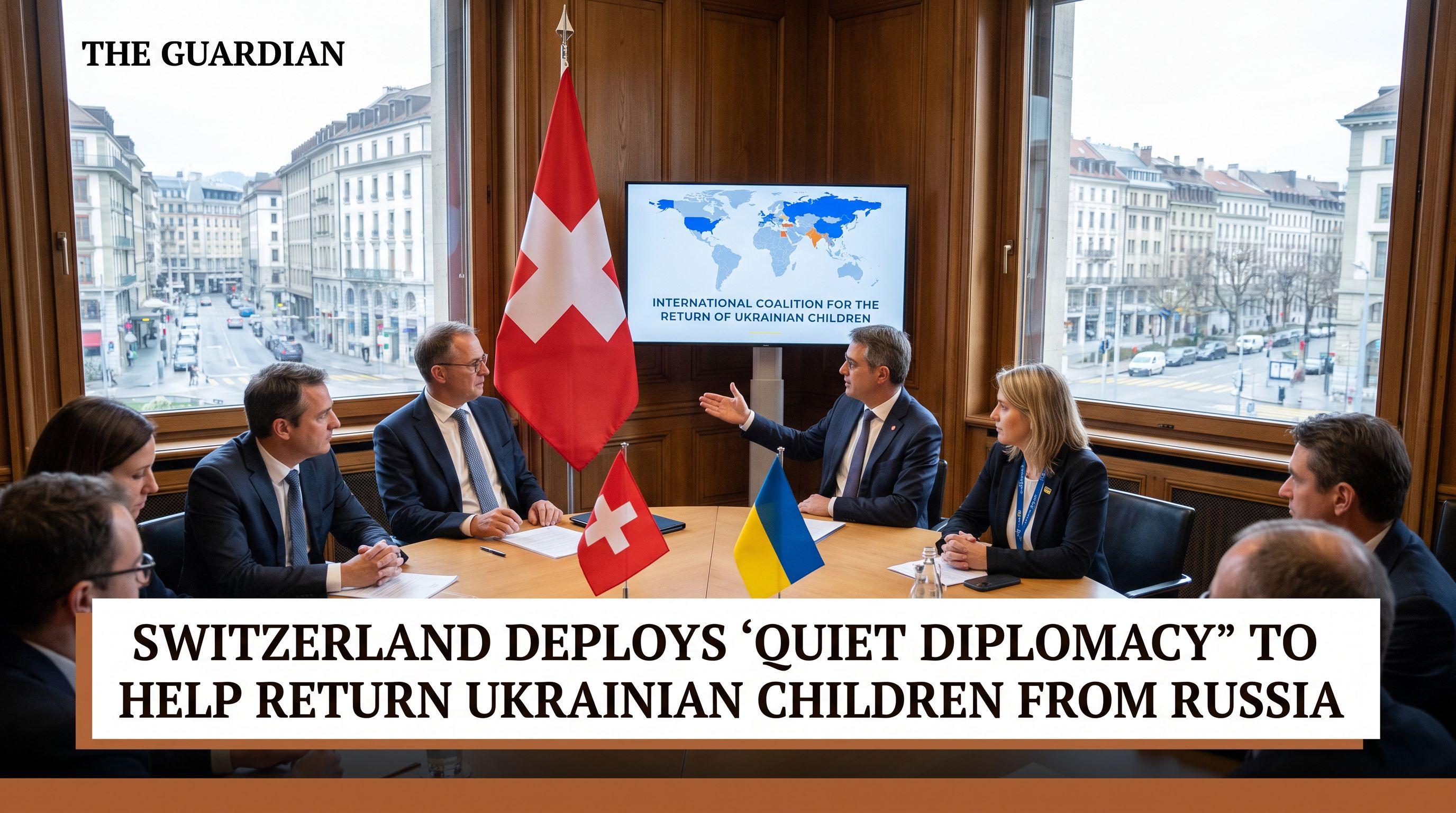
Switzerland has officially joined an international coalition focused on the return of thousands of Ukrainian children forcibly deported to Russia. This article examines Switzerland's diplomatic role and the challenges faced by the international effort to reunite families affected by the war.
Bern Breaks Silence on Stolen Generations
Switzerland is finally stepping into the light to confront one of the darkest chapters of the Russo-Ukrainian war. After two years of watching from the sidelines as an observer, the Swiss government has officially joined the international coalition dedicated to repatriating thousands of Ukrainian children. This is not merely a symbolic gesture; it is a calculated pivot. The Federal Council's decision follows intense pressure from both chambers of parliament, signaling a national consensus that neutrality does not mean indifference to the fate of the vulnerable. Over 20,000 children have been forcibly removed from their homes, a staggering figure that has prompted the International Criminal Court to issue an arrest warrant for Vladimir Putin. Switzerland now lends its diplomatic weight to a cause that demands immediate, decisive action. The urgency is palpable as the Alpine nation prepares to deploy its unique brand of statecraft to rectify a profound violation of international humanitarian law.
The Logistics of a Humanitarian Crisis
A staggering 20,000 children remain displaced, trapped within the borders of Russia or Russian-occupied territories. While Ukrainian sources provide this harrowing estimate, the reality on the ground is a chaotic puzzle of missing identities and erased heritage. To date, only a few thousand have successfully returned to their families, leaving a massive deficit of justice. Switzerland’s entry into the 50-nation coalition aims to bridge this gap through sophisticated coordination and tracing. The mission is clear: find the children, trace their movements across vast territories, and facilitate their safe return. President Volodymyr Zelensky has identified these steps as the absolute priority for Ukraine's survival as a nation. The Swiss Foreign Ministry is now tasked with integrating into this massive logistical machine, providing the technical expertise required to navigate the complex web of international borders and hostile jurisdictions that currently separate families.
Good Offices in the Shadows
Switzerland operates best when the cameras are off. This is the essence of 'quiet diplomacy,' a strategy the Swiss government is now deploying to negotiate the return of Ukraine’s 'stolen' children. Unlike nations that rely on sensational public statements, Switzerland utilizes its 'good offices'—a traditional role as a non-partisan messenger—to open doors that remain closed to others. This behind-closed-doors approach is critical when dealing with a Kremlin that remains defiant in the face of international warrants. The Swiss Foreign Ministry emphasizes that this membership is a continuation of their existing commitment, yet the shift to full member status provides a more robust platform for confidential mediation. By acting as a neutral intermediary, Switzerland can facilitate the delicate, high-stakes dialogues necessary to secure the release of children without the friction of public political posturing. It is a game of chess played in the shadows, where the prize is the reunification of broken families.
A Global Front Against Deportation
The coalition now stands 50 nations strong, creating an unprecedented united front against the unlawful deportation of minors. Switzerland’s formal inclusion marks a significant strengthening of this international bloc. While the Swiss government has been cautious to frame this as a 'continuation' of policy, the move signals to the world that the Alpine nation is ready to lead in humanitarian coordination. The road ahead remains fraught with challenges; Russia continues to dispute the figures and the legality of the ICC's actions. However, the collective pressure of the coalition, bolstered by Swiss diplomatic finesse, creates a formidable force. Looking forward, the focus shifts to reintegration—ensuring that children who return receive the psychological and social support they need to recover from the trauma of war. Switzerland’s involvement ensures that the effort is not just about the return, but about the long-term restoration of a generation. The world is watching, and for the first time in years, there is a coordinated path home.