artificial intelligence
Most Swiss consumers have used AI to help with shopping, survey finds
Nearly 70% of Swiss adults surveyed say they have used AI assistants to prepare for a purchase, according to a Visa-backed poll of more than 1,200 people. Most still want to approve payments themselves: only 17% would accept a fully autonomous purchase.
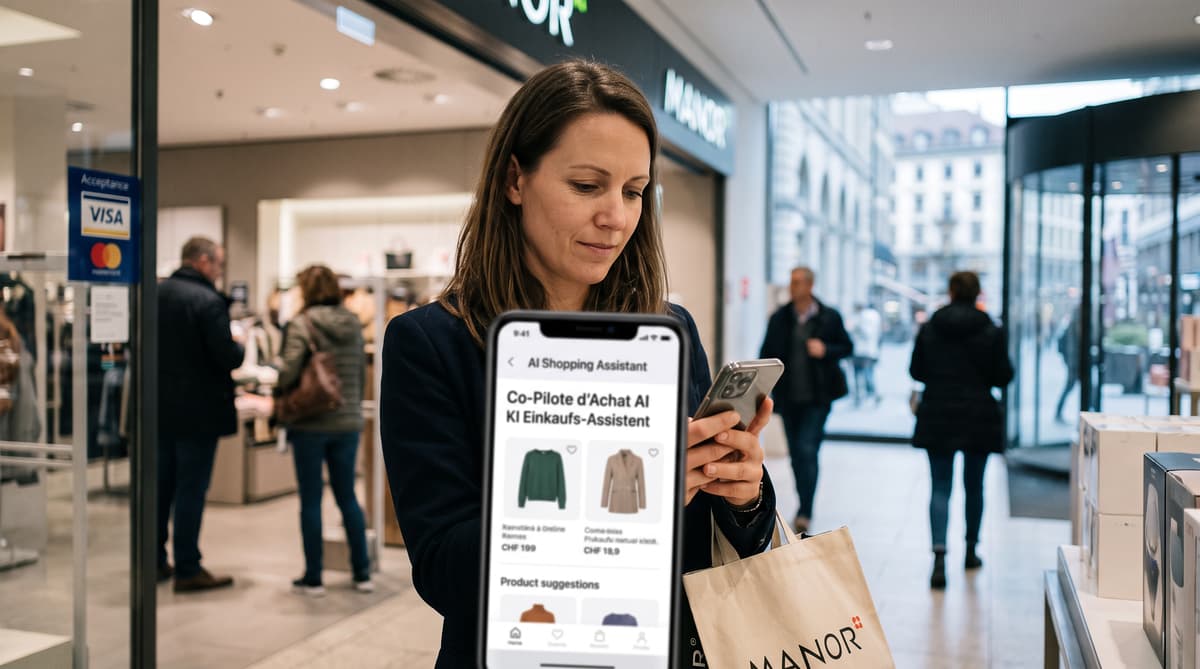
Nearly 70% of surveyed Swiss adults have already used an AI assistant while preparing to buy something. The finding places recommendation engines, chatbots and other AI tools inside an everyday consumer journey that once relied on search engines, comparison sites and advice from friends.
The figure comes from an online survey commissioned by Visa and published on October 15, 2026. It questioned more than 1,200 people aged 18 to 65 in Switzerland. The survey does not suggest that AI has taken over the checkout. Swiss consumers draw a firm line around payment approval, even when they accept help with research and product selection.
Among respondents who use AI for shopping, 49% said it strongly influences their purchasing decisions. One in ten said they had already bought exactly the product recommended by an AI tool. Those figures give retailers and payment providers a clear signal: AI can shape demand before a customer reaches a web shop, while trust still depends on who controls the final transaction.
The results also arrive as Swiss consumers encounter AI across banking, travel, retail and customer service. The survey captures adoption and attitudes, rather than proving that every recommendation improves price, quality or convenience.
Keep Payment Control
Two-thirds of respondents want to approve every payment themselves. The survey found that 67% would continue making each payment personally, while only 17% would accept a fully autonomous purchase, including payment. That preference gives human authorisation a central role in the next phase of AI-assisted commerce.
A larger group is willing to test a narrower arrangement. One-third, or 33%, would allow an AI agent to complete a purchase within a predefined limit, usually a modest amount. The strongest support appears at low values: 24% would authorise an autonomous purchase, including payment, up to CHF 50. Once the amount exceeds CHF 100, willingness drops to 2.5%.
The pattern points to a practical form of automation. Consumers may delegate a repeat purchase, a low-cost item or a transaction with clear rules, while retaining control over larger or unfamiliar spending. Preset limits could also give banks, card issuers and retailers a way to build confidence gradually.
For Swiss users, payment is the point at which convenience meets accountability. A recommendation can be ignored. A completed charge requires a stronger guarantee that the customer understood and authorised what happened.
Target Complex Purchases
Travel and transport bookings lead the categories where Swiss consumers want AI assistance, at 33%. Electronics and technology follow at 28%, while 20% see a role for AI in weekly shopping. The figures suggest that users value assistance most when products are difficult to compare, expensive or tied to several decisions.
A travel booking may involve dates, connections, luggage, cancellation terms and competing prices. An electronics purchase can require comparisons across specifications, compatibility and warranties. AI tools can organise that information quickly, but the final choice still depends on details that a recommendation may overlook, including a traveller’s flexibility or a buyer’s existing equipment.
Weekly shopping presents a different test. Regular purchases are familiar and often driven by habit, discounts or immediate availability. That may explain why fewer respondents identified routine groceries and household items as a leading use case. It also leaves room for AI to develop through shopping lists, price comparisons and substitutions, provided users can review the basket before payment.
The survey records what consumers envisage, not which services they use or whether retailers already offer them. Its category figures nevertheless show where Swiss shoppers see the clearest value: complex decisions first, routine transactions later.
Set Trust Boundaries
Spending control and payment-data misuse are the leading concerns, cited by 55% and 51% of respondents respectively. Those worries explain why broad use of AI for product research has not translated into enthusiasm for autonomous checkout.
Consumers face several decisions when an AI agent acts on their behalf. They need to know which information the system used, how it ranked products, whether sponsored results affected its recommendation and what data it shares with a retailer or payment provider. A mistaken suggestion can waste money. An unauthorised or poorly understood transaction creates a more serious dispute over responsibility.
Age also matters. Generation Z reported higher AI use than older generations. The published survey excerpt says 82% of young respondents approved of comparing shopping options with AI, although it does not provide a complete generational breakdown. That points to an adoption gap, while leaving open how attitudes may change as older consumers become more familiar with the tools.
Swiss retailers, banks and technology companies will need to make limits visible and reversable. Clear spending caps, transaction confirmations and accessible records could help users experiment without surrendering oversight. For now, the survey shows a market willing to delegate research, with payment authority still firmly in consumers’ hands.
Shape the Next Checkout
Swiss consumers are adopting AI in stages, with autonomy tied closely to the value of the purchase. The survey’s CHF 50 and CHF 100 thresholds show that willingness is conditional rather than uniform. A low-risk transaction may be delegated, while a larger purchase still calls for an explicit human decision.
That distinction will shape how payment services develop in Switzerland. AI agents could search across offers, monitor prices, assemble baskets or suggest travel itineraries. Payment providers will have to support the customer’s ability to set limits, inspect the transaction and withdraw permission. Retailers will also need to explain how recommendations are generated and distinguish paid placement from independent product advice.
The survey offers no forecast for how quickly autonomous commerce will grow. It does show that consumers are already using AI before they buy, especially for complex categories. As Generation Z enters more purchasing decisions, familiarity may increase adoption, but concerns about spending and data are unlikely to disappear simply because the technology becomes common.
For Swiss shoppers, the immediate model is clear: let AI narrow the options, compare the details and reduce the work. Keep the final approval close at hand, especially when the price or the consequences rise.