Military
Swiss Army Super Pumas Deployed to Fight Wildfires in Corsica
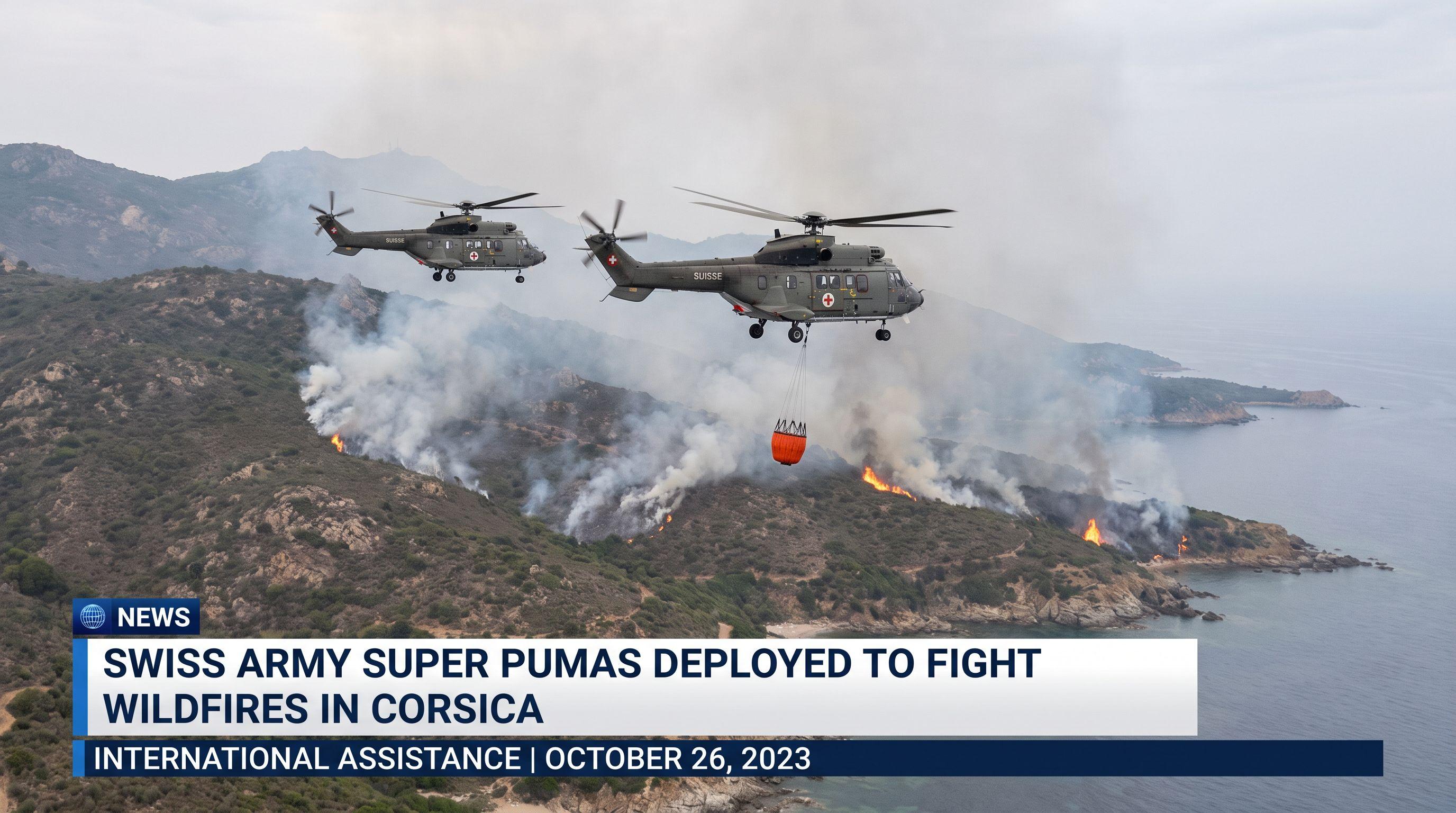
In a display of international cooperation, three Swiss Army Super Puma helicopters have been dispatched from Ticino to assist in combating fierce forest fires on the French island of Corsica. The mission involves a 22-person team of specialists and marks another instance of the army's rapid response operations abroad.
Swiss Air Power Strikes Mediterranean Infernos
Three Swiss Army Super Puma helicopters surged from the Locarno military airbase on Tuesday, marking a decisive escalation in Switzerland's commitment to European disaster relief. This mission targets the fierce forest fires currently ravaging the French island of Corsica, where a lethal combination of drought and wind threatens to consume vast tracts of Mediterranean wilderness. A total of 22 elite personnel are spearheading this operation, representing a rapid-response capability that few nations can match. While local forces grapple with the blaze, the arrival of Swiss air assets provides a critical tactical advantage. The mission, authorized by the federal government, underscores Switzerland’s role as a proactive partner in regional security. These aircraft are not merely transport vehicles; they are sophisticated firefighting platforms equipped to drop thousands of liters of water with surgical precision on terrain that is often inaccessible to ground crews. The clock is ticking as another heatwave looms, making the timing of this deployment absolutely vital for the survival of the island's ecosystem.
Elite Specialists Confront Unpredictable Elements
A staggering 22-person team of specialists, including mechanics and humanitarian aid experts from the Swiss Agency for Development and Cooperation (SDC), is now on the ground in Corsica. This is not a standard military exercise; it is a high-stakes battle against an unpredictable enemy. Head of operations Patrick Egli emphasizes that the team is specifically designed to solve problems that have not yet been anticipated. In an environment where temperatures soar and fire behavior changes in seconds, the Swiss contingent relies on a mix of technical mastery and tactical flexibility. Meanwhile, the SDC members ensure that every drop of water and every flight hour is coordinated with local French authorities for maximum impact. This synergy between military hardware and humanitarian expertise is the hallmark of the Swiss 'Rapid Response' model. The team is prepared for a grueling week-long deployment, though they remain ready to extend their stay if the inferno refuses to yield. Their presence is a testament to the rigorous training undergone in the Swiss mountains, which serves as the perfect rehearsal for the vertical challenges of Corsica.
Navigating the Lethal Fog of War and Smoke
Visibility has plummeted to critical levels as dense smoke blankets the Corsican ridges, creating a 'flying blind' scenario for even the most seasoned pilots. Helicopter pilot Tobias Müller describes the operation as exceptionally challenging from a flying perspective, citing the dual threats of extreme heat and obscured terrain. The heat generated by the fires creates turbulent air currents that can toss a multi-ton helicopter like a leaf, while the smoke masks the very mountains the crews must navigate. Furthermore, the airspace is crowded; Swiss pilots must coordinate with a swarm of other international aircraft and local emergency services. This requires a level of communication and precision that leaves zero margin for error. Despite these alarming conditions, the Swiss crews possess a unique advantage: the topography of Corsica closely mirrors the rugged terrain of the Swiss Alps. This familiarity allows them to execute low-altitude water drops in narrow valleys where others might hesitate. The mission is a grueling test of endurance for both man and machine, as they confront temperatures that push the Super Pumas to their mechanical limits.
A Tradition of Rapid Response Beyond Borders
Switzerland’s intervention in Corsica is no isolated incident; it is part of a surging trend of Swiss humanitarian activism across Europe. This operation follows successful deployments in Montenegro, Italy, and Greece, solidifying the Swiss Army’s reputation as the continent’s premier emergency air wing. While 22 specialists fight in Corsica, another 30 Geneva firefighters are simultaneously battling flames near Bordeaux, demonstrating Switzerland's ability to project power and aid across multiple fronts. This dual-front engagement highlights the unprecedented demand for Swiss expertise as climate-driven disasters become more frequent and severe. The costs, covered by the FDFA and the DDPS, represent a strategic investment in international stability and environmental protection. As the mission enters its first critical days, the implications are clear: Switzerland is no longer just a neutral observer of European crises but a vital, active participant in solving them. Looking ahead, this mission will likely serve as the blueprint for future Swiss rapid-response operations, proving that when Europe burns, Switzerland is ready to answer the call with speed, precision, and unwavering resolve.