Business
Stadler Rail Secures Landmark Contract to Supply 45 Locomotives to Canada
Swiss train manufacturer Stadler Rail has announced a significant contract with VIA Rail Canada to supply 45 hybrid locomotives specifically designed for extreme climates, including a 20-year maintenance agreement, marking a major expansion of its presence in the North American market.
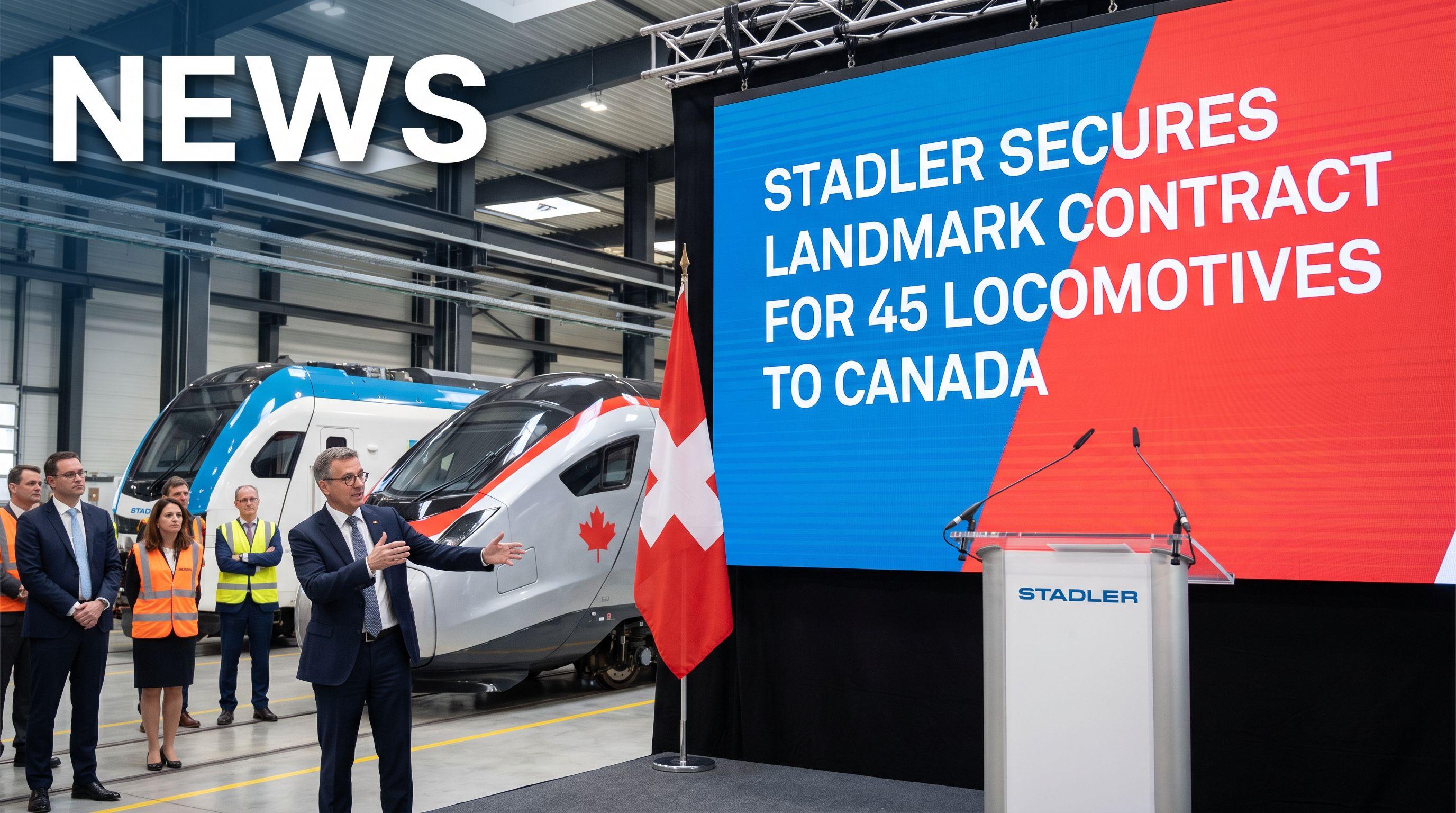
Swiss Engineering Conquers the Canadian Tundra
Stadler Rail has shattered expectations by securing a monumental contract to supply 45 state-of-the-art locomotives to VIA Rail Canada. This isn't just a sale; it is a strategic conquest of the North American market. While competitors grapple with supply chain instabilities, the Thurgau-based manufacturer has locked in a deal that includes a staggering 20-year maintenance agreement, ensuring a permanent Swiss footprint on Canadian soil. The Canadian Ministry of Transport has flagged a massive 1.95 billion CAD investment for this fleet overhaul, with roughly 1.6 billion CAD—nearly 1 billion Swiss Francs—earmarked directly for Stadler’s superior rolling stock. This deal cements Stadler’s reputation as the go-to provider for complex, high-stakes infrastructure. The sheer scale of this partnership transforms VIA Rail’s passenger service and positions Stadler as an immovable force in transatlantic transit. As the world watches, Swiss precision is once again proving to be the gold standard for global transportation networks.
Hybrid Power Defies Minus 50 Degree Extremes
A bone-chilling -50°C is the benchmark for Stadler’s latest engineering marvel. These 45 locomotives are not merely trains; they are survival machines designed to thrive where others fail. Featuring a cutting-edge hybrid traction system, these vehicles fuse diesel-electric power with high-capacity batteries to slash emissions and maximize energy efficiency. This dual-threat technology confronts the climate crisis head-on while maintaining relentless reliability in the world’s most unforgiving environments. The development is spearheaded by Stadler Valencia, the group’s center of excellence, which is now tasked with perfecting a machine that can withstand the thermal shock of a Canadian winter. While traditional engines seize in the arctic blast, Stadler’s hybrid tech surges forward. This contract proves that green technology and extreme performance are no longer mutually exclusive. By integrating battery power into heavy-haul passenger rail, Stadler is effectively rewriting the rulebook for sustainable transport in extreme latitudes.
Billion-Dollar Backlog Fuels Market Dominance
Investors are surging into Stadler Rail, driving shares up by 2% immediately following the announcement on the Zurich stock exchange. This latest victory contributes to a soaring 17% increase in share price since the beginning of January 2026, a clear signal of market confidence in CEO Peter Spuhler’s vision. While the broader market trended lower, Stadler’s financial trajectory remains aggressively positive. The 20-year technical support agreement is the real crown jewel, guaranteeing a stable, high-margin revenue stream that will insulate the company from economic volatility for two decades. In 2025, the firm achieved a turnover of CHF 3.7 billion, and this Canadian windfall suggests that 2026 could shatter previous records. The contrast is stark: while other industrial giants face stagnation, Stadler is capitalizing on the global shift toward rail. This contract isn't just a win for the balance sheet; it is a definitive statement of financial health that will echo through the halls of Swiss banking for years to come.
Global Reach with a Swiss Heartbeat
From its humble origins in 1942 Zurich, Stadler has evolved into a global titan employing 18,000 people, yet its heart remains firmly Swiss. Over 6,000 employees still operate within Switzerland, ensuring that the 'Swiss Made' label remains a badge of uncompromising quality. This Canadian deal utilizes a sophisticated 'local-global' model: while the intellectual property and core production reside in Valencia and Switzerland, final assembly and testing will occur in Canada. This strategy bypasses protectionist hurdles and creates local jobs, making Stadler an indispensable partner for national governments. The move reinforces a critical reality: Swiss engineering is the backbone of modern global infrastructure. As Stadler locomotives begin to traverse the vast Canadian landscape, they carry with them the legacy of Ernst Stadler and the future of Swiss industrial might. The world is moving toward rail, and Switzerland is the one driving the engine. Expect this momentum to trigger further expansions into the United States and beyond as the North American rail renaissance gathers speed.