health
Sepsis kills 4,000 people a year in Switzerland as campaign seeks earlier action
Sepsis kills around 4,000 people in Switzerland each year, yet its early symptoms can be difficult to recognise. A new patient and family association is seeking greater awareness, support and faster responses to what remains a medical emergency.
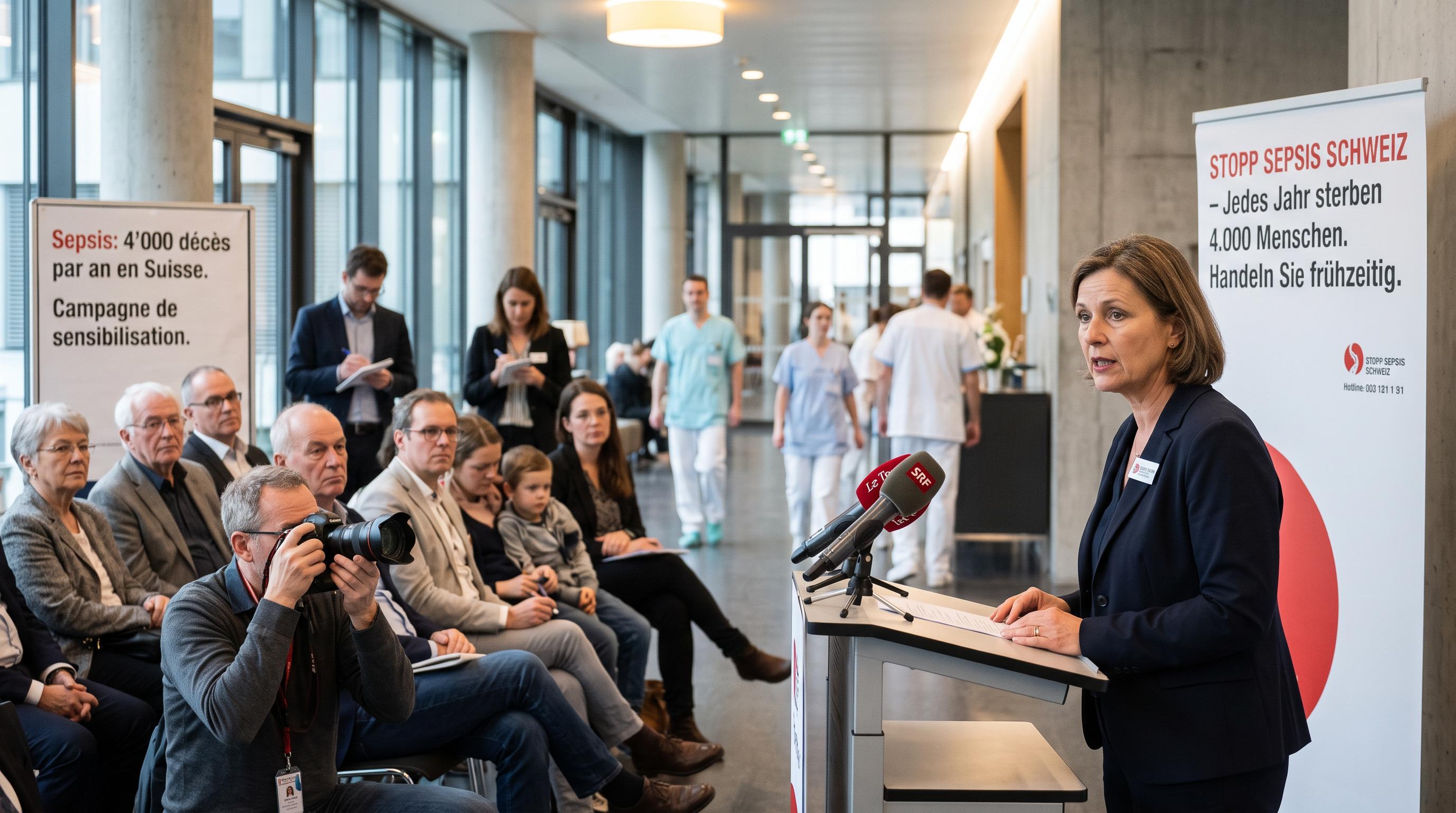
Sepsis campaign puts speed at the centre of the response
Around 4,000 people die from sepsis in Switzerland every year. The figure is at the centre of a new awareness campaign launched around World Sepsis Day on Sunday, September 13, 2026. The Swiss Sepsis Programme is urging the public to recognise the condition quickly, since symptoms can be difficult to identify in their early stages and deterioration can lead to a medical emergency.
Swiss hospitals record approximately 20,000 sepsis cases annually, according to figures cited by the programme. About one in five of those cases proves fatal. The death toll is comparable to the combined number of people who die from breast, bowel and prostate cancer, the programme says.
The campaign focuses on a simple response: suspected sepsis requires immediate medical attention. It can affect anyone, and the early signs may not point clearly to the seriousness of the illness. Delays can reduce the opportunity to treat the underlying infection and prevent complications.
The message is being delivered through a new organisation created by patients and relatives who have experienced the disease. Their goal is to put sepsis higher on the public health agenda and help families act sooner when a loved one becomes seriously unwell.
Early signs can disappear inside a wider illness
Sepsis sends about 20,000 people to Swiss hospitals each year. The condition develops when the body responds dangerously to an infection, and the initial symptoms can be mistaken for a less serious illness. The source material does not provide a single symptom checklist, making professional assessment especially important when someone’s condition worsens rapidly.
The Swiss Sepsis Programme says sepsis can affect anyone. That broad risk is one reason its campaign is aimed beyond hospitals and specialist circles. Families, carers and patients may be the first to notice that a person is becoming acutely ill. The programme’s public message is to consider sepsis and seek medical help immediately when it is suspected.
The consequences can continue after survival. Anton Löffel, president of the programme and the newly formed Sepsis Switzerland association, said sepsis can cause permanent physical and psychological impairments, organ damage and amputations.
Those outcomes create a long recovery for patients and relatives, with consequences that extend beyond the acute hospital stay. Earlier recognition cannot guarantee survival, but it can prompt a faster clinical response to a condition that Löffel described as “always a medical emergency.”
Patients and relatives build a support network
Sepsis Switzerland was founded in Bern by patients and family groups. The association grew out of the Swiss Sepsis Programme and is designed to give people affected by sepsis a stronger voice in Switzerland’s health system.
Its work will include a platform for discussion and advice. That support matters because sepsis can leave patients with physical and psychological effects after the infection has been treated. Relatives may also need help understanding what happened, navigating recovery and sharing experiences with others who have faced the same emergency.
The organisation’s launch ahead of World Sepsis Day gives the campaign a national focus. The available figures are national rather than canton specific, so they do not show whether the burden is distributed evenly across Switzerland or whether response times differ between urban hospitals and rural communities. They do show the scale confronting the country’s hospitals as a whole.
By placing patients and families at the centre, Sepsis Switzerland is seeking more than one day of publicity. It wants greater awareness, better support and faster responses. Löffel’s formulation, “Thinking of sepsis means saving lives,” captures the association’s practical aim: make consideration of sepsis part of the response when a serious infection may be developing.
Switzerland faces a long campaign for faster action
The campaign is asking Switzerland to shorten the time between suspicion and treatment. The annual figures provide the clearest measure of the challenge: about 20,000 hospital cases and 4,000 deaths. The Swiss Sepsis Programme says the risk remains underestimated, while the new association is pressing for broader public understanding and stronger support for those who survive.
For the public, the guidance is direct. When sepsis is suspected, seek medical help immediately. People should explain the concern clearly to health professionals and describe how quickly the person’s condition has changed. The campaign does not replace clinical assessment, and the source material does not recommend self treatment.
For hospitals and health authorities, the figures point to a continuing need for rapid recognition and coordinated care. Sepsis Switzerland’s patient and family perspective can add evidence about what happens before admission and during recovery, areas that are often less visible in hospital statistics.
World Sepsis Day gives the issue a fixed moment in the calendar, but the association’s launch signals a longer campaign. Its success will depend on whether awareness reaches households, workplaces and care settings across the country, and whether suspected cases receive faster attention when minutes matter.