Fuel
Low Rhine levels raise concern over Swiss fuel supplies
Switzerland could face pressure on fuel supplies this autumn as low water levels on the Rhine disrupt tanker traffic from the North Sea. The risk highlights the country’s dependence on cross-border fuel logistics and could affect petrol availability and energy costs if transport conditions worsen.
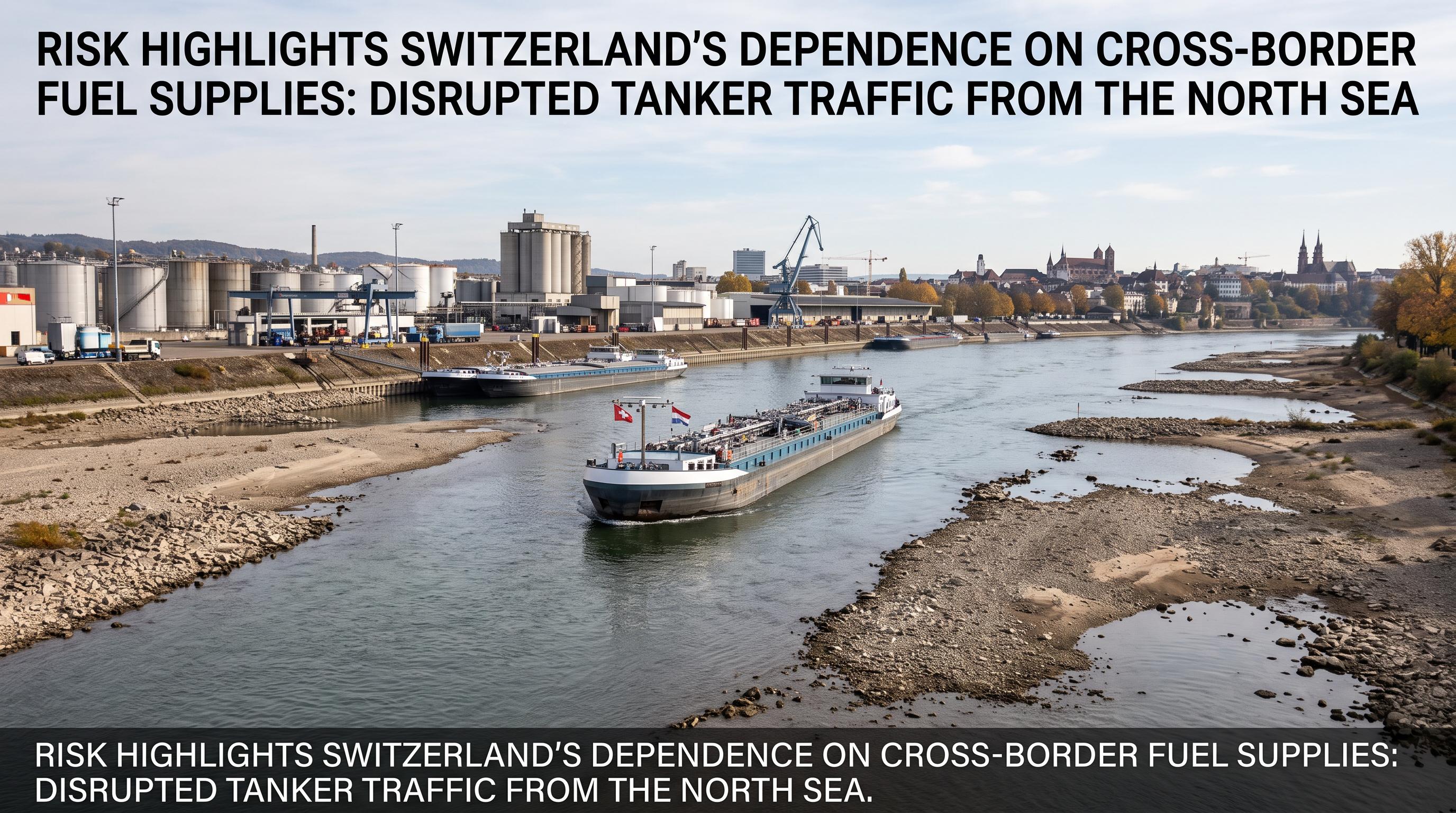
Low Rhine Levels Squeeze Fuel Deliveries
Low Rhine levels are raising the cost of moving fuel into Switzerland this autumn. Persistent drought across Europe left the river at historically low levels during the summer, and water levels have not fully recovered. Tankers and barges travelling south from the North Sea must reduce their loads to pass shallow sections safely. That has slowed deliveries and increased the number of vessels needed to move the same volume of petrol and diesel.
The disruption is already visible in Germany, where several petrol stations have reported shortages and some have temporarily closed pumps. Switzerland sits further downstream and depends heavily on the Rhine route into Basel, making it exposed to the same transport bottleneck. The immediate effect is higher logistics costs rather than an empty national fuel market. Shipping fuel to Basel now costs about 10 times more than usual, according to 20 Minuten.
That pressure reaches motorists through pump prices. Diesel cost CHF 2.41 per litre in mid September, then rose to CHF 2.46 on 5 October, according to The Local. The figures show how a river transport problem can quickly feed into household and business costs.
German Shortages Expose the River’s Weak Point
German pump shortages show what can happen when shallow water cuts the main delivery route. The Rhine links North Sea import terminals with inland markets across Germany, Switzerland and other European countries. When barges cannot carry normal loads, operators face a difficult calculation: send more vessels, wait for higher water, or shift cargo to rail and road.
German stations have already experienced supply interruptions under those conditions. Some have temporarily closed pumps, according to Bild. The reports do not establish a nationwide shortage, but they demonstrate the vulnerability of fuel distribution when several deliveries arrive late or below capacity.
For Switzerland, the impact is concentrated around the Rhine corridor and the Basel area. Fuel destined for inland storage or distribution must compete for limited transport capacity, while operators absorb higher freight and handling costs. The strain can also spread beyond the river itself if companies turn to rail or road at short notice. Those alternatives have finite capacity and may cost more.
The Swiss situation therefore depends on the duration of the low water, the volume of reserve stocks, and how quickly importers can reorganise deliveries. The available information points to logistical pressure, not confirmed nationwide pump closures.
Rail and Mediterranean Routes Keep Supply Moving
Swiss importers have shifted part of the burden from the river to the railway. Tess Sapin, spokesperson for the Federal Office for National Economic Supply, said that industry had “imported additional goods by rail”. The move gives suppliers another channel while Rhine barges operate below normal capacity.
Switzerland also has routes that do not depend on the Rhine. Fuel can travel from the Mediterranean near Marseille to the refinery in Cressier, in Neuchâtel canton, and to facilities in Vernier, Geneva. Those routes are not affected by the Rhine’s shipping restrictions, according to the information provided by The Local.
The network gives Switzerland some protection because supply does not rely on a single river corridor. It also creates a more complex cost picture. Rail deliveries can supplement missing barge capacity, while Mediterranean routes can serve different parts of the country and require separate storage and distribution arrangements. The system must keep working across several modes of transport at once.
No source cited here reports a national shortage in Switzerland. FONES says the industry has taken steps to maintain deliveries. That response reduces the immediate risk to motorists, although it cannot remove the higher costs created by the Rhine disruption.
Higher Diesel Prices Test Swiss Resilience
Diesel prices have already reached a record high reported by The Local, adding a direct cost for Swiss drivers and businesses. The price stood at CHF 2.41 per litre in mid September and climbed to CHF 2.46 per litre on 5 October. The increase came as Rhine transport became more expensive and deliveries required alternative routes.
Diesel matters beyond private cars. It powers freight vehicles, agricultural machinery, construction equipment and parts of the logistics network that move goods between Swiss cantons. Higher fuel costs can therefore affect transport operators before consumers see any change at a petrol station. The available reporting does not quantify how much of the price increase comes specifically from low Rhine levels, so the river should be treated as one pressure among several market factors.
The next test will come if water levels remain low through the autumn. Importers will need to maintain rail capacity, use the Cressier and Vernier routes where practical, and keep deliveries coordinated with storage facilities. A prolonged disruption could raise costs further and make regional shortages more likely, particularly where distributors depend heavily on Rhine-linked supply. For now, Switzerland has alternative channels and no confirmed nationwide fuel shortage.