Migros
Migros proposes merging its regional cooperatives into one group
Migros plans to merge its ten regional cooperatives and the Migros Cooperative Federation into a single group cooperative, aiming to simplify its management structure. The proposal still needs approval from cooperative members in a vote scheduled for mid-2027.
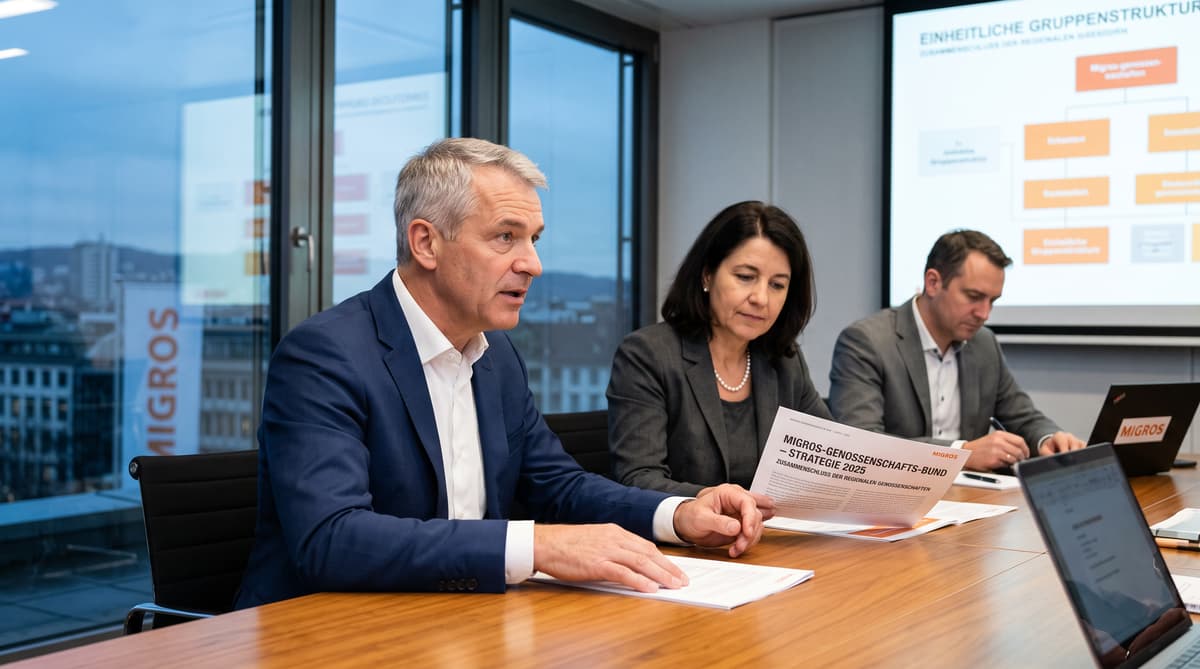
Migros’s boards have unanimously backed a plan to replace its ten regional cooperatives and the Migros Cooperative Federation with one group cooperative. The decision now rests with the retailer’s 2.3 million cooperative members, who are scheduled to vote in mid-2027. The merger must win a two-thirds majority in each of the ten regional cooperatives to proceed.
Migros says the new structure would simplify management and let the supermarket business be run from a single source across Switzerland. The proposed group cooperative would sit above seven business units, which would continue to operate independently. They include Migros Supermarket, discount retailer Denner, online retailer Digitec Galaxus and Migros Bank.
The plan reaches beyond an internal reshuffle. It would redraw how Switzerland’s largest retailer is governed, while leaving the final decision with its members. The vote will determine whether the cooperative network moves to a central group structure.
Put Six Councils in the Regions
Six regional councils would take the place of most existing regional management structures. They would represent regional interests and elect delegates to the national delegates’ assembly, according to Migros. The cooperative says regional roots and members’ right to have a say would remain part of the proposed model.
That design sets up a new balance between national coordination and regional representation. Today’s ten cooperatives would become one group cooperative, with the six councils providing a formal channel for local interests. Members would still decide on the merger through the 2027 ballot, and each regional cooperative would need to meet the two-thirds approval threshold.
Migros has long operated through a complex cooperative structure. A previous attempt in the 1990s to reduce the number of regional cooperatives, then 12, to three failed. The current proposal again seeks to streamline the organisation, this time while retaining regional representation through councils and delegates.
Weigh Savings Against Job Impact
The restructuring could save CHF 300 million to CHF 400 million a year, according to a report in SonntagsZeitung. The newspaper also reported that around 3,000 jobs could be affected. Migros has promised that organisational changes in the regional cooperatives will not lead to redundancies until at least mid-2028.
The company says the changes will primarily affect administration and management. Where possible, it plans to find alternative roles within the group for affected employees. Those assurances come as Migros continues a broader restructuring begun in 2024, which has included the sale of specialist retail chains and other businesses.
That earlier programme resulted in around 1,500 job losses from a workforce of approximately 100,000. Migros is now focusing on retail, financial services and healthcare. The cooperative merger would reshape the management behind those activities, while its potential savings and employment effects put the consequences for staff in sharp focus.
Prepare for a Leadership Handover
Migros CEO Mario Irminger and Peter Diethelm, CEO of Migros Supermarkt AG, plan to leave their posts by the mid-2027 ballot. Both will then be 62. Migros says the successors should be ready to lead the new organisation from the outset, and the search for replacements has begun.
The leadership change comes during a wider transformation. Since 2024, Migros has sold businesses including Melectronics, SportX, Micasa, Hotelplan and Mibelle, narrowing its focus to retail, financial services and healthcare. The programme has already cost around 1,500 jobs across a workforce of about 100,000.
The proposed cooperative merger would be the group’s second major restructuring in recent years. Its scale also reflects a long-running debate over how quickly a cooperative organisation can make decisions. Migros’s competitor Coop merged its regional cooperatives in 2001. For Migros, the next milestone is the members’ vote, which will decide whether the new group structure goes ahead.